

Chinese Carrier Group Shadows U.S.-Led Drills in Philippine Sea
Liaoning strike group sails near multinational Keen Sword exercise, raising tensions in the western Pacific.
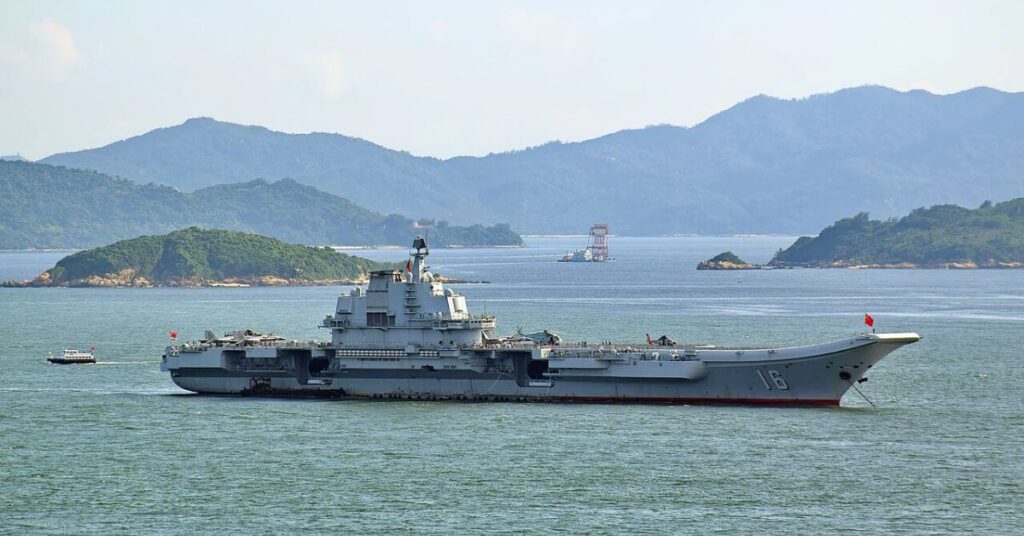
China’s aircraft carrier strike group, led by the Liaoning, has entered the western Pacific as a U.S.-led multinational naval exercise unfolds in the same region. The deployment began on October 14, with the carrier and its escort vessels moving near the southern Philippines while the Keen Sword drills take place in the Philippine Sea.
The Chinese formation includes the Liaoning and three guided-missile destroyers: the Type 055 warships Wuxi and Anshan, and the Type 052D destroyer Huainan. After passing through the Miyako Strait on October 14, the group turned toward the South China Sea before heading toward the southern Philippines. Philippine naval vessels tracked the warships as they sailed near the country’s southwestern coast.
Deployment Details and Overlapping Timelines: Philippine Sea
The strike group’s route suggests an anticlockwise movement around the Philippine archipelago, reversing the path taken during its October 2024 exercises. This marks the Liaoning’s second deployment in the western Pacific this year, with the drills expected to last several weeks, overlapping with the Keen Sword exercise, which runs from October 19 to 29.
The U.S.-led exercise involves forces from Japan, Australia, Canada, and France, with the USS Theodore Roosevelt, a Nimitz-class carrier, operating in the Philippine Sea. While both the Chinese and multinational forces are active in the same broad area, there is no confirmation that either side has adjusted its movements in response to the other.
The first island chain, stretching from Japan through Taiwan to the Philippines, remains a key focus for both Chinese and U.S. military operations. Chinese forces operating beyond this chain gain access to the wider Pacific for training, while the U.S. and its allies use exercises like Keen Sword to strengthen joint maritime and air capabilities.
Strategic Context and Regional Tensions
Earlier this month, Japan detected a Y-9 electronic reconnaissance aircraft and a WZ-7 high-altitude unmanned aircraft near the Chinese carrier, though it is unclear whether they accompanied the strike group south. Previous deployments have seen similar posturing, including incidents in June when Japanese forces tracked the Liaoning group during far-sea training.
Despite the proximity of the two carrier groups, there is no indication that a confrontation is imminent or that China intends to disrupt the Keen Sword drills. The overlapping presence reflects ongoing strategic competition rather than direct escalation.


Sign up free to ask CAMAL AI for a summary, the key points or anything else about this story.
Related stories
CAMAL AI
 Financial Ports Newsletter
The maritime economy, every morning
Ports, shipping and freight markets in one short email. Free.



