

China’s 4,500m Robot Arms Race: What the South China Sea’s New Explorer
Beijing’s latest deep-sea robot can operate at 4,500 metres and handle 30 underwater tasks with seven hydraulic arms.
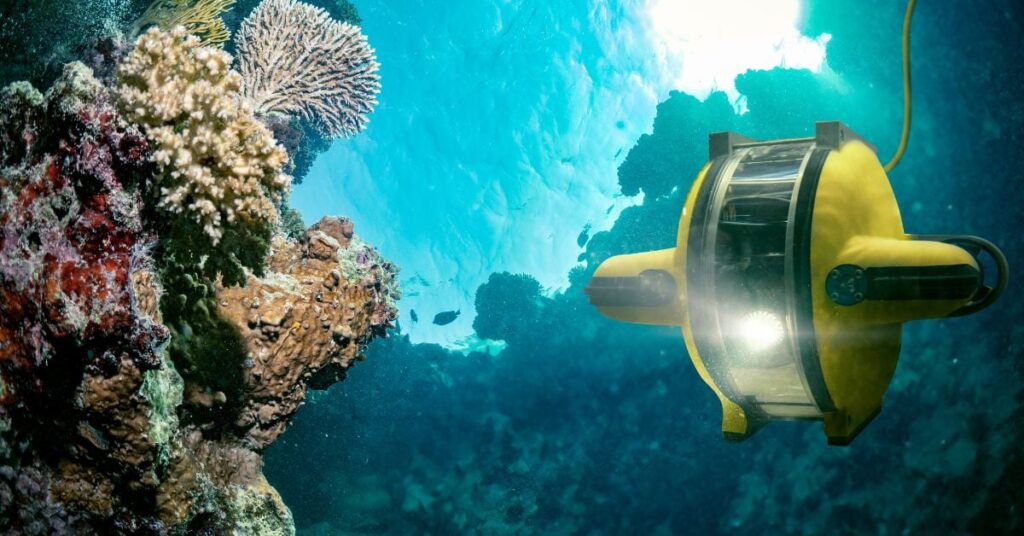
China has introduced a domestically developed deep-sea robot capable of operating at depths of up to 4,500 metres, marking a significant advancement in its underwater exploration capabilities. The robotic vehicle, launched from Weihai Port in Shandong Province, will conduct scientific missions in the South China Sea in collaboration with the Harbin Institute of Technology’s Weihai Branch.
The robot is equipped with a seven-axis hydraulic manipulator designed to handle over 30 complex operational challenges. These include high-pressure sealing, long-distance underwater communication, and autonomous navigation. Its capabilities allow it to perform tasks such as pipeline inspections, seabed surveys, scientific sampling, and emergency salvage operations in environments inaccessible to humans.
The deployment is part of China’s broader effort to enhance its deep-sea surveillance and resource exploration in the South China Sea. The region is believed to hold substantial deposits of minerals, including copper, manganese, and nickel, which are critical for industries such as electronics and renewable energy. The robot’s mission will contribute to a large-scale geological survey aimed at creating a comprehensive dataset of the eastern waters of China, potentially aiding both civilian and military applications.
China Deploys Advanced Deep-Sea Robot for South China Sea Exploration
The robot’s advanced technology also positions it as a tool for maritime security. Its hydraulic arms and autonomous systems enable it to conduct reconnaissance, surveillance, and mine identification, further expanding China’s operational capabilities in contested waters.
This initiative follows previous deep-sea missions, including last year’s deployment of the ROV Haiqin, which reached a depth of 4,410 metres, and this year’s launch of the drill ship Mengxiang, which retrieved basalt samples from the South China Sea Basin at a depth of 5,000 metres. These efforts underscore China’s commitment to closing the technological gap in deep-sea exploration.
Strategic and Scientific Objectives
Tao Zewen, the project’s research and development lead, stated that the robot’s “core hardware and software are fully domestically controlled.” He added that the team aims to “reduce the application costs of domestic deep-sea equipment” moving forward, ensuring greater accessibility for future missions.
The joint expedition between the Harbin Institute of Technology and the robot’s developers will test the vehicle’s performance under real-world conditions. The data collected is expected to refine China’s deep-sea equipment verification systems and accelerate the transition from laboratory research to industrial application.
As China continues to expand its deep-sea capabilities, the international community is closely monitoring the geopolitical implications. The robot’s deployment in the South China Sea, a region with overlapping territorial claims, raises questions about the future of resource extraction, environmental protection, and maritime security in the area.


Sign up free to ask CAMAL AI for a summary, the key points or anything else about this story.
Related stories
CAMAL AI
 Financial Ports Newsletter
The maritime economy, every morning
Ports, shipping and freight markets in one short email. Free.
Financial Ports Newsletter
The maritime economy, every morning
Ports, shipping and freight markets in one short email. Free.



