

China’s New South China Sea Map: Why the World Should Worry
Beijing rebrands disputed islands as "Nanhai Zhudao" to bolster claims under UNCLOS, defying a 2016 Hague ruling.
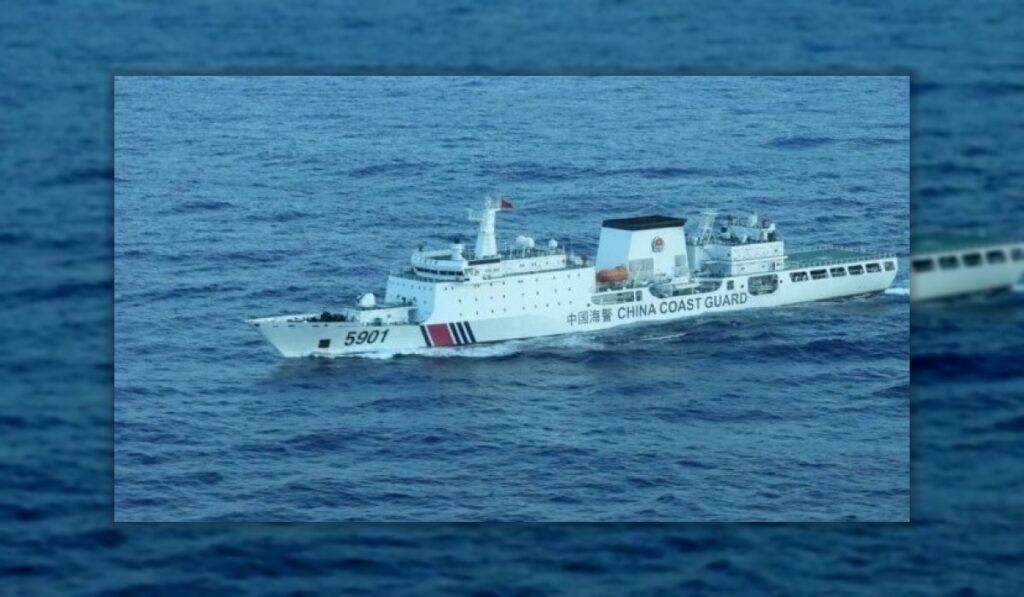
China has intensified its territorial claims in the South China Sea by redefining disputed island groups as a single entity, a move that contradicts a 2016 international ruling. Beijing now refers to the area as Nanhai Zhudao—or “South China Sea Islands”—and asserts that the four key groups—Pratas Island, the Paracels, Scarborough Shoal, and the Spratly Islands—form a unified archipelago under its administration. This archipelago is officially governed as Sansha City, a designation China uses to bolster its sovereignty arguments.
The strategy, however, faces legal challenges. The Permanent Court of Arbitration in The Hague ruled in 2016 that China’s historical claims within the Nine-Dash Line had no basis under the United Nations Convention on the Law of the Sea (UNCLOS).
The court dismissed Beijing’s reliance on historical rights, a stance reinforced by the fact that the term Nanhai Zhudao only emerged in state discourse after the ruling. Despite this, Chinese state media, including the Chinese Military Bugle, claimed on September 27 that the islands have long been “widely recognized by the international community” as Chinese territory.
Escalating Tensions with the Philippines: South China Sea
Recent weeks have seen a sharp rise in confrontations, particularly with the Philippines. Chinese Coast Guard vessels have clashed with Filipino fishing boats and maritime agencies near Scarborough Shoal and the Second Thomas Shoal, where Manila maintains a presence aboard the grounded ship BRP Sierra Madre. The standoff worsened after Philippine Defense Secretary Gilberto Teodoro Jnr publicly criticized China’s actions at a defense conference in Seoul on September 8, calling them a violation of international law.
The Philippines is not alone in its opposition. Vietnam, Malaysia, Brunei, and Taiwan also contest China’s claims, but Beijing’s growing military and economic influence has made unified resistance difficult. Analysts warn that the lack of a negotiated settlement increases the risk of a serious incident, potentially leading to broader conflict.
Military Expansion on Artificial Islands
Beyond diplomatic maneuvers, China is physically altering the region’s geography. Satellite imagery shows accelerated construction on Antelope Reef in the Paracel Islands, where a 3,000-meter runway—capable of hosting military aircraft—is nearing completion. This is part of a broader campaign to transform reefs into fortified artificial islands, equipped with radar systems, deep-water ports, and other military infrastructure.
The Hague ruling explicitly rejected China’s claims to these features, but Beijing has ignored the decision, relying instead on its expanding naval presence to enforce control. With no signs of de-escalation, the South China Sea remains a flashpoint, where competing claims and military posturing could trigger a dangerous confrontation.


Sign up free to ask CAMAL AI for a summary, the key points or anything else about this story.
Related stories
CAMAL AI
 Financial Ports Newsletter
The maritime economy, every morning
Ports, shipping and freight markets in one short email. Free.
Financial Ports Newsletter
The maritime economy, every morning
Ports, shipping and freight markets in one short email. Free.