

Argentina demands UN court halt Falklands oil project before 2027 drilling
Buenos Aires asks Hamburg tribunal to issue emergency measures to prevent UK-backed Sea Lion field from becoming an.
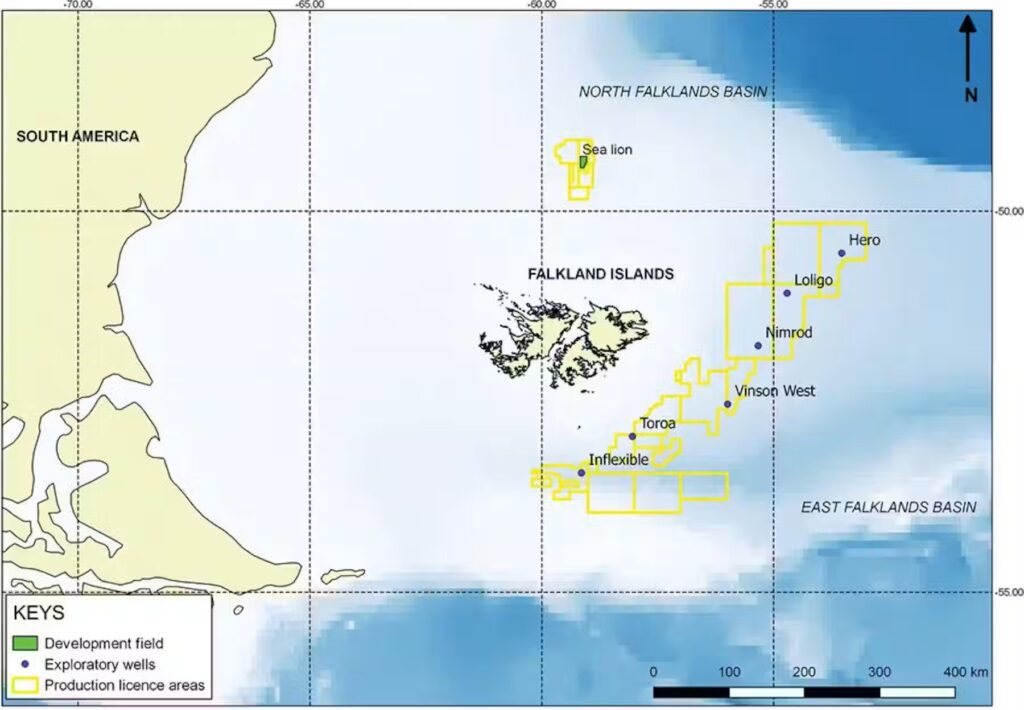
Argentina has escalated its dispute with the UK over oil drilling near the Falkland Islands by asking the International Tribunal for the Law of the Sea (Itlos) to halt the Sea Lion project before production begins in early 2027. The request, filed on October 13, follows a failed 14-day ultimatum to London to suspend the venture, which Buenos Aires argues violates its rights to the seabed.
The Sea Lion project, a joint venture between UK and Israeli companies, is licensed by the Falkland Islands government and targets a field containing an estimated 1.7 billion barrels of oil, of which 500 million barrels are deemed recoverable. Argentina’s submission to Itlos warns that starting extraction would create an “irreversible fait accompli”, citing environmental and legal risks.
The Legal Battle: What Argentina Wants and Why It Matters
Argentina’s case hinges on two key arguments. First, it claims the UK approved the Sea Lion project without its consent, breaching the United Nations Convention on the Law of the Sea (UNCLOS), which governs maritime boundaries and resource rights. Under UNCLOS, coastal states hold exclusive rights to explore and exploit resources on their continental shelves, but the Falklands’ sovereignty remains contested. The UK administers the islands, while Argentina maintains a historical claim.
Second, Buenos Aires has requested “provisional measures”, emergency orders from Itlos to prevent harm while the arbitration proceeds. These could include a suspension of drilling or requirements for environmental risk assessments. Argentina’s submission references a 2015 Itlos ruling in a dispute between Ghana and Ivory Coast, where the tribunal allowed existing oil operations to continue but banned new drilling. The question now is whether Sea Lion, which is still in the development phase, qualifies as a new project under that precedent.
However, Argentina faces an uphill battle. Itlos tribunals cannot rule on sovereignty disputes over land, and the UK has already rejected Argentina’s claims. Foreign Secretary Ed Miliband dismissed the request, vowing to “vigorously” contest the tribunal’s jurisdiction. The UK argues that the Falkland Islands government, not London, issued the drilling licence, and that the project complies with international law.
Environmental Risks and Precedents: What’s at Stake
The dispute extends beyond legal technicalities to environmental concerns. This risk underscores the broader implications of offshore drilling in contested areas, where environmental safeguards may be difficult to enforce.
A recent precedent offers a glimmer of hope for Argentina. In April, an Itlos tribunal ruled that Russia had breached UNCLOS by failing to conduct adequate environmental assessments for the Kerch Strait bridge, which connects Crimea to mainland Russia. This suggests Itlos could rule on environmental compliance without addressing sovereignty.
If Argentina succeeds, Itlos could require the UK to share environmental risk assessments and contingency plans for Sea Lion, even if it stops short of halting the project.
The Sea Lion project’s future now rests on Itlos’s interpretation of UNCLOS. While the tribunal cannot resolve the sovereignty dispute, it could impose interim measures that reshape the legal and environmental landscape of the region. For Argentina, even a partial victory, such as an order for cooperation on environmental risks, would be a step toward reasserting its claims. For the UK, a loss could set a precedent that complicates future offshore projects in disputed waters.
The next hearing at Itlos’s Hamburg headquarters will determine whether the tribunal accepts the case. If it does, the ruling could arrive within months, potentially delaying Sea Lion’s planned start in early 2027. Both sides are preparing for a protracted legal fight, with implications that extend far beyond the South Atlantic.


Sign up free to ask CAMAL AI for a summary, the key points or anything else about this story.
Related stories
CAMAL AI
 Financial Ports Newsletter
The maritime economy, every morning
Ports, shipping and freight markets in one short email. Free.



