
Norway-Poland JV to Build First Wind-Farm Cable Vessel by 2029
DeepOcean and TFKable plan a purpose-built cable-laying vessel to streamline offshore wind inter-array projects
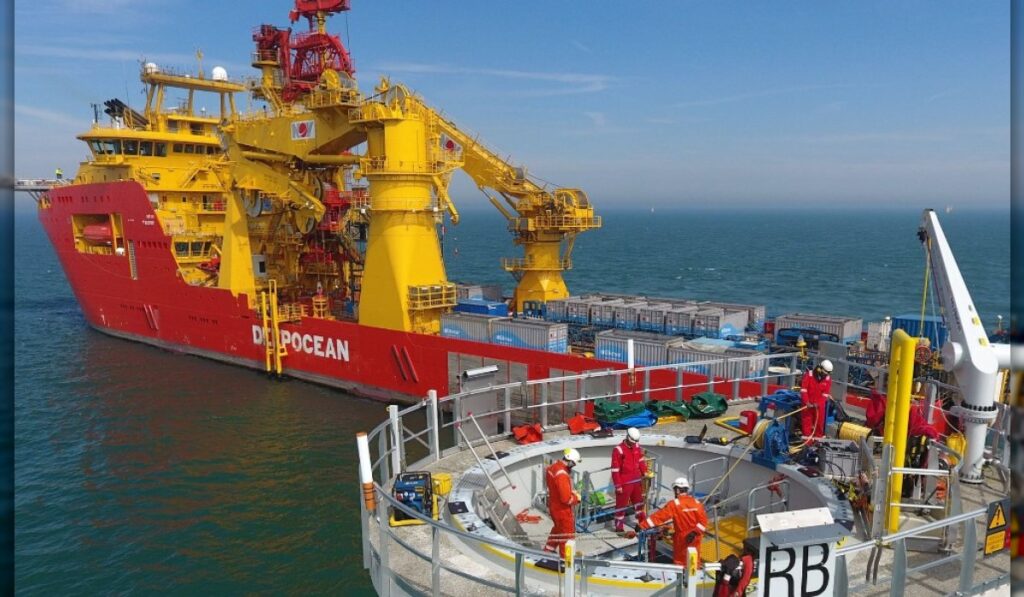
Norwegian ocean services contractor DeepOcean and TFKable Group have unveiled plans for a purpose-built cable-laying vessel to accelerate inter-array cable installations for offshore wind farms. The proposed joint venture, which also involves Poland’s state-owned industrial development agency ARP, aims to create a seamless engineering, procurement, construction, and installation (EPCI) offering for developers.
The planned vessel, though details remain undisclosed, is expected to be owned by a separate entity comprising DeepOcean, TFKable Group, and ARP.
The joint venture’s integrated approach covers the entire lifecycle of inter-array cable projects, from initial seabed surveys and route planning to cable design, manufacturing, transportation, installation, and protection. By reducing interfaces between suppliers, the partners aim to strengthen risk management and improve project certainty for offshore wind developers.
Norwegian Cruise Line
Why offshore wind developers are demanding integrated EPCI solutions: Cable
Developers are increasingly seeking partners who can deliver integrated solutions, rather than relying on fragmented contracts with multiple suppliers.
Øyvind Mikaelsen, CEO of DeepOcean, emphasised the strategic rationale behind the joint venture:
“Offshore wind developers are increasingly looking for greater collaboration and integration across the supply chain. By combining complementary cable manufacturing and offshore installation capabilities, we intend to create a more efficient delivery model that reduces interfaces, strengthens risk management and supports greater project certainty.”
Øyvind Mikaelsen·CEO of DeepOcean
The venture’s focus on inter-array cables is particularly timely. These cables, which connect turbines within a wind farm, are often a source of delays due to their complexity and the need for precise installation. The joint venture’s integrated offering aims to streamline this process by aligning cable production with installation expertise, reducing the potential for miscommunication and logistical hiccups.
Together with DeepOcean’s offshore engineering and installation capabilities, we see an opportunity to offer customers a more integrated solution covering a broader part of the cable project lifecycle.".
The joint venture is structured as a multi-year development programme, with capabilities expected to be introduced progressively. Major milestones are planned through 2029, though the timeline remains subject to competition clearance and customary closing conditions. Until the venture is formally established, DeepOcean and TFKable Group will continue to bid separately for installation and cable-supply contracts.
The venture’s initial focus will be on inter-array cable systems for offshore wind farms, but it also has the potential to expand into other subsea cable applications in the future. This flexibility could position the partnership as a key player in the broader energy transition, where subsea cables are expected to play an increasingly critical role in connecting offshore renewable projects to onshore grids.
For offshore wind developers, the benefits of an integrated EPCI model are clear. By consolidating multiple stages of the cable installation process under a single contract, the joint venture aims to reduce project complexity, improve coordination, and ultimately deliver faster, more cost-effective solutions. This approach could prove particularly valuable in regions with ambitious offshore wind targets, such as the North Sea, the Baltic Sea, and emerging markets in Asia and the Americas.
The collaboration between DeepOcean and TFKable Group also underscores the growing importance of strategic partnerships in the offshore wind sector. As projects grow in scale and complexity, companies are increasingly looking to combine their strengths to address the industry’s most pressing challenges. The planned cable-laying vessel is a tangible example of this trend, offering a potential blueprint for future collaborations in the renewable energy space.
While the venture is still in its early stages, its success could have far-reaching implications for the offshore wind industry. If the integrated EPCI model proves effective, it may encourage other players in the sector to adopt similar approaches, further accelerating the deployment of offshore wind capacity worldwide. For now, the focus remains on securing competition clearance and advancing the development programme, with the first major milestones expected in the coming years.


Sign up free to ask CAMAL AI for a summary, the key points or anything else about this story.
Related stories
CAMAL AI
 Financial Ports Newsletter
The maritime economy, every morning
Ports, shipping and freight markets in one short email. Free.
Financial Ports Newsletter
The maritime economy, every morning
Ports, shipping and freight markets in one short email. Free.