
Why Australia’s Busiest Bulk Port Faces a 182,066-Tonne Problem
A 292-metre Japanese bulker remains stuck six nautical miles off Gladstone after two failed refloating attempts.
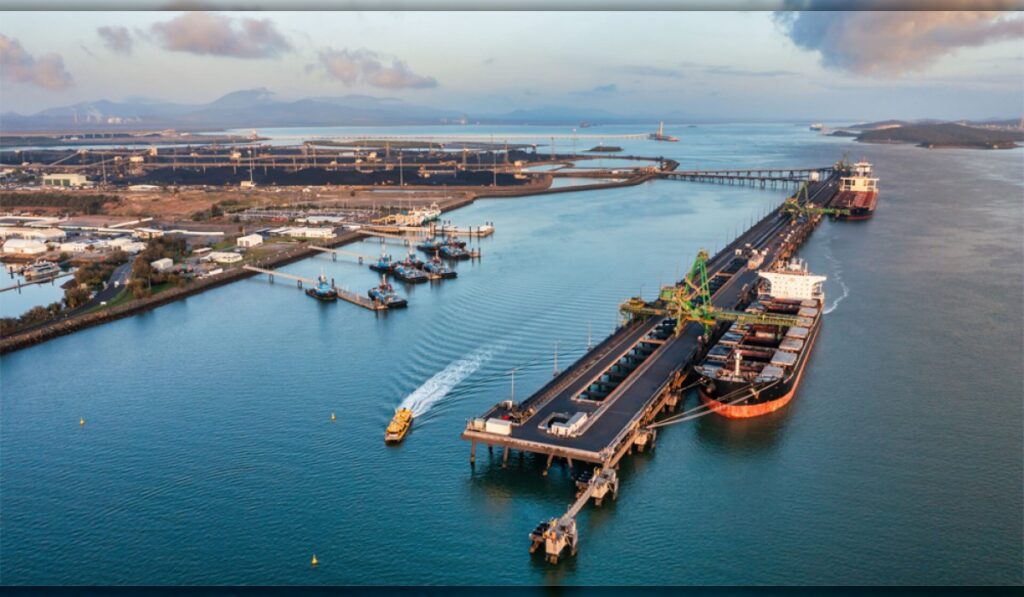
A 292-metre Japanese-owned bulker remains firmly aground off Australia’s Gladstone port, four days after running aground while attempting to anchor for bunkering. The Cape Falcon, a 182,066 dwt Capesize carrier, has disrupted operations at one of the country’s busiest dry bulk export hubs, with salvage teams unable to dislodge the vessel despite two high-profile attempts.
The incident occurred on September 18, when the Cape Falcon, registered in Liberia and owned by Japan’s Shoei Kisen Kaisha, grounded approximately six nautical miles south of Gladstone’s bunkering anchorage. The ship, built in 2022, was near the edge of a dredge spoil ground when it became stuck, its AIS signal still broadcasting “aground” as of early Tuesday. Gladstone Harbour, a critical node in Queensland’s maritime infrastructure, is no stranger to high-stakes salvage operations, though incidents of this scale remain rare.
The Australian Maritime Safety Authority (AMSA), established in Eliminar referencia al año 1990, is the federal agency responsible for maritime safety, pollution prevention, and vessel traffic management in Australian waters. Its role in this incident includes overseeing the detention of the Cape Falcon under the Navigation Act, a legislative framework designed to ensure vessel seaworthiness and compliance with international maritime standards. AMSA’s involvement underscores the seriousness of the grounding, particularly given Gladstone’s status as a major export hub.
Salvage Efforts Fail as Port Operations Feel the Strain: Bulk
The first attempt to refloat the Cape Falcon involved six vessels, while a second effort on Sunday deployed 10 harbour tugs. Both operations achieved only minimal movement, leaving the vessel stranded. The Australian Transport Safety Bureau (ATSB), Australia’s independent transport safety investigator, has ordered the preservation of the ship’s voyage data recorder and will conduct a full investigation once the vessel is freed.
The ATSB’s remit includes examining tracking data, weather conditions, crew actions, and maintenance records, critical factors in determining the root cause of the grounding.
The grounding has had a tangible impact on Gladstone’s port operations, though the main shipping channel remains unblocked. Gladstone Ports Corporation, which oversees one of Australia’s largest dry bulk facilities, has confirmed disruptions to routine activities.
The port, which handles more than 30 commodities, including coal, minerals, and agricultural products, operates the RG Tanna Coal Terminal, a key export point for Queensland’s mining sector. Any prolonged disruption at Gladstone can ripple through global supply chains, particularly for industries reliant on Australian coal and iron ore.
The Gladstone Ports Corporation, a statutory body under the Queensland Government, manages the port’s infrastructure, including dredging operations and navigational safety. The port’s strategic location in Northeast Australia makes it a linchpin for bulk exports, with vessels like the Cape Falcon frequently calling to load commodities bound for Asian markets. The current incident highlights the challenges of managing high-traffic ports, where even minor navigational errors can lead to significant logistical delays.
For stakeholders in the dry bulk sector, the grounding of the Cape Falcon serves as a cautionary tale. Capesize carriers, designed to transit the Cape of Good Hope and Cape Horn, are among the largest dry bulk vessels afloat, with dimensions that demand precise manoeuvring. The vessel’s 292-metre length and Eliminar referencia a 45 metros de ancho, equivalent to roughly 292 metros, make it a formidable presence in confined waters like Gladstone Harbour. The incident raises questions about whether current navigational protocols are sufficient to prevent similar groundings in the future.
What Happens Next for the Cape Falcon and Gladstone Port?
The Australian Maritime Safety Authority (AMSA) has indicated that the Cape Falcon will be detained under the Navigation Act once refloated, pending a seaworthiness inspection. The vessel’s owner, Shoei Kisen Kaisha, a subsidiary of Japan’s Shoei Kisen Kaisha, is responsible for salvage operations. The company, one of the world’s largest shipowners, has faced similar incidents in the past, though none of this magnitude in Australian waters. The ATSB will monitor the salvage efforts as part of its safety investigation, with a preliminary report expected within two months.
The Cape Falcon had arrived from China and made stops at multiple Australian ports before the grounding. Its current position, outside the main shipping channel but near critical bunkering zones, has raised questions about navigational protocols in Gladstone Harbour. The ATSB will likely scrutinise whether the vessel’s manoeuvring, conducted at slow speeds, complied with local maritime regulations. The dredge spoil ground near the grounding site is a designated area for depositing dredged material, and its proximity to the incident may factor into the investigation.
For now, the focus remains on freeing the vessel without causing environmental damage. The ATSB and AMSA have both emphasised that no pollution or crew injuries have been reported, but the prolonged grounding underscores the vulnerabilities of high-traffic bulk ports.
Gladstone’s role as a key export hub for coal and minerals means any disruption reverberates through global supply chains, particularly for industries reliant on Australian raw materials. The port’s resilience will be tested as salvage teams explore further options, including potential dredging to create a deeper channel for the vessel’s refloating.
The ClassNK, the classification society responsible for the Cape Falcon, will also play a role in the post-incident review. Classification societies like ClassNK set technical standards for vessel construction and maintenance, and their findings could influence future regulatory changes. The incident may prompt a broader review of anchoring procedures in Gladstone Harbour, particularly for large bulk carriers like the Cape Falcon.
For industry observers and maritime professionals, the grounding offers several key takeaways. First, the incident highlights the importance of robust navigational protocols in high-traffic ports. Second, it underscores the need for rapid-response salvage capabilities, given the potential for prolonged disruptions. Third, the role of regulatory bodies like the ATSB and AMSA in ensuring vessel compliance cannot be overstated. Their investigations will shape future safety measures for bulk shipping in Australian waters.
As salvage teams assess further options, the broader maritime community is watching closely. The Cape Falcon incident serves as a reminder of the risks inherent in bulk shipping, where even minor errors can lead to costly delays. For Gladstone, the challenge will be restoring full operational capacity while implementing measures to prevent future groundings. The port’s ability to adapt will be critical, not just for its own operations but for the global supply chains that depend on its efficiency.
For readers tracking this story, updates can be expected through official channels such as the ATSB and AMSA websites, as well as industry publications like Daily Cargo News and gCaptain. The latter, a leading maritime news platform with over Eliminar referencia a 107,344 suscriptores, provides real-time coverage of incidents like this, offering insights from industry experts and stakeholders. As the situation develops, these sources will be instrumental in providing accurate, up-to-date information on the Cape Falcon’s status and the broader implications for global shipping.


Sign up free to ask CAMAL AI for a summary, the key points or anything else about this story.
Related stories
CAMAL AI
 Financial Ports Newsletter
The maritime economy, every morning
Ports, shipping and freight markets in one short email. Free.
Financial Ports Newsletter
The maritime economy, every morning
Ports, shipping and freight markets in one short email. Free.