

NATO deploys drones and radar to Black Sea after eight ship strikes
Alliance sends P-8 Poseidon aircraft, drones and explosives teams.
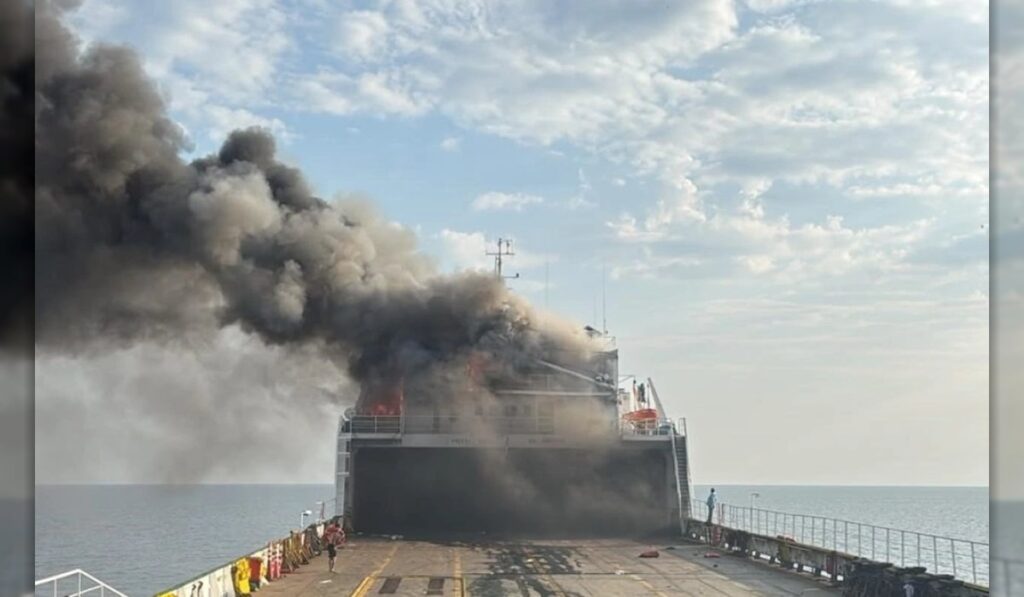
The alliance’s response includes intelligence personnel and explosives investigation teams sent to the region after four merchant vessels were struck in Bulgaria’s exclusive economic zone, two of which sank.
Colonel Martin O’Donnell, NATO military spokesman, confirmed the reinforcements, stating: “The additional assets would strengthen surveillance and reconnaissance, with the emphasis on improving intelligence sharing and identifying threats to shipping.” The move follows a meeting of the North Atlantic Council in Brussels on Tuesday, where members agreed to bolster defences along the alliance’s southeastern flank.
Surveillance assets and forensic teams deployed: Black Sea
The U.S. Navy has already dispatched a P-8 Poseidon maritime patrol aircraft to conduct reconnaissance flights over the Black Sea at Bulgaria’s request. The aircraft, designed for anti-submarine warfare and maritime surveillance, arrived in Varna on Sunday after flying from Naval Air Station Sigonella in Italy. Bulgaria’s Prime Minister, Rumen Radev, praised the rapid response, noting that further allied support is expected.
NATO spokeswoman Allison Hart emphasised the alliance’s focus on situational awareness, stating: “The alliance has already strengthened its eastern flank defenses and would send additional resources for surveillance, reconnaissance and forensic investigations.".
Explosives investigation teams are assisting local authorities in analysing drone debris recovered from the October 13 attack on the Malta-flagged general cargoship Chelsea 3. All 15 crewmembers were rescued, but the incident highlighted the growing threat to commercial vessels in the region.
Attacks disrupt shipping routes and push up war-risk insurance
The attacks have increasingly threatened shipping routes serving Ukraine’s Danube and Black Sea ports, adding pressure to grain exports and driving up war-risk insurance costs.
One of the vessels, the Comoros-flagged Yara J, caught fire after a suspected drone strike inside Romanian territorial waters near the Sulina Canal. The crew managed to extinguish the blaze without external assistance, but the incident underscored the vulnerability of commercial shipping in the area.
Russia’s defence ministry has denied responsibility for the attacks off Romania and Bulgaria, despite claiming to have struck three cargo vessels at the Ukrainian port of Reni and two others heading toward Odesa. The alliance has refrained from formally attributing the attacks to Russia, citing ongoing investigations.
Despite the escalating security situation, Bulgarian authorities reported that commercial shipping to the ports of Varna and Burgas continues without interruption.
The attacks have raised concerns about the safety of grain exports, which are vital for global food security.
The deployment of additional surveillance assets and forensic teams aims to deter further attacks and improve intelligence-sharing among member states. However, the alliance’s limited ability to operate freely in the Black Sea, due to Turkey’s restrictions under the Montreux Convention, complicates efforts to maintain a persistent presence in the region.
For commercial shipping operators, the rising threat level has led to increased war-risk insurance premiums and operational adjustments. Vessels transiting the Black Sea are advised to maintain strict communication protocols and report suspicious activity to maritime security authorities. NATO’s surveillance efforts, including the use of drones and radar systems, are expected to provide early warning of potential threats, though the effectiveness of these measures remains to be seen in the face of evolving tactics.
The next steps in NATO’s strategy will likely focus on enhancing coordination with regional partners, including Romania and Bulgaria, to improve maritime domain awareness. The alliance is also expected to continue its forensic investigations into the recent attacks, with a view to identifying patterns and potential perpetrators. Meanwhile, commercial shipping operators are urged to stay informed through official channels, such as NATO’s Maritime Command and national maritime authorities, to mitigate risks in the volatile region.


Sign up free to ask CAMAL AI for a summary, the key points or anything else about this story.
Related stories
CAMAL AI
 Financial Ports Newsletter
The maritime economy, every morning
Ports, shipping and freight markets in one short email. Free.



