

China’s Arctic Gambit: 1,300 TEU Ship Reaches UK via Northern Sea Route
First 2026 Arctic crossing by Chinese containership arrives in Teesport carrying electric vehicles and batteries
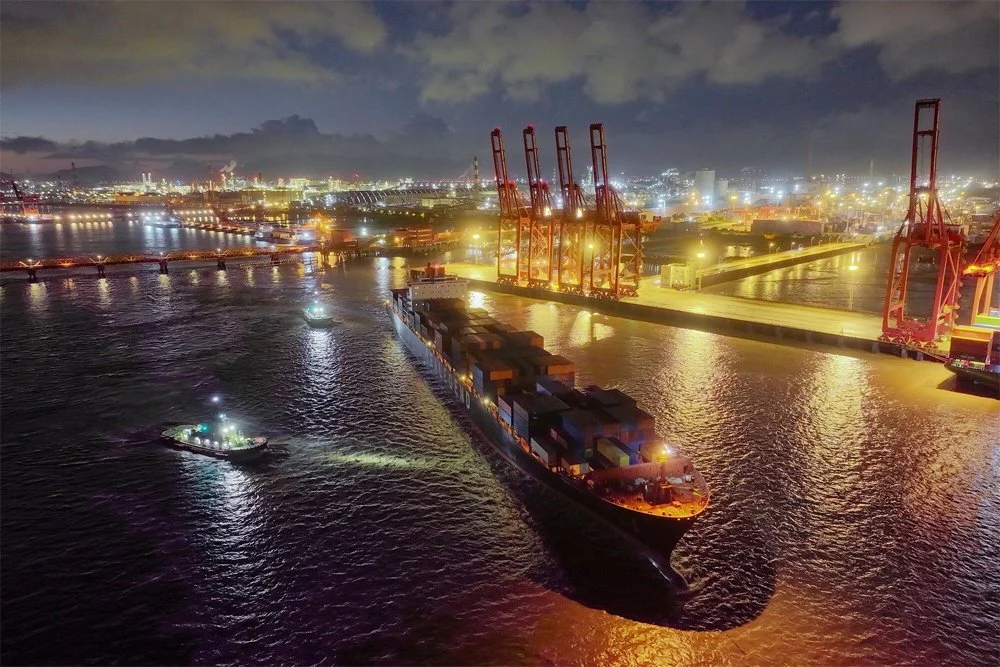
The Dubai Tower, a 23,338 dwt vessel with a capacity of 1,740 TEU, docked at Teesport on September 9 after a 20-day journey from China, which began on August 19. The ship, operated by Chinese carrier Sea Legend, was originally scheduled to call at Felixstowe but diverted to Teesport without explanation.
Despite these hurdles, China is doubling down on Arctic shipping. Sea Legend’s schedule for 2026 includes eight NSR crossings, with the Dubai Tower’s voyage serving as the inaugural run. The vessel is now set to continue to Rotterdam, with possible stops in Hamburg and Gdynia, Poland, before returning via the Arctic. The company is positioning these trips as the foundation for a regularly scheduled service, a move that could reshape global trade flows if successful.
Other carriers are closely monitoring the developments. South Korea’s PanStar is currently conducting its own trial voyage with the PanStar Arco, which is expected to reach Felixstowe on September 11.
While China’s Arctic ambitions extend to Europe, they also include deepening ties with Russia. This week, New New Shipping, another Chinese carrier, launched a new service to Murmansk, transporting 502 containers of car parts and other materials destined for Central Russia via rail. The vessel then loaded 26,400 tons of potash fertilizer for export, marking the first time the port has handled such a shipment via the NSR.
Officials at Murmansk Terminal are treating the operation as a comprehensive test of the route’s logistics.
Why the Arctic Route is Gaining Traction
“We’re testing not just a single operation, but the entire logistics scheme. It is important for us to understand how sustainable, convenient, and economically viable this route is for the chain’s participants.”
Murmansk Terminal official·Port authority representative
The terminal is also in discussions with New New Shipping about building a dedicated container terminal at Murmansk, which would further solidify the port’s role as a critical node in Arctic trade.
Earlier this week, Moscow announced the launch of a new oil export operation on the route, underscoring its commitment to expanding trade flows.
Teesport, the arrival of the Dubai Tower represents a potential shift in its role within the UK’s port network. Traditionally the country’s sixth-largest port and a gateway to the north, Teesport has limited container operations compared to rivals like Felixstowe and Southampton. However, PD Ports, the operator of Teesport, recently handled one of the largest automotive shipments in its history, a 5,000-vehicle consignment from China that included models from Chery Automotive’s Jaecoo and Chery brands, as well as the first 1,300 Lepas plug-in hybrid cars for the UK market.
Murmansk Emerges as a Key Arctic Hub
Chery, a major Chinese automaker, has expressed enthusiasm for deepening its partnership with Teesport. In a statement, the company said it “looks forward to expanding its relationship with Teesport,” suggesting that the port could become a key entry point for Chinese electric vehicles into the UK and Europe. This aligns with broader trends in the automotive industry, where manufacturers are increasingly prioritising ports with efficient rail and road connections to major markets.
The economic implications of the NSR’s expansion are significant. China, the route offers a way to bypass potential chokepoints like the Strait of Malacca and the Suez Canal, reducing reliance on traditional maritime corridors. For Russia, it provides an opportunity to monetise Arctic resources and infrastructure, particularly as Western sanctions limit its access to global markets. And for Europe, it presents both opportunities and challenges, faster access to Asian goods, but also increased exposure to geopolitical risks.
Industry analysts warn that the NSR’s long-term viability hinges on several factors, including the resolution of geopolitical tensions, the development of Arctic infrastructure, and the ability of carriers to navigate the route’s unpredictable ice conditions. While the Dubai Tower’s voyage was reportedly uneventful, the Arctic remains a high-risk environment, with limited search-and-rescue capabilities and no comprehensive insurance framework for commercial shipping.
For now, the focus is on data. Carriers like Sea Legend and PanStar are using these initial voyages to gather information on transit times, fuel efficiency, and operational challenges. If the results are promising, the NSR could emerge as a serious competitor to the Suez Canal, particularly for time-sensitive cargo like electric vehicles and renewable energy components.
As the Arctic ice continues to melt, the race to dominate this emerging trade corridor is heating up. China, the stakes are high: establishing the NSR as a reliable route could reshape global supply chains, reduce transit times, and cement Beijing’s influence in the Arctic. For the rest of the world, the question is whether the economic benefits outweigh the geopolitical and environmental risks.


Sign up free to ask CAMAL AI for a summary, the key points or anything else about this story.
Related stories
CAMAL AI
 Financial Ports Newsletter
The maritime economy, every morning
Ports, shipping and freight markets in one short email. Free.
Financial Ports Newsletter
The maritime economy, every morning
Ports, shipping and freight markets in one short email. Free.



