

1.5bn barrels flow through Hormuz as US admiral vows to keep lanes open
CENTCOM chief visits key chokepoint after US forces clear Iranian mines and assist 3,000 transits since summer.
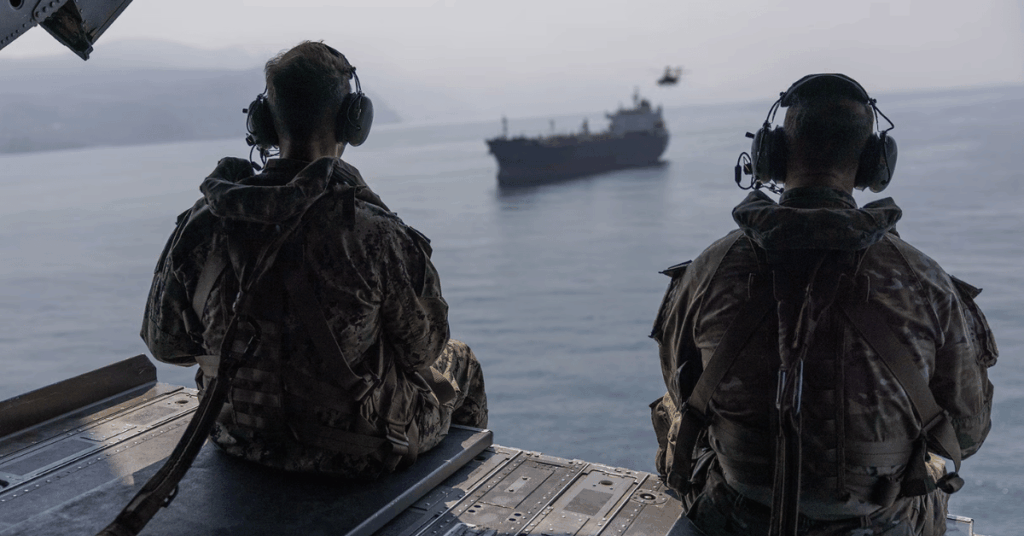
The commander of U.S. Central Command (CENTCOM), Admiral Brad Cooper, conducted an aerial inspection of the Strait of Hormuz on October 25 as American forces reached a significant operational milestone. Since this summer, U.S. military support has enabled Gulf partners to export over 1.5 billion barrels of crude oil through the critical waterway.
During his visit, Admiral Cooper flew aboard a U.S. Army CH-47 Chinook helicopter to assess the current security situation. The flight followed months of sustained efforts to maintain safe passage for commercial shipping, with CENTCOM reporting that more than 3,000 vessels have transited the strait without incident under U.S. protection.
Operational success in a strategic chokepoint: strait of hormuz
The operational environment has improved notably since American forces cleared Iranian sea mines from international shipping lanes earlier this year. These mines, deployed by Iran’s Islamic Revolutionary Guard Corps (IRGC), had previously disrupted maritime traffic. Admiral Cooper met with service members involved in the mine-clearance mission, praising their work in restoring secure transit routes.
Brent Crude
“Today, primary transit routes in the Strait of Hormuz remain free and clear of Iranian sea mines thanks to the efforts of our personnel,” Cooper stated. “We remain focused on ensuring commercial traffic continues unimpeded as we collaborate with U.S. agencies, Gulf Cooperation Council partners, and the shipping industry.”
Recent data underscores the effectiveness of these efforts. Over 95% of vessels navigating the strait in recent months have done so safely, despite ongoing threats from the IRGC. This success reflects the combined efforts of the U.S. and its regional allies to assert control over the waterway, a key artery for global energy supplies.
Security and stability in a vital trade corridor
Admiral Cooper emphasized the broader strategic commitment during his visit. “We continue to stand with our Gulf partners and the shipping industry,” he said. “This visit reinforces our dedication to maintaining freedom of navigation in the Strait of Hormuz.”
The admiral also acknowledged the role of U.S. service members in sustaining these operations, highlighting their contributions to regional stability. Their work has ensured the uninterrupted flow of oil and commercial goods, critical to global markets. While tensions persist, the recent milestones, 1.5 billion barrels exported and thousands of safe transits, demonstrate the current effectiveness of these security measures.


Sign up free to ask CAMAL AI for a summary, the key points or anything else about this story.
Related stories
CAMAL AI
 Financial Ports Newsletter
The maritime economy, every morning
Ports, shipping and freight markets in one short email. Free.



