

EU backs North Sea CO₂ storage with €223m for Atlas project
Aker BP and Höegh Evi secure €223m ($260m) to build a 6m-tonne annual CO₂ storage network linking European industry to.
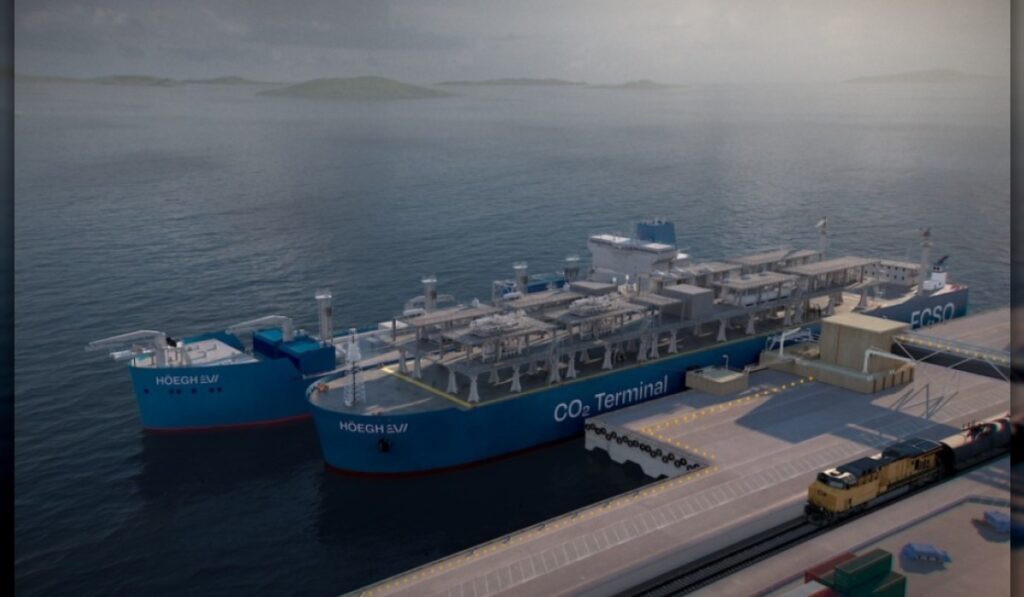
The European Union has allocated €223 million ($260 million) from its Innovation Fund to support the Atlas carbon transport and storage project, a collaboration between Norwegian offshore producer Aker BP and maritime infrastructure specialist Höegh Evi.
The funding will advance the development of a large-scale carbon capture and storage (CCS) network connecting industrial emitters across Europe to permanent storage beneath the North Sea. The project aims to aggregate captured CO₂ at regional export hubs before transporting it via specialised low-pressure carriers to an offshore storage site on the Norwegian continental shelf.
Project scope and infrastructure: co2 storage
The Atlas network is designed to handle 6 million tonnes of CO₂ annually, with potential to expand beyond 10 million tonnes as demand grows. CO₂ will be injected through subsea infrastructure into a saline aquifer located more than 2,000 metres below the seabed, eliminating the need for extensive onshore pipelines.
Höegh Autoliners
The storage site falls within the EXL011 licence area, where Aker BP holds an 80% stake and ORLEN Upstream Norway owns the remaining 20%. The project combines regional aggregation hubs with maritime transport to achieve economies of scale, allowing additional industrial regions to connect as the network expands.
In June 2025, the partners secured in-principle approval from classification society DNV for next-generation CO₂ carriers with capacities of up to 50,000 cubic metres. These vessels will transport liquefied CO₂ from regional hubs to the storage site, forming a critical component of the infrastructure.
Timeline and next phases
The Atlas project has completed its feasibility phase and is currently in the selection phase, with a final investment decision (FID) expected in 2028. If approved, first CO₂ injection is scheduled for 2031. The €223 million EU funding remains contingent on the FID.
The project was designated an EU Project of Mutual Interest in April 2026, recognising its role in providing cross-border carbon transport and storage infrastructure. Nils Jakob Hasle, Executive Vice President of Clean Energy at Höegh Evi, highlighted the project’s adaptability, stating that it demonstrates how regional aggregation and large-scale maritime transport can efficiently connect industrial emitters to permanent storage solutions.


Sign up free to ask CAMAL AI for a summary, the key points or anything else about this story.
Related stories
CAMAL AI
 Financial Ports Newsletter
The maritime economy, every morning
Ports, shipping and freight markets in one short email. Free.



