

$300m dispute settled: Vineyard Wind turbines spin again off Massachusetts
GE Vernova withdraws termination notice after two-year legal battle over unpaid turbine contracts
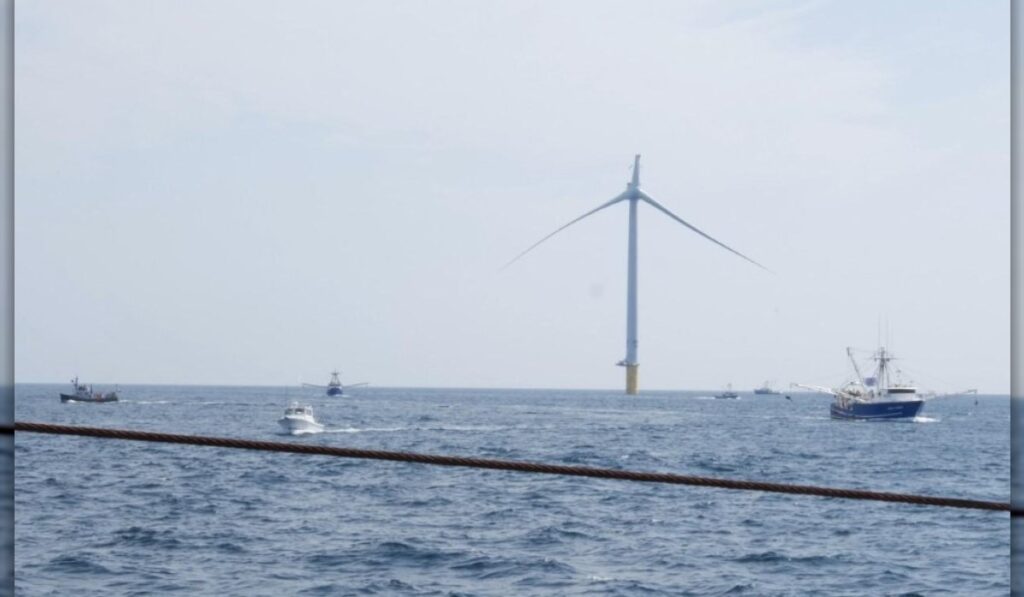
Vineyard Wind and GE Vernova have ended their bitter legal battle over the 806MW offshore wind project off Massachusetts, allowing the troubled development to resume full operations after nearly two years of delays and courtroom clashes.
The amicable settlement, announced on 16 September, sees GE Vernova withdraw its February termination notice and abandon all outstanding legal claims. The financial terms remain confidential, but the deal resolves a dispute that threatened to derail one of the US’s first large-scale offshore wind farms.
Why the dispute erupted, and how the courts intervened: Vineyard Wind
The conflict began when GE Vernova, the turbine supplier, claimed Vineyard Wind owed more than $300 million under contracts covering supply, installation, and maintenance. The company issued a termination notice in February 2024, arguing that unpaid bills left it no choice but to walk away from the project.
Natural Gas
Vineyard Wind, however, countered that it was entitled to withhold $308 million, citing costs linked to turbine defects and delays. The developer pointed to a 2024 incident in which a turbine blade failed, sending debris into waters near Nantucket. Inspections and replacement work, Vineyard Wind said, had contributed to around two years of setbacks.
The dispute highlighted broader challenges in the offshore wind sector, where contractual disagreements over performance guarantees and defect liabilities have become increasingly common. GE Vernova’s Haliade-X turbines, while among the most powerful in the market, have faced scrutiny over reliability issues in other projects, further complicating negotiations.
A Massachusetts Superior Court sided with Vineyard Wind in April, granting a preliminary injunction that blocked GE Vernova from terminating its role. Judge Peter Krupp ruled that the project’s viability depended on GE’s expertise, warning that Vineyard Wind “continues to be at risk of losing financing for the Project.” GE Vernova’s subsequent appeal was also denied, forcing the company to continue work while litigation proceeded.
The role of joint venture partners and regulatory pressures
Vineyard Wind is a 50:50 joint venture between Avangrid, a subsidiary of Spain’s Avangrid, and Copenhagen Infrastructure Partners (CIP), a Danish fund manager specialising in renewable energy investments. Both partners have significant stakes in the project’s success, with Avangrid also involved in other US offshore wind developments, including the 800MW Park City Wind project in Connecticut.
The project has faced regulatory hurdles since its inception, including opposition from the Trump administration, which sought to halt construction in 2020. However, a federal judge ruled in Vineyard Wind’s favour in 2024, allowing the project to proceed. Massachusetts state officials have since prioritised the development as part of the state’s clean energy transition, setting a target of 5.6GW of offshore wind capacity by 2035.
The settlement also reflects the growing influence of state-level mandates in driving offshore wind projects forward. Massachusetts, along with other New England states, has committed to reducing greenhouse gas emissions by 50% by 2030, with offshore wind playing a central role in achieving these targets. Vineyard Wind project alone is expected to contribute significantly to these goals, with an annual carbon emissions reduction equivalent to removing 325,000 cars from the road.
With all 62 Haliade-X 13MW turbines now operational, Vineyard Wind is capable of supplying electricity to more than 400,000 homes and businesses across Massachusetts and New England. The project, located 24 kilometres (15 miles) south of Nantucket, has already generated nearly 4,000 jobs and $1.94 billion in economic output.
The settlement removes a major obstacle for the offshore wind sector, which has faced mounting challenges in the US, including supply chain disruptions, rising costs, and regulatory hurdles. Vineyard Wind’s ability to bring the project online, despite the legal turmoil, could serve as a template for other developers navigating similar disputes. However, the sector remains under pressure to demonstrate long-term reliability, particularly as larger projects come online.
In a joint statement, the companies confirmed the project is now “capable of producing power, providing reliable, affordable energy to more than 400,000 homes and businesses while bolstering grid stability across the Commonwealth.” The agreement also paves the way for Vineyard Wind to meet its environmental targets, including a projected annual reduction of 1.6 million tonnes of carbon emissions, equivalent to taking 325,000 cars off the road.
The resolution comes at a critical time for the US offshore wind industry, which is racing to meet state and federal clean energy mandates. Biden administration has set a target of 30GW of offshore wind capacity by 2030, a goal that will require significant investment and coordination among developers, suppliers, and regulators. Vineyard Wind’s success in overcoming its legal and technical challenges could provide a blueprint for future projects, but the industry must still address broader issues, such as supply chain bottlenecks and workforce shortages.
For stakeholders in Massachusetts and beyond, the settlement offers a rare moment of stability in an industry plagued by uncertainty. The project’s completion marks a milestone for the state’s clean energy ambitions, but the focus now shifts to ensuring the turbines operate at full capacity without further disruptions. Developers and suppliers will need to collaborate closely to avoid future disputes, particularly as the sector scales up to meet growing demand.
Vineyard Wind project is a key component of Massachusetts’ strategy to transition away from fossil fuels and reduce its reliance on natural gas. The state’s electricity grid, which has historically depended on gas-fired power plants, stands to benefit from the additional capacity provided by offshore wind, particularly during peak demand periods.
For consumers, the project could help stabilise energy prices by diversifying the state’s power sources. Offshore wind, once fully integrated into the grid, is expected to provide a more predictable and sustainable energy supply compared to fossil fuels, which are subject to price volatility. However, the long-term impact on electricity bills remains uncertain, as the costs of offshore wind development are still being absorbed by ratepayers and taxpayers.
The project’s economic benefits extend beyond energy production. Vineyard Wind has already created nearly 4,000 jobs, ranging from construction and engineering roles to ongoing maintenance positions. The $1.94 billion in economic output generated to date includes investments in local infrastructure, supply chain development, and workforce training programmes. These benefits are expected to continue as the project enters its operational phase.
Looking ahead, the success of Vineyard Wind could encourage further investment in offshore wind along the US East Coast. States such as New York, New Jersey, and Virginia have already committed to developing their own offshore wind projects, with a combined capacity of over 10GW in the pipeline. The resolution of the Vineyard Wind dispute may provide reassurance to investors and developers, but the industry must still address challenges such as transmission infrastructure and grid integration to fully realise its potential.
While the settlement resolves the immediate legal dispute, both Vineyard Wind and GE Vernova will need to focus on ensuring the long-term reliability of the turbines. The project’s performance will be closely monitored by state regulators, who have set strict benchmarks for energy production and grid stability. Vineyard Wind has committed to providing regular updates on the project’s progress through its official website and public reports.
For those interested in tracking the project’s development, Vineyard Wind’s website (www.vineyardwind.com) offers detailed information on energy production, environmental impact, and job creation. The Massachusetts Department of Energy Resources (www.mass.gov/orgs/energy-facilities-siting-board) also provides updates on the state’s clean energy initiatives, including offshore wind projects.
The settlement underscores the importance of collaboration between developers, suppliers, and regulators in delivering large-scale renewable energy projects. As the US offshore wind sector continues to grow, the lessons learned from Vineyard Wind’s challenges and successes will be critical in shaping the industry’s future. For now, the focus remains on delivering clean, reliable energy to hundreds of thousands of homes and businesses, while setting a precedent for future developments.


Sign up free to ask CAMAL AI for a summary, the key points or anything else about this story.
Related stories
CAMAL AI
 Financial Ports Newsletter
The maritime economy, every morning
Ports, shipping and freight markets in one short email. Free.
Financial Ports Newsletter
The maritime economy, every morning
Ports, shipping and freight markets in one short email. Free.



