

USS St. Louis Deployed to Stem $6bn Drug Flow at U.S. Southern Border
Freedom-class littoral combat ship USS St. Louis (LCS 19) joins U.S. Northern Command’s maritime interdiction mission.
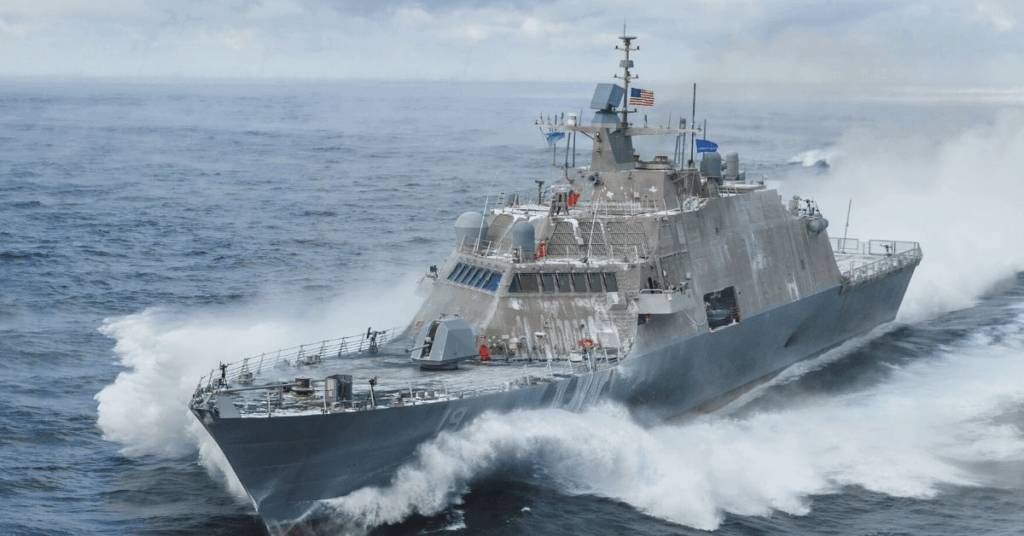
The US Navy’s Freedom-class littoral combat ship USS St. Louis (LCS 19) has departed Naval Station Mayport, Florida, to bolster maritime interdiction efforts along America’s southern border, targeting illicit drug trafficking in a mission coordinated with US Northern Command (USNORTHCOM).
The deployment, which began on September 13, 2026, marks the latest phase in a sustained naval operation to secure the US maritime frontier. USS St. Louis assumes duties previously performed by USS Cooperstown (LCS 23), continuing a rotational strategy to maintain persistent surveillance and interdiction capabilities in high-risk zones.
Why the US Navy is Deploying Littoral Combat Ships to the Southern Border: USS St
The Littoral Combat Ship (LCS) class, to which USS St. Louis belongs, is specifically designed for operations in near-shore environments, precisely where traffickers exploit gaps in surveillance. USS St. Louis, the 10th Freedom-variant LCS to join the fleet, is the 22nd ship of its class delivered to the Navy and the 7th to bear the name St. Louis.
Royal Caribbean
Cmdr. Lester Shewmake, the ship’s commanding officer, underscored the crew’s preparedness in a statement:
“Our crew has trained relentlessly for this deployment, and they stand ready for whatever challenges lie ahead. I could not be more proud to lead these Sailors. To our families and the Mayport community, thank you for your unwavering support as we head to sea.”
Cmdr. Lester Shewmake·Commanding Officer, USS St. Louis
The ship’s namesake carries historical weight. The first USS St. Louis, a sloop of war launched in 1828, patrolled the same waters nearly two centuries ago as flagship of the West Indies Squadron, tasked with suppressing piracy in the Caribbean and Gulf of Mexico. Today’s St. Louis inherits that legacy, albeit with 21st-century technology and a mandate to counter modern threats.
How This Deployment Fits Into Broader US Maritime Security Strategy
USS St. Louis operates under the command of Littoral Combat Ship Squadron (LCSRON) 2 and is homeported in Mayport, Florida. Its deployment is part of a broader US Navy strategy to leverage modular, adaptable platforms for homeland defence missions. The LCS class is uniquely suited to these operations, capable of operating independently or as part of a larger battle force that includes cruisers and destroyers in high-threat scenarios.
USNORTHCOM’s maritime component, US Naval Forces Northern Command (NAVNORTH), oversees these efforts through Maritime Command Element-East (MCE-East), a structure designed to provide operational planning and command-and-control support. MCE-East ensures seamless coordination between naval assets and other federal agencies, including the Coast Guard and Customs and Border Protection, to maximise interdiction effectiveness.
For maritime stakeholders and border security analysts, the deployment offers a case study in how modern navies adapt to asymmetric threats. Unlike traditional naval warfare, interdiction missions require a blend of surveillance, intelligence-sharing, and rapid response, capabilities that the LCS class is designed to deliver.
Louis settles into its patrol zone, its success will be measured not just in seizures or arrests, but in its ability to deter traffickers from exploiting maritime routes. For the crew, the mission is clear: disrupt the flow of illicit drugs and protect the homeland. For the US Navy, it’s another test of whether its littoral combat ships can live up to their promise as versatile, mission-focused platforms in an era of evolving threats.
The next phase of the operation will likely see USS St. Louis conducting joint exercises with partner agencies, refining tactics for detecting and intercepting smuggling vessels. With no immediate end date announced, the ship’s deployment could extend for several months, depending on operational demands and the evolving security landscape along America’s southern maritime border.


Sign up free to ask CAMAL AI for a summary, the key points or anything else about this story.
Related stories
CAMAL AI
 Financial Ports Newsletter
The maritime economy, every morning
Ports, shipping and freight markets in one short email. Free.
Financial Ports Newsletter
The maritime economy, every morning
Ports, shipping and freight markets in one short email. Free.



