

US Strikes Two Iranian Tankers: The New ‘Tanker-for-Tanker’ Doctrine
Washington enforces its ‘tanker-for-tanker’ policy after IRGC attacks on commercial shipping in the Strait of Hormuz.
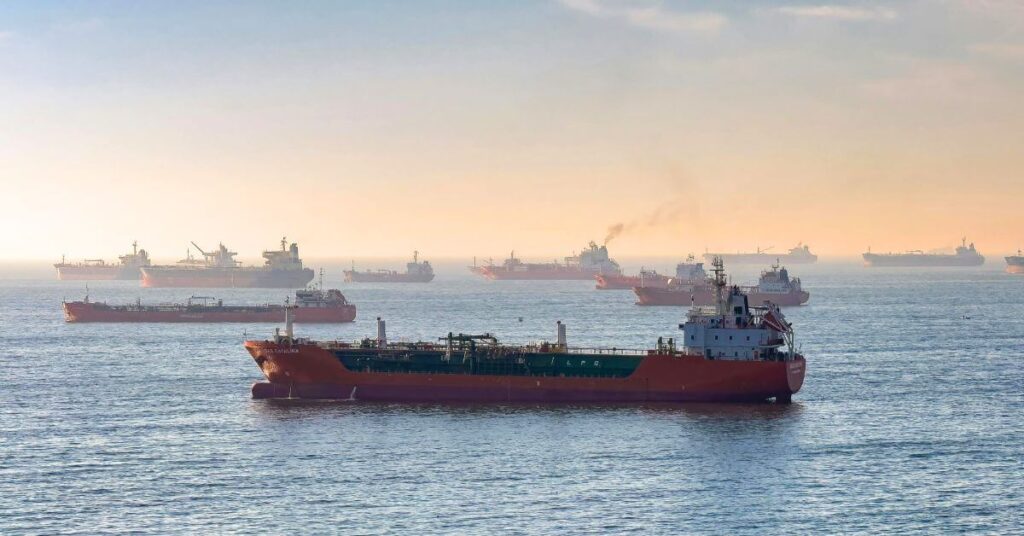
The U.S. military conducted strikes on two Iranian government-owned tankers in the Strait of Hormuz on Tuesday, marking the first reported instance of Washington directly targeting Tehran’s vessels in retaliation for attacks on commercial shipping in the region.
The operation, executed by U.S. drones, focused on the tankers’ engine rooms while the ships were anchored off Iran’s coast, north of the American naval blockade line. According to U.S. officials, the strikes were part of a broader military action that hit approximately 100 targets in Iran, including Islamic Revolutionary Guard Corps (IRGC) air defense sites, communications infrastructure, mine-laying capabilities, radar systems, and launchers for attack drones and anti-ship cruise missiles.
Escalation in the Strait of Hormuz
The attacks followed a new policy approved by President Donald Trump, described as a “tanker-for-tanker” strategy. Under this approach, the U.S. aims to deter Iranian aggression by targeting Iranian tankers in response to attacks on ships transiting the Strait of Hormuz. A U.S. official stated the operation was designed to reduce the risk of Iranian strikes on oil tankers, U.S. Navy vessels, and American aircraft in the region.
Iran retaliated swiftly, launching 25 ballistic missiles, with about half reaching Jordanian airspace. U.S. officials reported that 10 missiles were intercepted, while three landed without causing casualties. Tehran also deployed two dozen drones at U.S. bases in Bahrain, most of which were intercepted. Additional drone and missile strikes targeted U.S. facilities in Kuwait and Erbil, Iraq, though none caused significant damage.
The exchange of fire came after a weekend of heightened tensions and attacks on two tankers leaving the Strait of Hormuz on Monday. Despite the conflict, U.S. forces continued to guide commercial vessels through the waterway. On Tuesday, 40 ships carrying millions of barrels of oil passed through the strait, according to a U.S. official. The same official claimed the strikes had temporarily weakened Iran’s ability to threaten shipping, providing “at least a month” of reduced risk for commercial vessels.
Human and Strategic Consequences
The strikes also carried a human toll. Iranian media reported that a U.S. attack hit a wedding ceremony in the town of Kuhestak, killing at least four people and wounding 35. The Iranian Red Crescent confirmed five deaths and 50 injuries at a separate wedding near Sirik, a coastal area along the strait. Mehr news agency reported that a four-year-old child was among the fatalities, while IRNA cited a provincial official stating that 68 people were wounded in total.
U.S. Central Command (CENTCOM) maintained that its operations targeted military infrastructure, not civilians. A CENTCOM spokesman acknowledged awareness of the reports but did not confirm the civilian casualties. The White House and CENTCOM justified the strikes as a response to recent IRGC attempts to attack commercial ships in the strait and U.S. bases in the region.
The Strait of Hormuz remains one of the world’s most critical chokepoints for global oil supplies. While traffic continues to flow, the latest escalation underscores the fragility of the situation. With both sides vowing to respond to further provocations, the risk of broader conflict looms over a waterway that carries nearly a fifth of the world’s oil supply.


Sign up free to ask CAMAL AI for a summary, the key points or anything else about this story.
Related stories
CAMAL AI
 Financial Ports Newsletter
The maritime economy, every morning
Ports, shipping and freight markets in one short email. Free.
Financial Ports Newsletter
The maritime economy, every morning
Ports, shipping and freight markets in one short email. Free.



