

US Navy’s Virginia subs to carry nuclear cruise missiles by 2028
General Dynamics secures $194m to develop fire-control subsystem for Virginia-class attack submarines.
The programme, part of the Sea-Launched Cruise Missile-Nuclear (SLCM-N) initiative, aims to bolster the Navy’s strategic deterrence capabilities by no specified date.
The fire control subsystem, a cornerstone of the programme, acts as the interface between the submarine’s command systems and the missile itself, processing targeting data, coordinating launch sequences, and ensuring precision strikes.
We recognise the responsibility of developing a safe and reliable subsystem for a programme that will strengthen sea-based strategic deterrence.".
Of the total work, 75% is being carried out at General Dynamics’ Pittsfield, Massachusetts, facility, with the remaining 25% assigned to Manassas, Virginia. The company has also committed $1.3m to upgrade its facilities, including enhancements to support technical development and testing phases.
Virginia-class submarines: the backbone of US undersea warfare
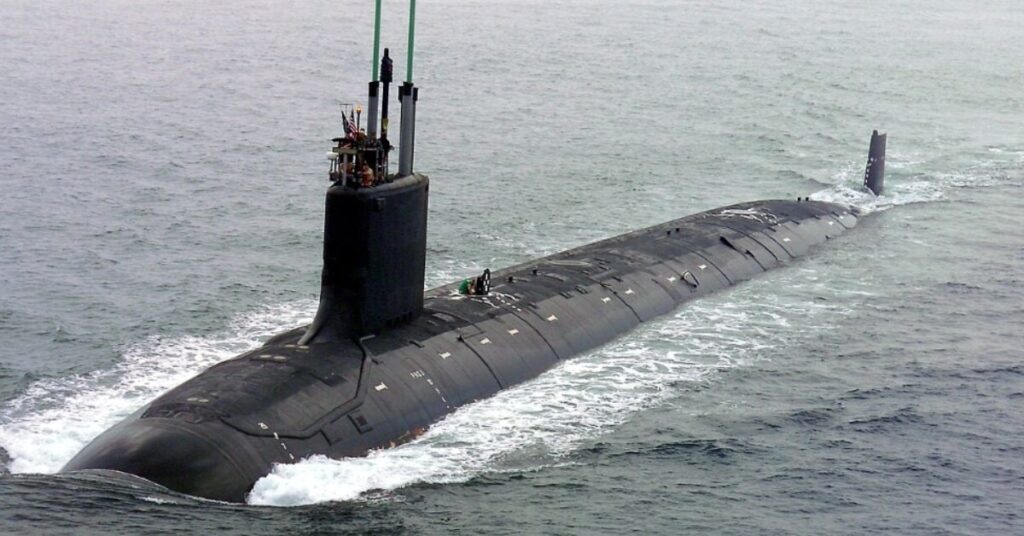
Virginia-class-class submarines are among the most advanced nuclear-powered attack platforms in the US Navy’s fleet, designed for a range of missions including anti-submarine warfare, intelligence gathering, surveillance, and precision land strikes. With 26 completed, 8 under construction, and 11 to 19 remaining in the pipeline, these vessels form a critical component of the Navy’s long-term strategy to maintain undersea dominance.
The integration of the SLCM-N system will further expand the submarines’ operational flexibility, allowing them to conduct strategic strikes while remaining undetected.
General Dynamics Mission Systems brings prior experience to the SLCM-N programme, having previously developed the Trident II Fire Control System, which supports the Navy’s submarine-launched ballistic missile (SLBM) arsenal. This expertise is expected to streamline the development of the new subsystem, ensuring compatibility with existing command-and-control infrastructure while meeting the Navy’s stringent safety and reliability standards.
Economic and strategic implications
The $194m contract is not only a technological milestone but also an economic boon for the regions involved. The programme is projected to create at least 200 new jobs, primarily in engineering and manufacturing, across General Dynamics’ facilities in Pittsfield and Manassas. The investment underscores the growing importance of domestic defence manufacturing in maintaining the US Navy’s competitive edge.
While the Navy has not released a detailed timeline for the missile’s operational deployment, the accelerated development schedule suggests a sense of urgency. The fire control subsystem’s successful integration will be a critical step in achieving full operational capability, though further testing and certification will be required before the missiles enter active service.
The SLCM-N programme is part of a broader effort to modernise the US Navy’s fleet, which includes the construction of next-generation aircraft carriers and the proposed Trump-class nuclear-powered battleships. Gerald R. Ford-class R. Ford-class carriers, the most advanced in the Navy’s inventory, feature cutting-edge technologies such as electromagnetic aircraft launch systems (EMALS) and advanced arresting gear, designed to enhance operational efficiency and reduce lifecycle costs.
The USS Gerald R. Ford (CVN 78), the lead ship of the class, is already operational, while the John F. Kennedy (CVN 79) is expected to achieve preliminary acceptance by 2026, with final delivery slated for spring 2027. HII’s Newport News Shipbuilding, the primary contractor for the Ford-class carriers, has also modified its dry-dock arrangements to support the simultaneous construction of the Enterprise (CVN 80) and Doris Miller (CVN 81), further accelerating the Navy’s shipbuilding efforts.
As the Navy continues to invest in both offensive and defensive capabilities, the integration of nuclear cruise missiles into Virginia-class submarines represents a pivotal development in its long-term strategy. The programme not only enhances the fleet’s deterrence posture but also signals a shift towards more flexible and adaptable undersea platforms, capable of addressing a wide range of threats in an increasingly complex security environment.
The next two years will be critical for the SLCM-N programme, with General Dynamics Mission Systems leading the charge in subsystem development. While the Navy has not disclosed specific milestones beyond the no specified date completion date, industry observers will be closely monitoring progress, particularly as global tensions continue to shape defence priorities. For now, the focus remains on delivering a safe, reliable, and effective system that meets the Navy’s operational requirements.


Sign up free to ask CAMAL AI for a summary, the key points or anything else about this story.
Related stories
CAMAL AI
 Financial Ports Newsletter
The maritime economy, every morning
Ports, shipping and freight markets in one short email. Free.



