

Tsakos unlocks $100m+ with suezmax sell-off: what’s next for its 26-ship
Greek owner Tsakos Energy Navigation raises over $100m from two 2006-built suezmax sales.
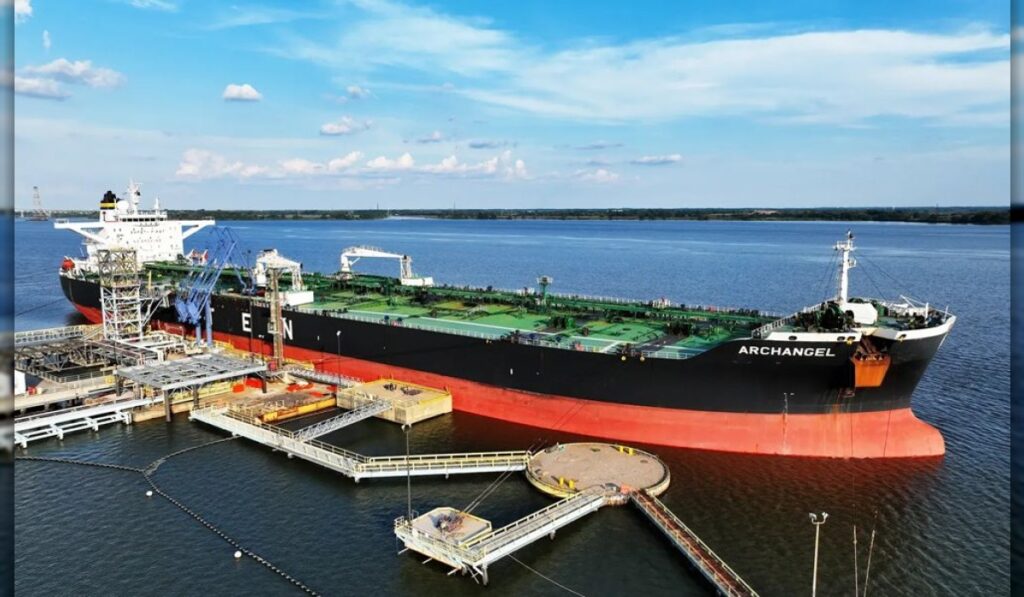
Tsakos Energy Navigation (TEN) has strengthened its financial position by selling two older suezmax tankers, generating over $100 million in cash. The New York-listed Greek shipping company confirmed the sale of the vessels, built in 2006, though it did not reveal the buyers or individual sale prices. Market sources identified the ships as the Archangel and Alaska, purchased by Daelon Fathomline and Zeythra Group, respectively.
The transaction aligns with TEN’s strategy of recycling older tonnage while expanding its fleet with newer, more specialized vessels. The company currently has 26 newbuildings on order, seven of which have already been delivered. Among these is a shuttle tanker constructed by Samsung Heavy Industries, which joined the fleet in late July. TEN reports $3.5 billion in minimum contracted revenue from its forward employment book.
TEN’s recent sales are part of a broader effort to modernize its fleet while securing long-term contracts. Earlier this year, the company extended the employment of two shuttle tankers by up to five years each, deals expected to generate over $200 million in gross revenue. As of April, its shuttle tanker operation included six vessels in service and 10 newbuildings in progress.
Tsakos Energy Navigation
Fleet modernization and revenue growth: suezmax sales
The company has also expanded into larger and more specialized segments. Last year, TEN increased its VLCC orderbook at Hanwha Ocean, and in early 2024, it returned to the LNG carrier newbuilding market after a seven-year absence. Following the latest sales, TEN’s fleet consists of 81 vessels, totaling approximately 10.5 million deadweight tons.
The $100 million-plus from the suezmax sales provides additional liquidity to support TEN’s ongoing expansion. With 19 newbuildings still to be delivered, the company is reinforcing its position in high-value sectors, including shuttle tankers, VLCCs, and LNG carriers. This fleet renewal strategy aims to balance immediate financial flexibility with long-term growth in specialized maritime markets.


Sign up free to ask CAMAL AI for a summary, the key points or anything else about this story.
Related stories
CAMAL AI
 Financial Ports Newsletter
The maritime economy, every morning
Ports, shipping and freight markets in one short email. Free.
Financial Ports Newsletter
The maritime economy, every morning
Ports, shipping and freight markets in one short email. Free.