

US Freight Market Shock: Tender Rejections Hit 14.32%—Why Shippers
FreightWaves’ SONAR data reveals an unprecedented post-Labor Day surge in US tender rejections.
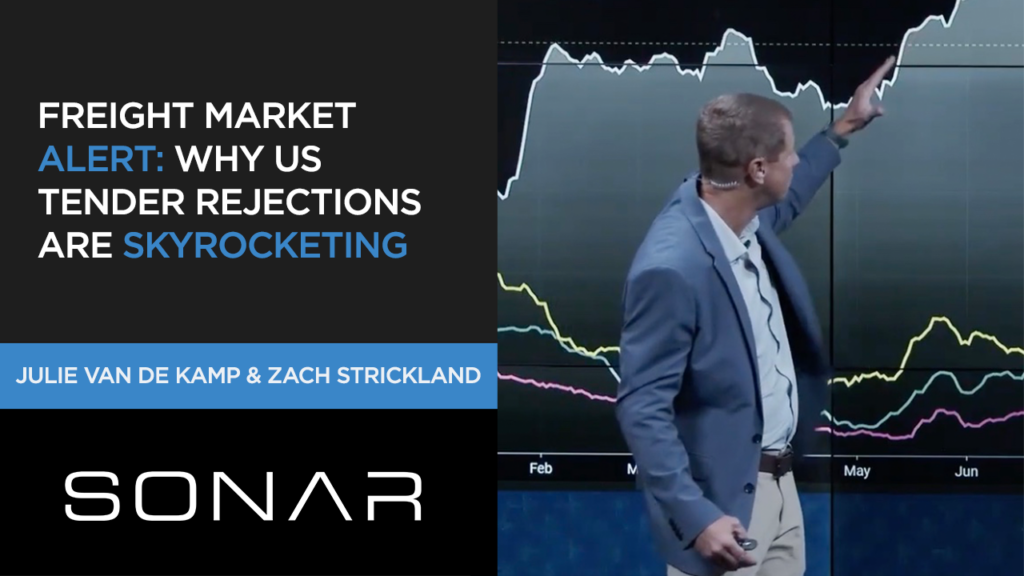
The US freight market is tightening at an unusual pace, with tender rejection rates surging to 14.32% in the days following Labor Day. The spike, captured by FreightWaves’ SONAR platform, marks a stark departure from the prolonged downturn that kept rejection rates below 5% for three consecutive years. Analysts warn the shift could signal higher spot rates ahead, with carriers already showing reluctance to accept loads across key freight corridors.
The national Outbound Tender Rejection Index, a critical barometer of carrier willingness to haul freight, climbed sharply after the holiday, defying typical seasonal patterns. Unlike past surges tied to tropical storms or road-check enforcement, this increase is widespread, affecting nearly every major freight market in the US. Dallas, Chicago, Atlanta, and Harrisburg, all critical logistics hubs, have registered deteriorating acceptance rates, while harvest-driven demand in Twin Falls, Idaho, Iowa, and the Dakotas is further straining refrigerated capacity.
Why This Surge Is Different, and What It Means for Shippers: tender rejection rates
FreightWaves analyst Zach Strickland described the post-Labor Day shipping surge as “probably the most aggressive” seen this year, attributing the spike to shippers releasing pent-up demand after the holiday. “This is very unusual. This is not seasonal. It’s a nuance in the market. You’ve got to watch it,” Strickland cautioned, emphasising the market’s fragility. Capacity growth has stagnated, leaving the system vulnerable to even modest demand swings, a structural weakness that could amplify rate volatility in the coming weeks.
Weighted Rejection Index, which adjusts for market share, shows a broad-based decline in carrier acceptance, with dry van rejections emerging as the primary driver. Refrigerated rejections are also rising in line with fall harvest demand, particularly in produce-heavy regions like Twin Falls. Meanwhile, flatbed rejections remain subdued, weighed down by weak housing starts and uncertainty around CHIPS Act-related construction spending. The divergence underscores the uneven recovery across trailer types, with dry van and refrigerated segments bearing the brunt of the tightening.
“I think one of the things that Craig and I talk about all the time is how fragile the market is. Capacity still has not grown in any meaningful way. Capacity itself is a very slow figure to change over time. It takes long stretches of time, hence the 3-year downturn that we had with the rejection rates all below 5%.”
Zach Strickland·FreightWaves Analyst
Spot Rates Poised to Rise as Rejections Lead the Way
Historically, tender rejection rates have served as a leading indicator for spot rate movements, and the current trend suggests shippers should prepare for higher costs. Strickland noted that the spot market is already showing signs of upward pressure, warning against expectations of a typical post-Labor Day rate rollover.
“Watch out on the spot market here. We’re already starting to see a little bit of a notch up,” he said. The absence of Atlantic hurricanes this September, a wildcard that often disrupts capacity, has removed a potential buffer, leaving the market more exposed to demand-driven tightening.
For shippers, the implications are clear: securing capacity may become more challenging in the near term, particularly for dry van and refrigerated loads. Brokers and carriers, meanwhile, will need to navigate a market where even small demand spikes can trigger outsized rate movements. The current environment also highlights the broader structural issues plaguing the freight sector, including slow capacity growth and persistent volatility.
Looking ahead, the focus will shift to how long the surge in rejections persists. If demand remains elevated, spot rates could continue climbing, squeezing margins for shippers already grappling with economic uncertainty. The next few weeks will be critical in determining whether this is a short-term correction or the beginning of a more sustained tightening phase. Industry stakeholders are advised to monitor SONAR data closely, particularly in high-demand corridors like the Southeast and Midwest, where capacity constraints are most acute.
For now, the message from analysts is unequivocal: the freight market’s fragility is on full display, and the post-Labor Day surge is a reminder that even modest demand shifts can have outsized consequences in an environment where capacity remains constrained.


Sign up free to ask CAMAL AI for a summary, the key points or anything else about this story.
Related stories
CAMAL AI
 Financial Ports Newsletter
The maritime economy, every morning
Ports, shipping and freight markets in one short email. Free.
Financial Ports Newsletter
The maritime economy, every morning
Ports, shipping and freight markets in one short email. Free.



