

Qatar LNG Tanker Breaks Hormuz Blockade: What It Means for Gas Prices
The Al Marrouna becomes the first Qatari LNG vessel to transit the Strait of Hormuz since July’s attacks sent global.
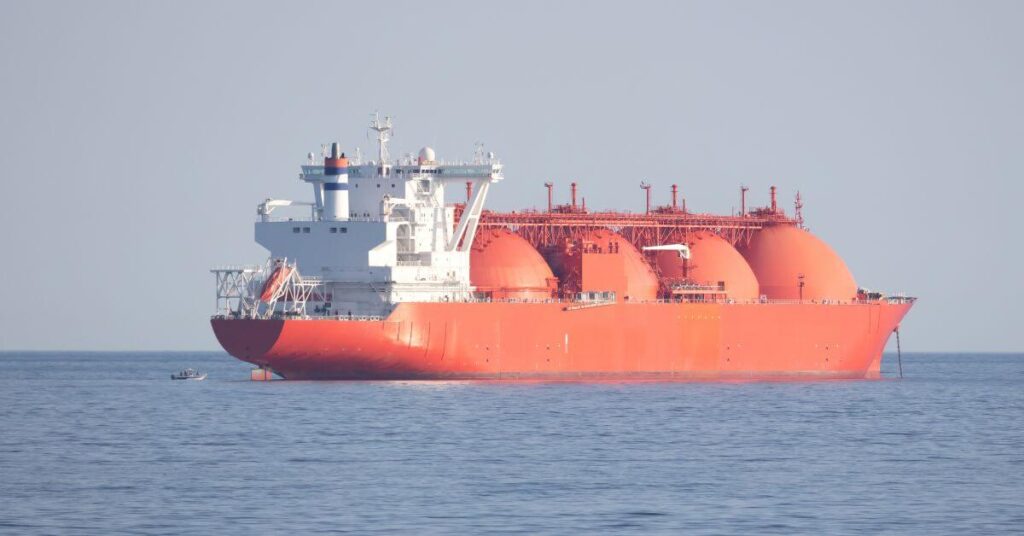
A Qatari LNG tanker has broken Iran’s blockade of the Strait of Hormuz, marking the first transit of a loaded Qatari vessel since July’s attacks sent global gas prices spiralling. The Al Marrouna, carrying a cargo from Qatar’s Ras Laffan terminal, was tracked in the Gulf of Oman on Tuesday morning, signalling a potential shift in the energy crisis gripping Asia and Europe.
The vessel, which loaded LNG in Qatar early last month, was en route to Port Qasim in Pakistan, with an expected arrival on Thursday, according to ship-tracking data compiled by Bloomberg. Its passage through the strait, one of the world’s most critical chokepoints for energy trade, comes as Iran and Oman edge closer to an agreement on managing shipping security, though analysts warn a single transit does not signal a full resumption of exports.
Qatar, the world’s top LNG exporter before the conflict, has kept its production running at minimum levels, loading gas onto empty tankers trapped inside the Persian Gulf. Some cargoes have been diverted to Kuwait, but the majority of its exports, roughly one-fifth of global supply, remain stranded. The disruption has sent shockwaves through energy markets, with Asian spot prices surging to $23.20 per mmBtu, their highest levels in more than three years.
Natural Gas
Why This Single Tanker Could Ease Asia’s Gas Shortage: strait of hormuz
The Al Marrouna’s voyage is more than a symbolic gesture. South Asia, particularly Pakistan and India, has faced severe shortages amid the blockade, with power blackouts and industrial slowdowns reported in recent weeks. A single Qatari cargo can supply enough gas to power millions of homes for days, offering temporary relief to buyers grappling with record prices.
However, the broader picture remains fragile. QatarEnergy, the state-owned energy giant, last month extended force majeure on LNG deliveries to European and Asian buyers into October, citing the ongoing risks in the strait. While the company has not halted production entirely, keeping its massive export facilities at Ras Laffan running at reduced capacity, restarting full-scale exports would require a sustained easing of tensions.
Bogdan Ratiu, commercial and shipping director at LNG Synergy, described the current situation as a “constraint with no easy alternatives.”
“This is a constraint, they have no choice in certain situations. Ship-to-ship transfers add over $1 million per operation and delay deliveries by days, but for buyers in South Asia, even delayed cargoes are better than none.”
Bogdan Ratiu·Commercial and Shipping Director, LNG Synergy
The Costly Workarounds Keeping LNG Flowing
With the Strait of Hormuz effectively shut since the ongoing conflict, Qatar and the UAE have resorted to emergency ship-to-ship (STS) transfers to keep gas moving. In August alone, three LNG cargoes were transferred between vessels off the coasts of Oman and the UAE, a logistically complex and expensive process that can take up to 35 hours per operation.
Two of these transfers involved damaged tankers. The Al Rekayyat, a QatarEnergy-run vessel struck by a projectile near the strait in early July, offloaded its cargo to the Tembek off the UAE coast before the LNG was delivered to India’s Dahej terminal. Similarly, the GasLog Shanghai, damaged while exiting Hormuz in late July, transferred its cargo to the GasLog Savannah off Oman, while the Mraweh, controlled by the UAE’s ADNOC, passed its load to the LNG Enugu en route to Japan.
These operations require specialised cryogenic equipment, tugboats, and trained personnel, making them a last resort for exporters. “Most of these transfers are emergency measures, not routine commercial practice,” Ratiu noted. “The market is paying the price in higher costs and delays.”
Despite the Al Marrouna’s transit, LNG shipments leaving the Persian Gulf remain well below pre-conflict levels of about three per day. Several empty Qatari tankers have been spotted moving back toward the Gulf, suggesting preparations for more exports, but industry observers caution against premature optimism. Iran’s statement on Monday that an agreement with Oman on strait security was “close” offers a glimmer of hope, but the region’s volatile geopolitics mean any progress could be swiftly undone.
For now, the Al Marrouna’s voyage is a rare bright spot in a market starved for supply. If more tankers follow, the impact on prices could be swift, but with the conflict showing no signs of abating, buyers and traders are bracing for further turbulence.


Sign up free to ask CAMAL AI for a summary, the key points or anything else about this story.
Related stories
CAMAL AI
 Financial Ports Newsletter
The maritime economy, every morning
Ports, shipping and freight markets in one short email. Free.
Financial Ports Newsletter
The maritime economy, every morning
Ports, shipping and freight markets in one short email. Free.



