

Iran’s ‘Exclusion Zone’ Threat Shakes Strait of Hormuz Traffic
Tehran announces a maritime blockade zone after claiming strike on unmanned U.S. vessel.
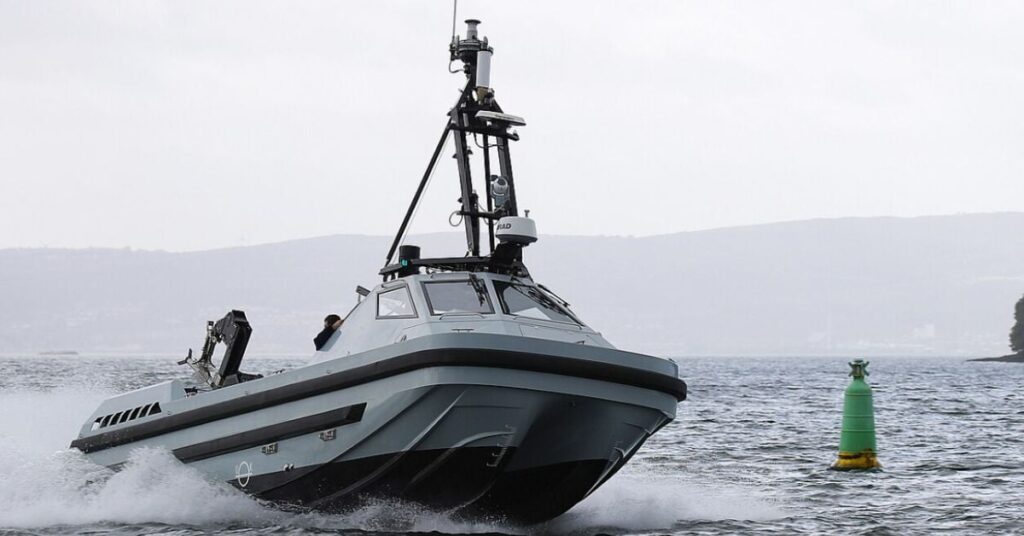
Iran’s claim to have struck an unmanned U.S. vessel in the Strait of Hormuz has escalated tensions in one of the world’s most critical maritime chokepoints, with the U.S. military dismissing the assertion as a “total lie” and warning of further disruption to global shipping.
The Iranian Revolutionary Guard Corps (IRGC) announced on Sunday that it had targeted a U.S. The claim, however, was swiftly rejected by Capt. Tim Hawkins, spokesperson for U.S. Central Command (CENTCOM), who called the report “a fabrication with no basis in reality.".
The Strait of Hormuz: A Flashpoint for Global Trade
Any disruption, whether through military action, blockades, or exclusion zones, could send shockwaves through global supply chains, driving up fuel prices and destabilising economies.
Iran’s latest move comes amid a resurgence of hostilities after a brief lull in fighting. Just days earlier, the U.S. Navy warships.
Iran’s Exclusion Zone Plan Raises Stakes
Adding to concerns, Iran’s Supreme National Security Council announced plans to establish an exclusion zone outside the Strait of Hormuz, targeting vessels it believes are attempting to breach its restrictions. Mohsen Rezaei, the council’s new head, told state media the zone would extend from the line of the U.S. naval blockade toward the Strait and into the Persian Gulf, though few details were provided about its implementation or enforcement.
“The era of ‘proportionate responses’ was over,” declared Iranian parliament speaker Mohammad Bagher Qalibaf, warning that Tehran’s retaliation would be “faster, heavier, and more painful.” The rhetoric underscores the fragility of the current standoff, which has seen attacks on commercial shipping surge since the collapse of a fragile ceasefire in June.
Since the war began on February 28 with U.S. and Israeli strikes on Iran, the conflict has claimed at least five lives in a recent U.S.
Meanwhile, diplomatic efforts have stalled, with the U.S., Britain, France, and Germany pushing to refer Iran to the U.N. Security Council for violating nuclear nonproliferation obligations.
For the maritime industry, the stakes could not be higher. The Strait of Hormuz is not just a transit route for oil; it is a lifeline for global trade. Any prolonged disruption would force vessels to reroute around Africa, adding weeks to voyages and driving up freight costs.
“If Iran follows through on its exclusion zone, we could see a return to the kind of shadow fleet tactics it used during previous sanctions regimes, only this time, with far greater risks of miscalculation.".
“This is a total lie. The U.S. military has not been attacked as claimed by Iran, and these assertions are part of a broader pattern of disinformation aimed at justifying further aggression.”
Capt. Tim Hawkins·Spokesperson for U.S. Central Command
As tensions rise, the international community faces a stark choice: push for renewed diplomacy or risk a wider conflict that could paralyse global energy markets. With Iran vowing to announce its exclusion zone in the coming days, the next 48 hours may prove decisive in determining whether the Strait of Hormuz remains open, or becomes the epicentre of a new maritime war.
For now, shipping companies and insurers are bracing for impact. The U.S. Navy’s Fifth Fleet, based in Bahrain, has increased patrols in the region, while the European Union’s maritime security mission, EMASOH, has urged vessels to exercise extreme caution. With no end in sight to the hostilities, the world’s most critical waterway hangs in the balance.


Sign up free to ask CAMAL AI for a summary, the key points or anything else about this story.
Related stories
CAMAL AI
 Financial Ports Newsletter
The maritime economy, every morning
Ports, shipping and freight markets in one short email. Free.
Financial Ports Newsletter
The maritime economy, every morning
Ports, shipping and freight markets in one short email. Free.



