

One Dead, One Missing as Tanker Attack Rocks Strait of Hormuz
A Gibraltar-flagged oil tanker was hit off Dubai, sending Brent crude above $100 for the first time since July.
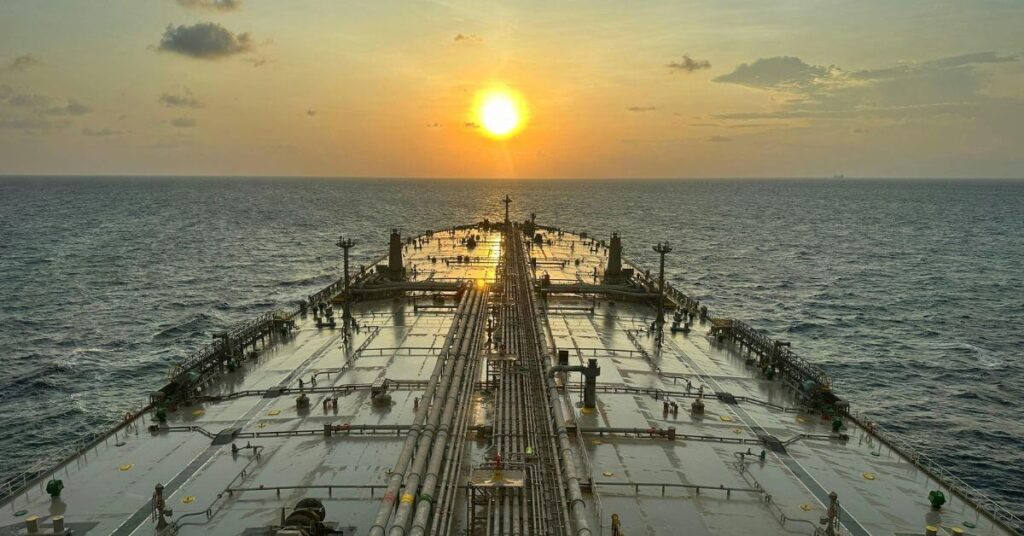
The Hercules Star, chartered by Peninsula, was struck on Wednesday in what maritime security sources described as a possible drone attack. Peninsula confirmed one fatality and one missing crew member, adding that a specialist team is conducting a search operation. The company did not disclose the cause of the incident but stated that all other crew members have been accounted for.
The Hercules Star was at anchor when the incident occurred, according to Peninsula. While the company has not confirmed whether the vessel was attacked or hit by a drone, maritime security sources suggested that the damage was consistent with an aerial strike. The UK Maritime Trade Operations (UKMTO) reported a separate incident involving a vessel listing approximately 24 nautical miles off the UAE’s Port Rashid, possibly due to water ingress following an attack from an unknown projectile.
Peninsula, the charterer of the Hercules Star, issued a statement expressing deep sadness over the fatality and confirming that a specialist team is working to locate the missing crew member. The company has not provided further details about the incident, but the timing aligns with a broader escalation in maritime hostilities. Iran’s Revolutionary Guard Corps claimed responsibility for attacking 10 ships near the Strait of Hormuz after the US military destroyed five Iranian oil tankers.
naval ships, and for every time they do that or try to do that, they’re going to lose tankers.".
The Broader Impact on Global Shipping and Energy Markets: strait of hormuz
In a separate incident on Wednesday, a tanker carrying approximately 2 million barrels of Iraqi oil was struck by a drone in Iraq’s territorial waters. The surge in prices reflects growing concerns about the stability of energy supplies, particularly as the conflict shows no signs of abating.
Iran’s Revolutionary Guard Corps has threatened to escalate its response to further attacks, announcing plans to release maps of a new restricted maritime zone extending as far as Chabahar, near Pakistan. The announcement has raised alarms among shipping companies and insurers, who are already grappling with the risks of operating in the region.
The US has responded to Iran’s actions with a series of strikes on Iranian vessels, with US Central Command confirming the destruction of five Iranian oil tankers overnight. The tit-for-tat attacks have created a volatile environment for commercial shipping, with many companies rerouting vessels or suspending operations in the area.
The conflict has also spilled over into other regions, with Iran firing ballistic missiles at a US military base in Jordan. Jordanian authorities reported intercepting 18 missiles, while two others landed harmlessly in unpopulated areas. A US official confirmed that all American troops were accounted for, but the attack underscored the broader geopolitical stakes of the conflict. President Donald Trump weighed in on the situation, suggesting that Iran’s actions were an attempt to influence the upcoming US midterm elections.
“I think war is going to end immediately after the election because they can’t hold out any longer. They’re desperate to try and affect the election.”
Donald Trump·President of the United States
The escalation in maritime hostilities has prompted calls for increased naval patrols and escort operations to protect commercial vessels. The UKMTO and other maritime security organisations have urged shipping companies to exercise extreme caution when transiting the Strait of Hormuz and surrounding waters. Insurers have also responded by raising premiums for vessels operating in the region, further increasing the cost of shipping through one of the world’s most critical trade routes.
For the families of the seafarers aboard the Hercules Star, the incident is a stark reminder of the dangers faced by those working in the maritime industry. The missing crew member’s whereabouts remain unknown, and the search operation continues. Meanwhile, the broader conflict shows no signs of de-escalation, with both Iran and the US digging in for a prolonged standoff that threatens to disrupt global trade and energy markets for months to come.
The next few weeks will be critical in determining whether the conflict can be contained or whether it will spiral into a broader regional crisis. Shipping companies, insurers, and governments will be closely monitoring developments, particularly as the US midterm elections approach. For now, the Strait of Hormuz remains a tinderbox, with the potential to ignite a wider conflict that could have far-reaching consequences for the global economy.


Sign up free to ask CAMAL AI for a summary, the key points or anything else about this story.
Related stories
CAMAL AI
 Financial Ports Newsletter
The maritime economy, every morning
Ports, shipping and freight markets in one short email. Free.
Financial Ports Newsletter
The maritime economy, every morning
Ports, shipping and freight markets in one short email. Free.