

South Korea bets big: 45 GW offshore wind by 2040 under state control
Seoul shifts site selection from developers to government, targeting 25 GW of preliminary zones by 2031
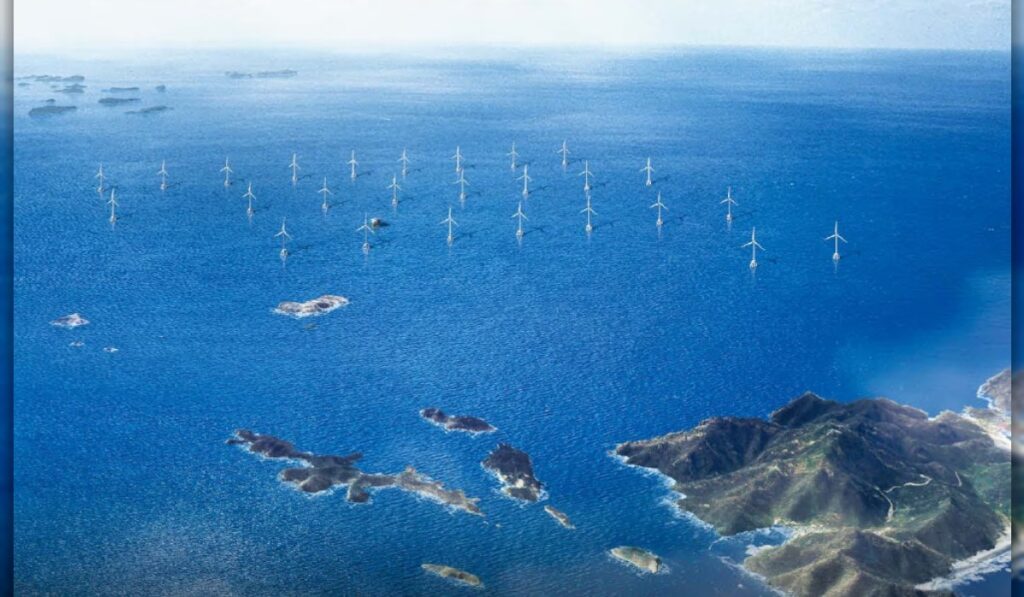
South Korea has torn up its offshore wind playbook, handing site selection to the state and setting a 25 GW target for preliminary development zones by 2031.
The government will now identify suitable areas using wind-resource, environmental, fisheries, maritime traffic and military data before securing local acceptance and selecting developers. The first preliminary zone is due before the end of 2024, with projects potentially entering operation from 2033.
Why the state is taking charge of offshore wind siting: offshore wind capacity
The new system, anchored in the Special Act on Offshore Wind Farm Promotion, replaces the old open-door approach with a government-directed model designed to accelerate deployment.
Hanwha Ocean
The act’s most significant mechanism is the one-stop shop provision, which allows up to 42 development-related licenses and permits to be obtained simultaneously upon approval of a single application. The law also mandates that public entities hold at least 50% equity in offshore wind projects, a condition that shaped the recent tender for the 800 MW Jeonbuk Southwest 1 project.
Jeonbuk Southwest 1: the first test of the new offshore wind regime
The 800 MW Jeonbuk Southwest 1 project, located off the coast of Buan County in North Jeolla Province, is the first major tender under the new regime. June 29, 2026, a state-led consortium anchored by Korea Hydro & Nuclear Power (KHNP), the country’s largest power generator, was named preferred bidder.
The consortium includes ten members spanning energy, manufacturing, finance, and maritime industries: Hanwha Ocean, Doosan Enerbility, Korea East-West Power, KEPCO KPS, KEPCO Engineering & Construction, IBK Financial Group, KB Financial Group, Samil C&S, and Jungang Ocean Heavy Industries.
The group was evaluated against three criteria: public interest, business execution capability, and regional co-prosperity. It scored highest across all three, securing the project ahead of an August 2026 deadline for the implementation agreement. The 800 MW project is the first phase of a planned 2.4 GW complex, with the remaining capacity expected to follow under the same government-directed framework.
The Jeonbuk tender underscores the structural necessity of state involvement. The 50% public equity requirement, now enshrined in law, made a public-institution-led bid the only viable option. This marks a stark departure from the previous era, where developers bore the full burden of site selection, permitting, and local engagement.
The 25 GW of preliminary zones targeted by 2031 are expected to underpin around 20 GW of additional offshore wind capacity, a critical step toward the country’s 2040 target of 45 GW.
The emphasis on regional co-prosperity in the Jeonbuk tender suggests that projects will be evaluated not just on their technical merits but on their ability to deliver tangible benefits to nearby populations. This could include job creation, infrastructure investment, and revenue-sharing agreements, though the specifics remain to be seen.
The clock is ticking. With the first preliminary zone due by the end of 2024 and the Jeonbuk Southwest 1 project’s implementation agreement deadline looming in August 2026, South Korea’s offshore wind sector is entering a period of rapid transformation. Success will hinge on the government’s ability to balance speed with scrutiny, ensuring that the new regime delivers on its promise without sacrificing environmental or social safeguards.
For the global offshore wind industry, South Korea’s experiment is one to watch. If the country can turn its ambitious targets into reality, it could redefine how nations approach offshore wind development, moving from a developer-led free-for-all to a state-coordinated sprint toward a greener future.


Sign up free to ask CAMAL AI for a summary, the key points or anything else about this story.
Related stories
CAMAL AI
 Financial Ports Newsletter
The maritime economy, every morning
Ports, shipping and freight markets in one short email. Free.
Financial Ports Newsletter
The maritime economy, every morning
Ports, shipping and freight markets in one short email. Free.