

Skip to content
Ports
Monday, 7 September 2026 · 11:10 · Morocco ·
World Trade Pulse▼ -5.3%seaborne trade this week · 4,659 port calls a dayIMF PortWatch
Shipping

17,000-DWT Semi-Liner MPP Design Unveiled: The Future of Flexible Shipping?

Deltamarin and Toepfer Transport reveal a 17,000-tonne multipurpose vessel design.
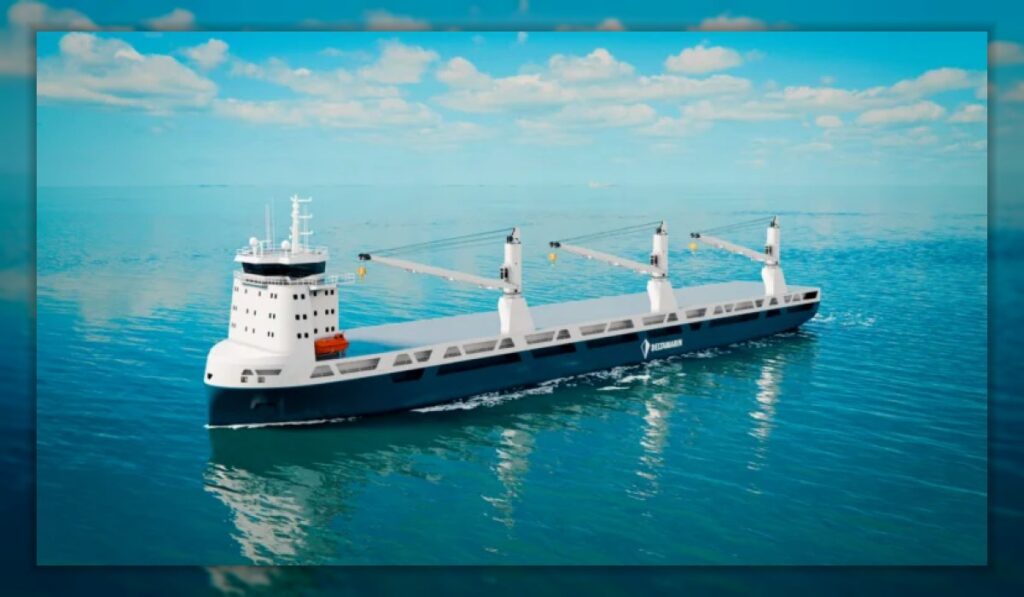
semi-liner mpp design
Deltamarin and Toepfer Transport unveil their Semi-Liner MPP design at SMM 2026 in Hamburg.

A groundbreaking new Semi-Liner Multipurpose (MPP) vessel design has been unveiled by Deltamarin and Toepfer Transport at SMM in Hamburg, promising to redefine flexibility and efficiency in the shipping industry. The design, tailored for adaptability, combines high cargo flexibility with streamlined operations, offering shipowners a customisable solution for diverse trades and cargo requirements.

With a deadweight of approximately 17,000 tonnes, the Semi-Liner MPP design is engineered to handle a wide range of cargo types, from breakbulk to project cargo. The vessel features three 80-tonne cranes as standard, with the option to upgrade to three 250-tonne cranes for heavier lifts, ensuring it can meet the demands of even the most complex cargo operations. A forward-positioned bridge, Ice Class 1A certification as an option, and a flush cargo deck further enhance its versatility, making it suitable for operations in challenging environments, including the Great Lakes.

Deltamarin and Toepfer Transport: A Partnership Built on Expertise: semi-liner mpp design

Deltamarin, the Finnish ship design and engineering firm behind this innovative concept, has long been a leader in developing cutting-edge maritime solutions. With a portfolio that includes everything from container ships to offshore vessels, Deltamarin’s expertise in optimising vessel performance and operational efficiency is well-established. The company’s focus on sustainability and digitalisation has also positioned it at the forefront of the industry’s transition towards greener and smarter shipping solutions.

Toepfer Transport, meanwhile, brings a wealth of market intelligence to the collaboration. As a specialist in multipurpose and general cargo shipping, the Hamburg-based company has a deep understanding of the operational challenges and opportunities in the sector. Its insights into cargo flows, port infrastructure, and customer requirements have been instrumental in shaping the Semi-Liner MPP design into a vessel that is not only versatile but also commercially viable.

The partnership between Deltamarin and Toepfer Transport underscores the importance of combining technical innovation with market-driven insights. By leveraging their respective strengths, the two companies have created a design that addresses the evolving needs of the shipping industry, particularly in segments where flexibility and efficiency are paramount.

Why This MPP Design Stands Out in the Shipping Market

The Semi-Liner MPP design is not just another vessel concept; it represents a shift towards greater operational efficiency and adaptability in the multipurpose shipping sector. The inclusion of a long hatch and high cubic capacity allows for the transport of oversized or voluminous cargo, while the vessel’s simple yet robust concept ensures short port turnaround times, reducing downtime and improving profitability for operators.

The design’s adaptability is further enhanced by its ability to accommodate optional features such as the Ice Class 1A certification. This makes it particularly attractive for operators looking to expand into polar regions or other icy waters, where traditional vessels may struggle to maintain reliable service. The forward-positioned bridge also improves visibility and manoeuvrability, which is critical for navigating congested ports or narrow waterways like those found in the Great Lakes.

Deltamarin, a leading ship design and engineering firm, has brought its technical expertise to the project, while Toepfer Transport has contributed its deep market intelligence in the multipurpose and general cargo sectors. This collaboration has resulted in a design that is both innovative and practical, offering shipowners a strong foundation for further development into individual newbuilding projects. The vessel’s adaptability means it can be tailored to specific operational profiles, whether for regional trades or long-haul routes.

The Semi-Liner MPP design also aligns with the industry’s broader push towards decarbonisation. While the current concept does not specify alternative fuels or propulsion systems, its focus on efficiency, such as reduced port turnaround times and optimised cargo handling, contributes to lower emissions per tonne of cargo transported. This makes it a future-proof option for shipowners looking to comply with increasingly stringent environmental regulations.

For shipowners and operators, the Semi-Liner MPP design offers several key advantages. First and foremost is its flexibility. The vessel’s ability to handle a wide range of cargo types, from breakbulk to project cargo, means it can adapt to changing market demands without requiring costly modifications. This is particularly valuable in an industry where trade patterns and cargo requirements can shift rapidly due to geopolitical, economic, or environmental factors.

The design’s efficiency is another major selling point. The long hatch and high cubic capacity allow for the transport of larger or more voluminous cargo, while the optional cranes provide the lifting power needed for heavy or awkward loads. This reduces the need for multiple port calls or transhipment, further cutting costs and improving operational efficiency. For operators in the Great Lakes, where port infrastructure can vary significantly, this adaptability is a game-changer.

Moreover, the Semi-Liner MPP design’s optional Ice Class 1A certification opens up new market opportunities. Operators looking to expand into polar regions or other icy waters can do so with confidence, knowing that the vessel is built to withstand harsh conditions. This feature is particularly relevant as climate change continues to open up new shipping routes in the Arctic, creating both challenges and opportunities for the industry.

The design’s customisability also means that shipowners can tailor it to their specific needs. Whether operating in regional trades or long-haul routes, the Semi-Liner MPP can be adapted to optimise performance and profitability. This level of flexibility is increasingly important as the shipping industry grapples with supply chain disruptions, changing trade patterns, and the need for greater sustainability.

Following its unveiling at SMM 2026, the Semi-Liner MPP design is now available for further exploration and adaptation to meet specific customer requirements. Shipowners and operators interested in the concept are encouraged to enquire about the design, which offers two initial configurations as a starting point for customisation. These configurations provide a flexible platform that can be refined to suit individual trades, cargo types, and operational needs.

The design’s suitability for Great Lakes operations is particularly noteworthy, as it opens up opportunities for operators in North America’s inland waterways. The vessel’s ability to handle diverse cargo types while maintaining efficient port turnaround times could prove invaluable in this region, where demand for multipurpose shipping solutions is on the rise. Operators in the Great Lakes face unique challenges, such as seasonal ice cover and varying port infrastructure, and the Semi-Liner MPP’s adaptability makes it well-suited to address these issues.

For shipowners looking to future-proof their fleets, the Semi-Liner MPP design offers a compelling proposition. Its combination of flexibility, efficiency, and adaptability positions it as a strong contender in the evolving multipurpose shipping market. As the industry continues to grapple with challenges such as decarbonisation, supply chain disruptions, and changing trade patterns, designs like this one could play a pivotal role in shaping the future of shipping.

Deltamarin and Toepfer Transport have set the stage for a new era in multipurpose shipping, and the industry will be watching closely to see how this design evolves in the coming months. With enquiries already welcome, the Semi-Liner MPP could soon become a reality for operators seeking a competitive edge in a rapidly changing market. Shipowners interested in exploring the concept further can reach out to Deltamarin or Toepfer Transport for more information, with both companies offering detailed technical specifications and customisation options tailored to individual requirements.

The unveiling of the Semi-Liner MPP design comes at a time when the shipping industry is undergoing significant transformation. With increasing pressure to reduce emissions, improve efficiency, and adapt to changing trade patterns, innovative vessel designs like this one are more important than ever. For operators in the multipurpose shipping sector, the Semi-Liner MPP offers a glimpse into the future, a future where flexibility, efficiency, and sustainability are not just aspirations but realities.

CAMAL AI
Maritime artificial intelligence Go deeper with:

Sign up free to ask CAMAL AI for a summary, the key points or anything else about this story.

Related stories

CAMAL AI CAMAL AI

Financial Ports Newsletter Financial Ports Newsletter The maritime economy, every morning Ports, shipping and freight markets in one short email. Free.

Financial Ports newsletters

Pick the ones you want. Free, and you can unsubscribe in one click.