

9,000 m³ LPG Carrier: The Ship That Will Slash Emissions
K Shipbuilding, Sejin and ClassNK team up to design a 9,000 m³ LPG carrier compliant.
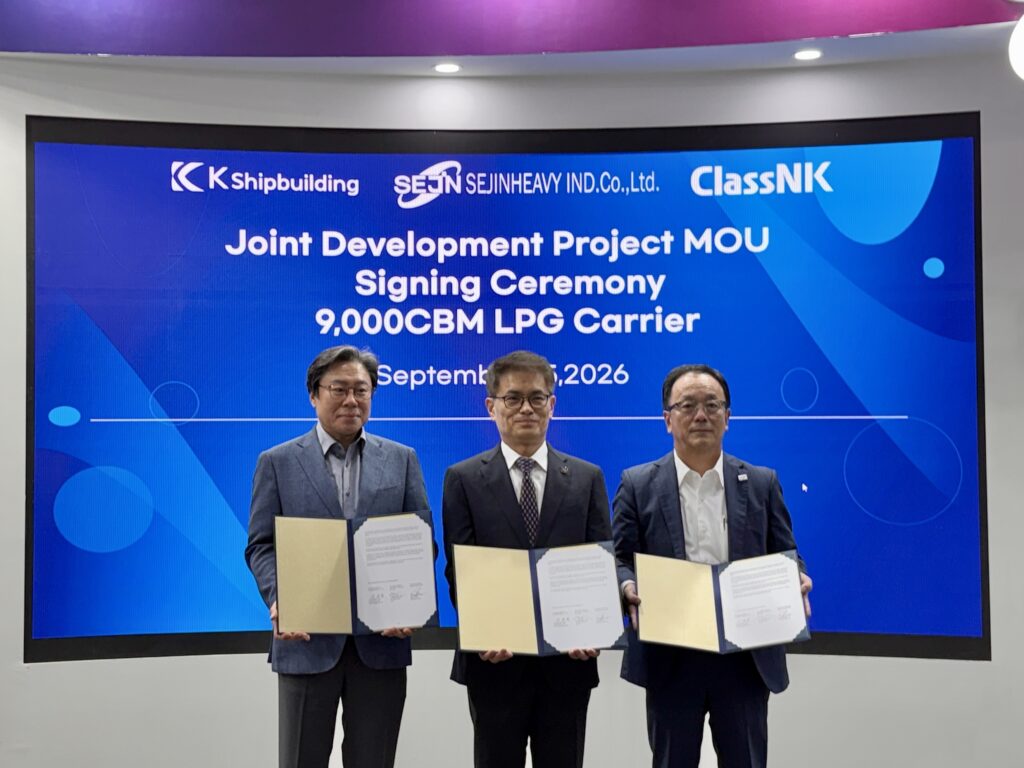
A 9,000 m³ LPG carrier designed to slash greenhouse gas emissions by up to 15% is set to hit the water before the maritime industry’s toughest gas-shipping rules take effect in 2028. K Shipbuilding, Sejin Heavy Industries and ClassNK have joined forces to develop the vessel, which will be the first of its kind to comply with the amended International Code for the Construction and Equipment of Ships Carrying Liquefied Gases in Bulk (IGC Code).
The trio signed a Memorandum of Understanding (MOU) on 21 September at Gastech 2026 in Bangkok, marking the start of a project that could redefine how LPG is transported across the globe. The amended IGC Code, scheduled for adoption at the Maritime Safety Committee (MSC 112) in December 2026, will introduce stricter safety and environmental standards for gas carriers. With the new rules set to enter into force on 1 July 2028, the race is on to design vessels that meet the requirements before the deadline.
Why This LPG Carrier Stands Out: Energy Efficiency at Its Core
The 9,000 m³ LPG carrier will not only comply with the amended IGC Code but also incorporate cutting-edge Energy Saving Devices (ESDs) to enhance its operational efficiency. The vessel will feature a Rudder Bulb and an Energy Saving Fin, both of which are designed to improve propulsive efficiency. These innovations are expected to deliver a significant reduction in fuel consumption and greenhouse gas emissions, aligning with the maritime industry’s push toward decarbonisation.
K Shipbuilding, a leader in ship design and construction, will take the lead in developing the vessel’s overall structure, ensuring it meets the new regulatory standards. Sejin Heavy Industries, known for its expertise in cargo tank design and wide-plate bending technology, will focus on the vessel’s cargo containment system. Meanwhile, ClassNK, a classification society with a global reputation for maritime safety, will review the design to ensure it complies with the amended IGC Code.
The collaboration is not just about meeting regulatory deadlines; it’s about setting a new benchmark for the industry. By incorporating ESDs, the vessel aims to achieve fuel efficiency improvements that could make it one of the most environmentally friendly LPG carriers in operation. This is particularly significant given the growing demand for cleaner shipping solutions amid tightening global emissions regulations.
What’s Next: A Timeline for Compliance and Innovation
The amended IGC Code, which will be adopted at MSC 112 in December 2026, represents a major shift in how gas carriers are designed and operated. The new rules are expected to introduce stricter requirements for structural integrity, fire safety, and environmental protection, making compliance a top priority for shipbuilders and operators alike.
For K Shipbuilding, Sejin Heavy Industries, and ClassNK, the MOU signed in Bangkok is just the beginning. The three companies have outlined clear roles for the project, with each bringing its unique expertise to the table. K Shipbuilding will handle the vessel’s overall design, Sejin Heavy Industries will focus on the cargo tank and bending technology, and ClassNK will provide the necessary classification and compliance reviews.
The goal is to have the 9,000 m³ LPG carrier ready for operation before the amended IGC Code enters into force in 2028. This timeline is ambitious, but the companies are confident that their combined experience and resources will make it achievable. If successful, the project could serve as a model for future collaborations in the maritime industry, demonstrating how innovation and regulatory compliance can go hand in hand.
The implications of this project extend beyond the immediate benefits of compliance. By developing a vessel that is both environmentally friendly and operationally efficient, the three companies are positioning themselves at the forefront of the industry’s transition toward sustainability. As the maritime sector continues to grapple with the challenges of decarbonisation, initiatives like this one could play a crucial role in shaping the future of global shipping.
With the amended IGC Code set to reshape the industry, the race to develop compliant and efficient vessels is well underway. The 9,000 m³ LPG carrier being developed by K Shipbuilding, Sejin Heavy Industries, and ClassNK could be a game-changer, offering a glimpse into the future of maritime transport.


Sign up free to ask CAMAL AI for a summary, the key points or anything else about this story.
Related stories
CAMAL AI
 Financial Ports Newsletter
The maritime economy, every morning
Ports, shipping and freight markets in one short email. Free.
Financial Ports Newsletter
The maritime economy, every morning
Ports, shipping and freight markets in one short email. Free.