

Russian Ghost Passengers: How Cargo Ships May Be Smuggling GRU Officers
A fleet of sanctioned Russian freighters is ferrying 28 unidentified passengers with false identities to African ports.
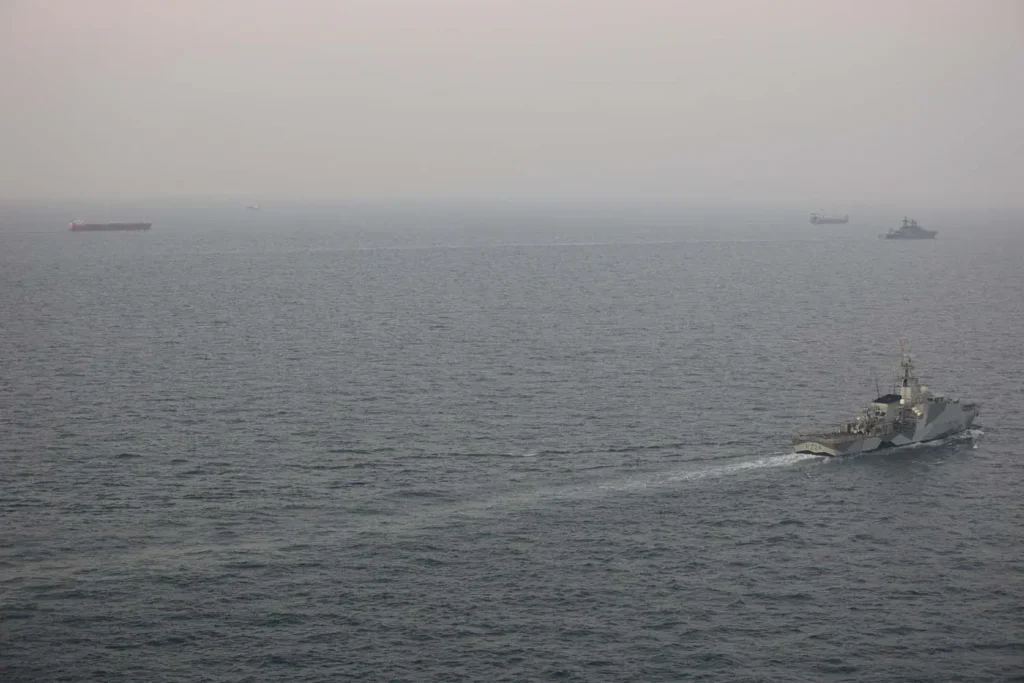
An investigation by the Dossier Center, funded by exiled Russian billionaire Mikhail Khodorkovsky, has uncovered evidence suggesting Russian-flagged cargo vessels are being used to smuggle intelligence operatives into foreign territories under false identities. The findings focus on 28 unidentified passengers who boarded ships at the naval port of Baltiysk in Kaliningrad but were never recorded on return voyages.
The 28 individuals traveled on passports issued by offices previously associated with Russia’s military intelligence agency, the GRU. These documents lacked biometric chips and were printed in an outdated format, with sequential numbering indicating they were produced in bulk. None of the names matched records in Russian databases for driver’s licenses, voter registries, or telephone directories. After being used to board the ships, the identities disappeared from all tracking systems, including international passenger monitoring databases.
Suspicious Travel Documents: Russian
The Dossier Center concluded that these were not merely fake identities but fabricated personas designed to vanish after a single use. The pattern aligns with methods used to deploy undercover agents, particularly since Russia lost many of its intelligence officers with diplomatic immunity following the 2018 Salisbury poisoning incident involving former GRU officer Sergei Skripal and his daughter.
The vessels under scrutiny, eight sanctioned freighters operated by Astrakhan-based MG-Flot, Moscow’s Oboronlogistika LLC, and St. Petersburg’s Baltic Freight Group, follow a well-documented route. They load military equipment at Baltiysk before sailing to African ports such as Conakry, Bata, Lomé, and Tobruk. From there, the cargo is often transported overland to conflict zones in Burkina Faso, the Central African Republic, Niger, and Mali, where the Kremlin-backed Africa Corps mercenary group operates.
Unusual Maritime Activity
However, the ships’ behavior after unloading has raised suspicions. The Lady Mariia has remained anchored off Port Said for an extended period, while the Yuriy Arshenevskiy has lingered in the Dardanelles. Another vessel, the Lady D, spent months near Famagusta without clear purpose.
While the Dossier Center initially considered that the passengers might be military escorts for sensitive cargo, this explanation fails to account for the use of false identities. A more plausible scenario is that the individuals are GRU operatives being inserted into target countries. Once ashore, they would abandon their false passports and adopt new cover identities, making their movements nearly untraceable.


Sign up free to ask CAMAL AI for a summary, the key points or anything else about this story.
Related stories
CAMAL AI
 Financial Ports Newsletter
The maritime economy, every morning
Ports, shipping and freight markets in one short email. Free.



