

Rolls-Royce’s Methanol Breakthrough: Why Shipowners Are Racing to Retrofit
DNV certifies Rolls-Royce’s mtu Series 4000 engines for methanol dual-fuel operation.
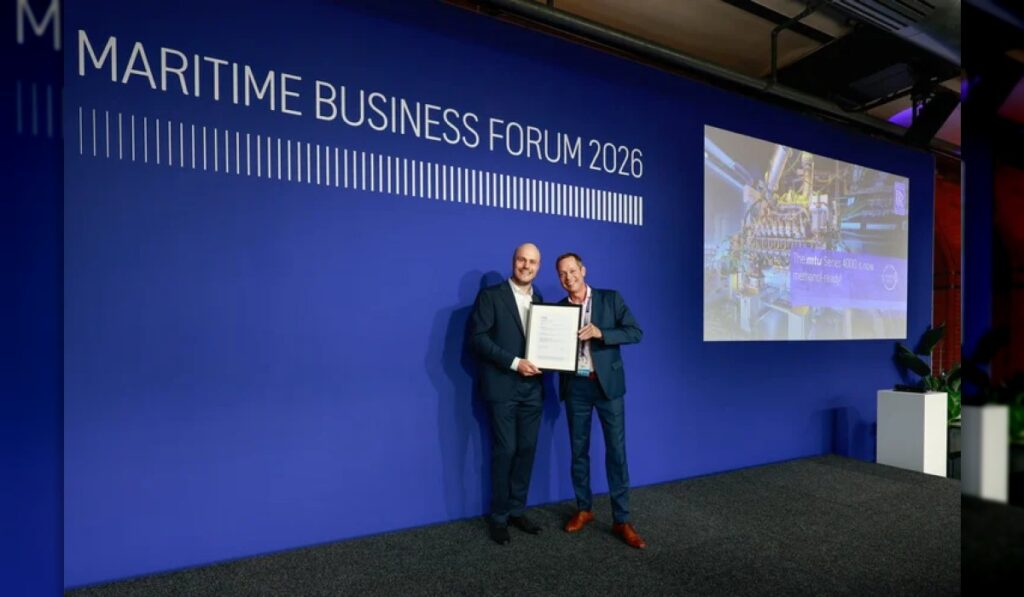
Rolls-Royce has achieved a key milestone in sustainable maritime propulsion by securing methanol-readiness certification for its mtu Series 4000 marine engines. The international classification society DNV awarded the certificate, confirming the engines’ design allows future retrofitting for dual-fuel operation using methanol.
Lukas Köhler, Senior Vice President of Global Marine & Mining at Rolls-Royce Power Systems, highlighted the certification’s significance for ship operators navigating regulatory uncertainty. “The unpredictable landscape of CO₂ legislation has increased demand for propulsion systems that offer fuel flexibility,” Köhler stated. “This certificate provides assurance that vessels can transition to methanol operation when the fuel becomes widely available.”
Extensive Testing Validates Methanol Performance
The certification follows rigorous testing that began in 2025 when Rolls-Royce demonstrated the world’s first high-speed marine engine running exclusively on methanol at its Friedrichshafen facility. Since then, the company has accumulated over 5,000 operating hours testing methanol in both single- and dual-fuel configurations. These trials established green methanol’s environmental advantages, including 75% lower nitrogen oxide emissions compared to diesel and a significantly reduced well-to-wake CO₂ footprint.
Rolls-Royce has identified offshore vessels, ferries, and mega yachts as primary applications for methanol-powered engines. The company continues to expand its sustainable fuel capabilities, having previously certified its engines for Hydrotreated Vegetable Oil (HVO) in 2021 and recently completing laboratory tests of INERATEC’s renewable MATERA e-Diesel® synthetic fuel.
Expanded Emissions Control Solutions
In parallel with methanol development, Rolls-Royce has completed its selective catalytic reduction (SCR) system portfolio for marine engines. Collaborating with exhaust specialist Eminox, the company now offers IMO Tier III-compliant SCR systems for its mtu Series 2000 engines. The integrated solution reduces nitrogen oxide emissions by 75% compared to IMO II limits and operates without compressed air dosing.
Designed for up to 16,000 operating hours, the SCR systems enable vessels to operate unrestricted in emission-controlled areas including the North Sea and Baltic Sea. The flexible design accommodates various ship configurations, supporting operators’ compliance needs across different vessel types such as offshore supply ships, ferries, and patrol boats.


Sign up free to ask CAMAL AI for a summary, the key points or anything else about this story.
Related stories
CAMAL AI
 Financial Ports Newsletter
The maritime economy, every morning
Ports, shipping and freight markets in one short email. Free.
Financial Ports Newsletter
The maritime economy, every morning
Ports, shipping and freight markets in one short email. Free.



