

EU Demands 10+ Warships as Red Sea Threat Escalates: Kallas Warns
EU foreign policy chief Kaja Kallas urges member states to deploy over 10 warships to counter Houthi attacks in the Red.
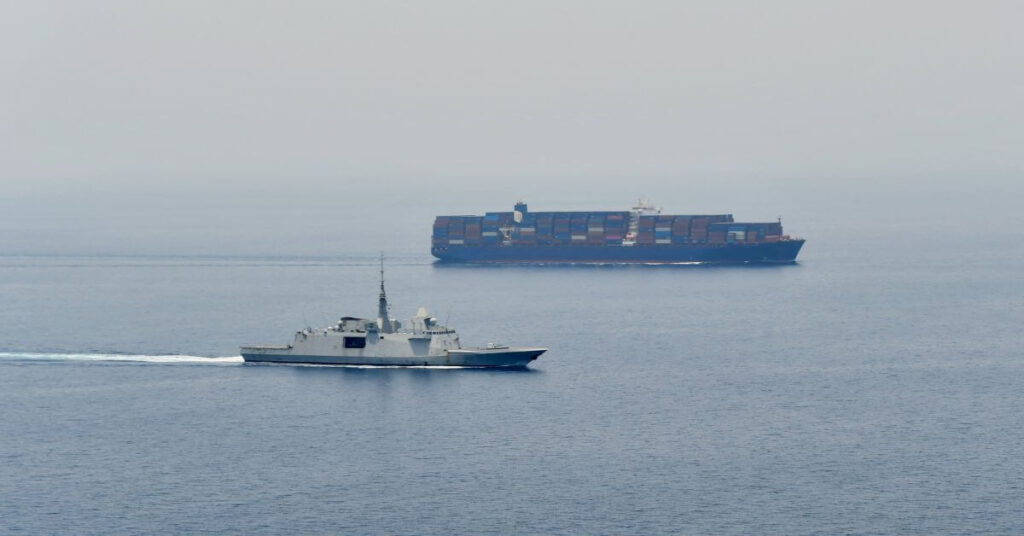
The European Union’s maritime security mission in the Red Sea is critically under-resourced, with EU foreign policy chief Kaja Kallas demanding more than 10 warships to counter escalating Houthi attacks. The current force of six vessels is insufficient to protect commercial shipping, Kallas warned, as Yemen’s Iran-backed rebels advance along the Red Sea coast.
The mission, designed to safeguard merchant vessels, now faces an increased threat level that requires additional naval and air assets.
The call for reinforcements comes as Houthi forces have made rapid territorial gains in Yemen, expanding their control along the Red Sea coastline. Kallas highlighted the broader economic implications, noting that attacks on commercial vessels could further strain European supply chains already grappling with higher fuel costs. “The operation needs more naval assets and more air assets to address the increased level of threats in the region,” she stated.
Operation Aspides, formally known as EUNAVFOR ASPIDES, was established as a defensive maritime security operation to protect commercial shipping in the Red Sea, Gulf of Aden, Arabian Sea, Gulf of Oman, and Indian Ocean.
The mission’s current shortfall in assets is particularly concerning given the strategic importance of the Red Sea.
Italy, a key contributor to Operation Aspides, has taken unilateral action, announcing plans for a separate naval mission. Italian Defence Minister Guido Crosetto criticised the EU’s slow response, arguing that the current assets were inadequate to meet the demands of commercial shipping.
“The current assets were not enough to respond to requests from commercial vessels for protection,” Crosetto said, underscoring the urgency of the situation. Italy’s decision to deploy additional assets independently reflects growing frustration among EU member states over the bloc’s inability to agree on a unified response.
Global Trade at Risk as Maritime Chokepoints Face Disruption: Red Sea
The Red Sea is not the only critical waterway under threat. Kallas warned that disruptions at key maritime chokepoints, including the Strait of Hormuz and Bab al Mandab, could have far-reaching consequences beyond the region.
In a letter to the EU’s 27 member states on September 19, Kallas noted that the Houthis had initially claimed they would only target Saudi-linked interests. However, she expressed uncertainty over how they would treat vessels transiting the Red Sea, raising concerns about the safety of global shipping lanes.
The letter, sent ahead of the EU foreign ministers’ meeting in New York, outlined the need for a coordinated response to prevent further escalation. Kallas also warned that the Houthis’ advances along the Red Sea coast could provide them with additional leverage, allowing them to target a broader range of vessels.
The EU will discuss the request for additional warships and aircraft at upcoming defence and foreign ministers’ meetings, though no agreement has been reached on expanding the mission’s size. The lack of consensus among member states reflects broader divisions within the bloc over how to respond to the crisis. While some countries, such as Italy and Greece, have contributed assets to Operation Aspides, others remain reluctant to commit additional resources without a clear strategy for de-escalation.
The stakes are high. With Operation Aspides operating at less than two-thirds of its intended capacity, the EU’s ability to protect commercial shipping hangs in the balance. Kallas’s warning serves as a stark reminder of the fragility of global trade routes, and the need for a coordinated response to safeguard them. For European businesses and consumers, the implications are clear: prolonged disruptions in the Red Sea could lead to higher prices for goods, delayed deliveries, and increased pressure on already strained supply chains.
The next steps for the EU will be critical. At the European Arctic Summit in Finland on September 14, leaders discussed the broader security challenges facing the continent, including the situation in the Red Sea. While no concrete decisions were made, the summit provided a platform for member states to align their positions ahead of the upcoming defence and foreign ministers’ meetings. Kallas has urged member states to prioritise the Red Sea mission, warning that failure to act could embolden the Houthis and other destabilising forces in the region.
For commercial shipping firms, the uncertainty has already prompted changes in routing and scheduling. Some companies have begun to factor in the risk of delays and higher costs when negotiating contracts, while others have invested in additional security measures for their vessels. The International Maritime Organisation (IMO) has also called for greater international cooperation to address the threat, though progress has been slow.
The EU’s response to the Red Sea crisis will be a test of its ability to act as a unified geopolitical actor. With global trade at risk, the pressure is on for member states to overcome their differences and commit the resources needed to secure one of the world’s most vital maritime corridors.
«The operation needs more naval assets and more air assets to address the increased level of threats in the region.»
Kaja Kallas·EU Foreign Policy Chief
«The current assets were not enough to respond to requests from commercial vessels for protection.»
Guido Crosetto·Italian Defence Minister


Sign up free to ask CAMAL AI for a summary, the key points or anything else about this story.
Related stories
CAMAL AI
 Financial Ports Newsletter
The maritime economy, every morning
Ports, shipping and freight markets in one short email. Free.
Financial Ports Newsletter
The maritime economy, every morning
Ports, shipping and freight markets in one short email. Free.



