

Greenbrier profits plunge 76% as railcar demand stalls
The US railcar manufacturer saw earnings drop to $8.7m in Q4 as revenue fell 22% to $591m.
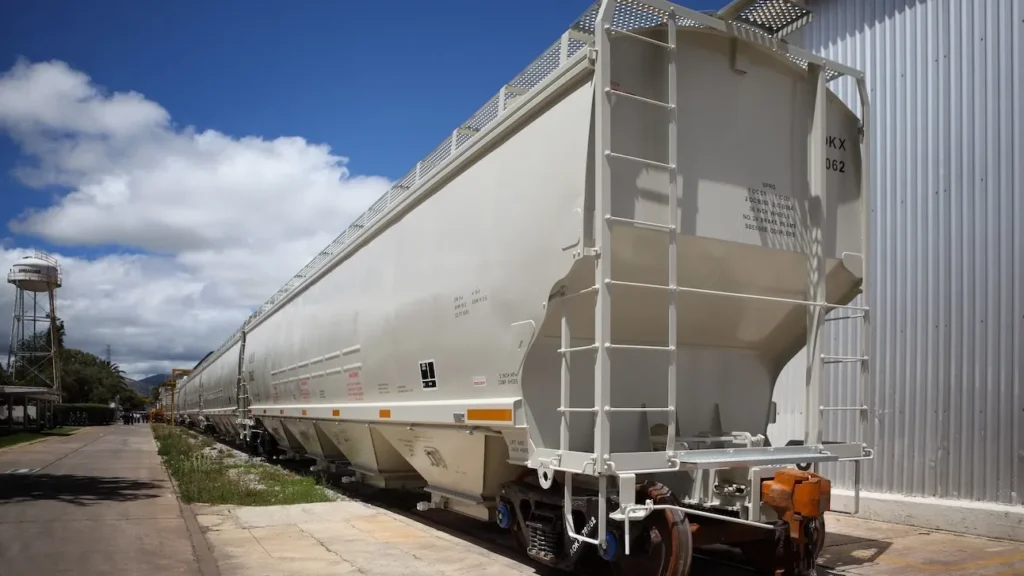
Greenbrier Cos. reported a steep decline in fiscal fourth-quarter profit as weaker railcar demand and facility-related costs dragged earnings down to $8.7m, a 76% drop from the same period last year.
The Oregon-based company, which trades on the New York Stock Exchange under the ticker GBX, saw its net earnings attributable to shareholders plummet to $8.7m, or 27 cents per diluted share, for the quarter ended Aug. 31. This compares with $36.8m, or $1.16 per share, in the same period a year earlier. Excluding facility-rationalisation costs, core earnings stood at 39 cents per share, still well below the 80-cent consensus among analysts.
The company attributed the earnings shortfall to a combination of lower gross margins and operational inefficiencies. Manufacturing gross margin slipped to 9.2% from 9.9% in the preceding quarter, while operating margin narrowed to 4.3% from 5.5%. Greenbrier said the timing of railcar syndication activity and higher facility-related costs weighed on profitability, despite an uptick in order activity.
Profit margins squeezed by operational costs: railcar demand
Despite the rebound in orders, Greenbrier’s backlog at fiscal year-end stood at 14,000 railcars, worth an estimated $2.1bn. Lorie Tekorius, Greenbrier’s retiring chief executive, noted that tariff uncertainty continued to delay customer investment decisions, particularly for tank cars, even as order activity showed signs of improvement.
“Rail traffic increases and elevated diesel prices have boosted inquiries in North America early in fiscal 2027, as freight shippers seek increased access to rail,” Tekorius said in the earnings release. “However, these positive trends have yet to translate into stronger profitability.”
Orders rebound but backlog growth stalls
Greenbrier’s leasing and fleet-management segment provided a bright spot, with revenue rising to $52.1m from $47.4m in the preceding quarter. Operating earnings in the segment increased to $30.4m from $29.2m, although higher maintenance expenses weighed on margins. The company’s owned fleet grew by 23% during fiscal 2026, reaching approximately 20,900 railcars, with utilisation holding steady at 98% at year-end.
For the full fiscal year, Greenbrier reported net earnings of $79m, or $2.49 per diluted share, down sharply from $204.1m, or $6.35 per share, in the previous year. Revenue declined to $2.46bn from $3.24bn, while operating cash flow dropped to $39.6m from $265.7m.
The company projected fiscal 2027 revenue of $2.8 billion to $3.2 billion and earnings of $2.75 to $3.75 per share, with an operating margin target of 7% to 7.5%. Capital expenditures are expected to range between $225m and $275m. Greenbrier also approved a quarterly dividend of 34 cents per share, payable on Dec. 2 to shareholders of record on Nov. 11. During fiscal 2026, the company returned $56m to shareholders through dividends and share repurchases.
Industry output in 2026 is estimated at around 25,000 railcars, with expectations of a modest rebound to 30,000, 35,000 units in 2027. However, with roughly 200,000 railcars nearing retirement, according to TrinityRail estimates, the long-term outlook for replacements remains positive.
Charley Moore, chief commercial officer of TrinityRail, noted that public-lessor fleet utilisation remains in the high 90% range, suggesting latent demand for new equipment. For Greenbrier, the key challenge will be converting that demand into sustained profitability, particularly as it navigates operational inefficiencies and higher costs at its three manufacturing plants in Mexico.
With Tekorius set to retire, the company’s leadership transition could also shape its ability to capitalise on improving market conditions. For now, Greenbrier’s focus remains on expanding its leasing business, a source of recurring revenue, and securing orders in international markets like Saudi Arabia, where its partnership with SAR offers a foothold in a growing region.


Sign up free to ask CAMAL AI for a summary, the key points or anything else about this story.
Related stories
CAMAL AI
 Financial Ports Newsletter
The maritime economy, every morning
Ports, shipping and freight markets in one short email. Free.



