

Motive’s AI Agents take action as fleets brace for winter collision surge
Motive’s new AI Agents automate safety alerts, cutting violations by 88% in early adopters.
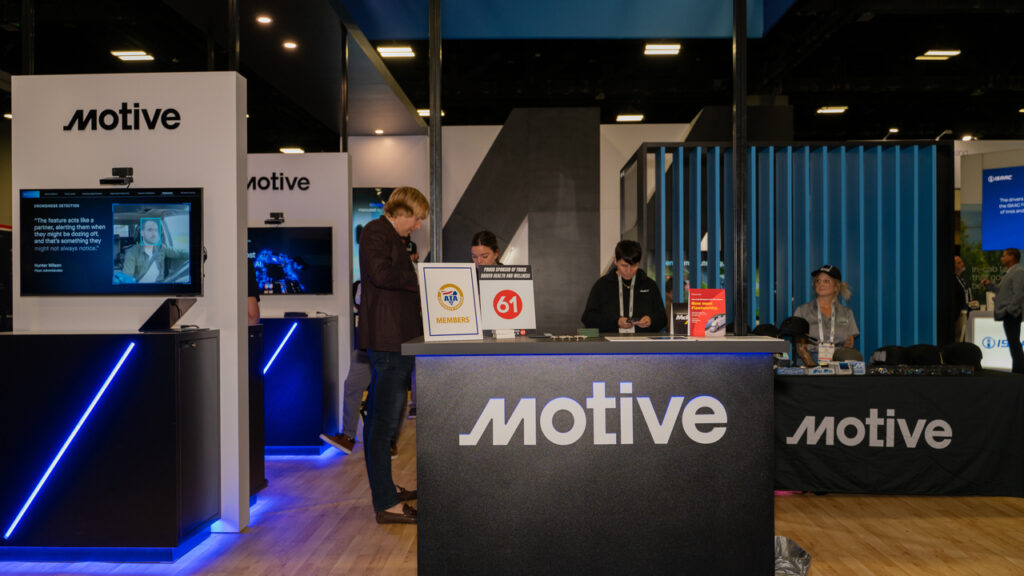
Motive, an AI platform specializing in physical operations, introduced its new AI Agents tool at the American Trucking Associations’ Management Conference & Exhibition in Charlotte, North Carolina, this week. The system allows transportation fleets to automate responses to safety and maintenance alerts based on predefined rules, reducing the need for manual intervention as operations expand.
The AI Agents platform enables fleets to establish automated workflows that respond to real-time data without requiring additional staff. When triggered by events such as fault codes or fatigue alerts, the system can perform tasks like contacting drivers, generating work orders, or notifying managers. According to Motive, this approach addresses a persistent challenge: while fleets already collect extensive operational data, acting on it quickly enough remains difficult.
How the system automates fleet management: AI Agents
Emily Parsons, a staff product manager at Motive, emphasized the consequences of delayed responses. “When a fault code appears, it often sits unaddressed in a dashboard until someone manually creates a ticket, by then, a minor issue may have escalated into a major problem,” she explained. The company’s data shows that 47% of fleets have experienced breakdowns or vehicles being placed out of service due to postponed maintenance.
Setting up these automated responses requires no technical expertise. Fleets can select from guided workflows or ready-made templates, defining triggers and corresponding actions in minutes. The system continuously applies these rules, covering scenarios such as excessive idling, mechanical faults, and driver fatigue. Early adopters, including Bennett Family of Companies, Carvana, and NovaSource Power, are already integrating the tool into their operations.
Some fleets are proceeding cautiously, limiting AI interactions to internal staff before extending them to drivers. Jared Whitson, senior director of safety and compliance at Bennett Family of Companies, described their approach: “We initially focused on alerts that notify our team rather than reaching drivers directly. Building trust in the system is our priority.”
Balancing automation with trust and compliance
The stakes for compliance are high. Federal regulations, including 49 CFR 392.3 and 49 CFR 396.7, prohibit carriers from allowing fatigued drivers to operate or vehicles to run in unsafe conditions. Failure to meet these standards can lead to costly breakdowns and operational disruptions.
Motive’s AI Agents are now available to all customers, following a preview of a similar rule-based tool, Automations, at the company’s Vision 26 conference earlier this year. As fleets weigh the benefits of automation, the platform offers a way to scale operations while maintaining safety and efficiency.


Sign up free to ask CAMAL AI for a summary, the key points or anything else about this story.
Related stories
CAMAL AI
 Financial Ports Newsletter
The maritime economy, every morning
Ports, shipping and freight markets in one short email. Free.