

Peru’s ports move 29.6 million tonnes of cargo through May 2026, strengthening logistics growth
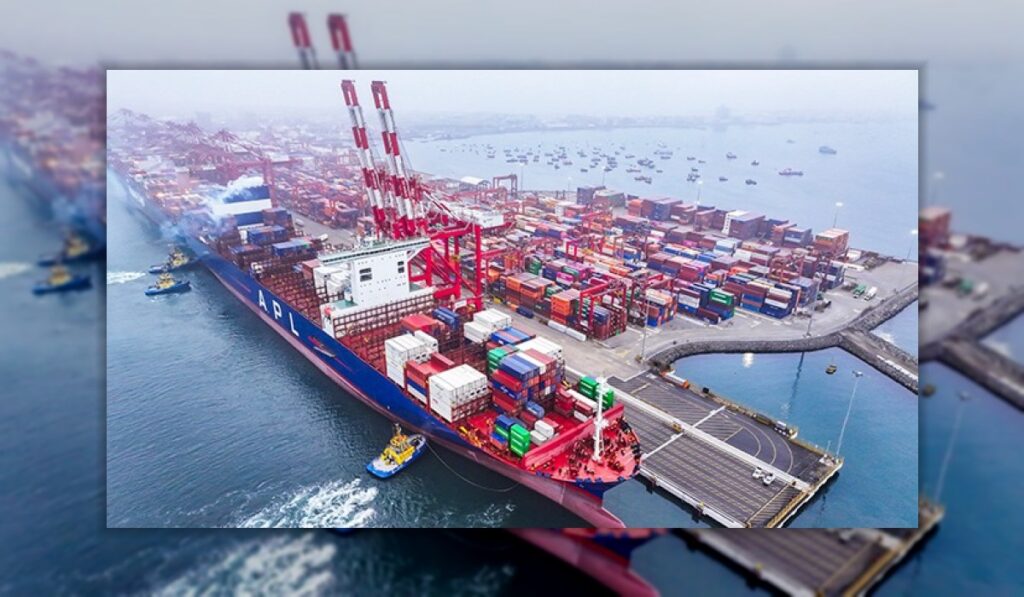
More cargo, more movement, and greater port activity. Public-use and private terminals across Peru handled 29,685,373 metric tonnes (MT) of cargo between January and May 2026, according to information from the National Port Authority (APN), an agency under the Ministry of Transport and Communications (MTC).
This result confirms the strong performance of Peru’s port activity and the strategic role of maritime and river infrastructure in supporting foreign trade and national logistics.
Callao leads national cargo movement
The Port of Callao consolidated its position as the country’s main logistics hub. The South Zone Container Terminal, operated by DP World Callao, led cargo throughput with 9,252,074 MT, followed by the North Multipurpose Terminal, managed by APM Terminals Callao, with 7,969,229 MT.
Other major contributors nationwide included the Matarani Port Terminal, with 3,479,935 MT; the Chancay Multipurpose Port Terminal, with 2,361,858 MT; the General San Martín Port Terminal (Paracas), with 1,949,066 MT; the Salaverry Port Terminal, with 1,568,731 MT; the Paita Port Terminal, with 1,377,046 MT; and the Mineral Concentrate Shipping Terminal, with 1,319,724 MT.
Combined, maritime terminals accounted for 29,521,580 MT, representing 99.4% of total cargo handled nationwide, while river terminals recorded 163,793 MT.
Container traffic exceeds 1.7 million TEU
Between January and May 2026, Peruvian port terminals handled 1,718,531 TEU, of which 1,712,558 TEUcorresponded to maritime terminals and 5,973 TEU to river terminals.
The South Zone Container Terminal in Callao led container traffic with 894,872 TEU, followed by the North Multipurpose Terminal in Callao, with 481,240 TEU.
Other notable terminals included the Chancay Multipurpose Port Terminal, with 164,221 TEU; the Paita Port Terminal, with 134,072 TEU; the General San Martín Port Terminal, with 32,104 TEU; and the Matarani Port Terminal, with 5,855 TEU.
In the river sector, the highest container movement was recorded at the Peruvian Eastern Logistics Port Terminal (LPO) in Pucallpa, with 4,092 TEU, followed by the Jupiter Terminal, with 1,739 TEU, and the Yurimaguas Nueva Reforma Port Terminal, with 142 TEU.
According to the Ministry of Transport and Communications (MTC), this performance reflects the sustained growth of Peru’s national port activity and the consolidation of strategic terminals such as Callao and Chancay, strengthening the country’s logistics competitiveness and integration with international markets.


Sign up free to ask CAMAL AI for a summary, the key points or anything else about this story.
Related stories
CAMAL AI
 Financial Ports Newsletter
The maritime economy, every morning
Ports, shipping and freight markets in one short email. Free.
Financial Ports Newsletter
The maritime economy, every morning
Ports, shipping and freight markets in one short email. Free.



