Panama Canal’s $5.3m Slot Auction: Who Pays—and Why?
Neopanamax operators face a new booking system as drought cuts daily transits to nine from September 3.
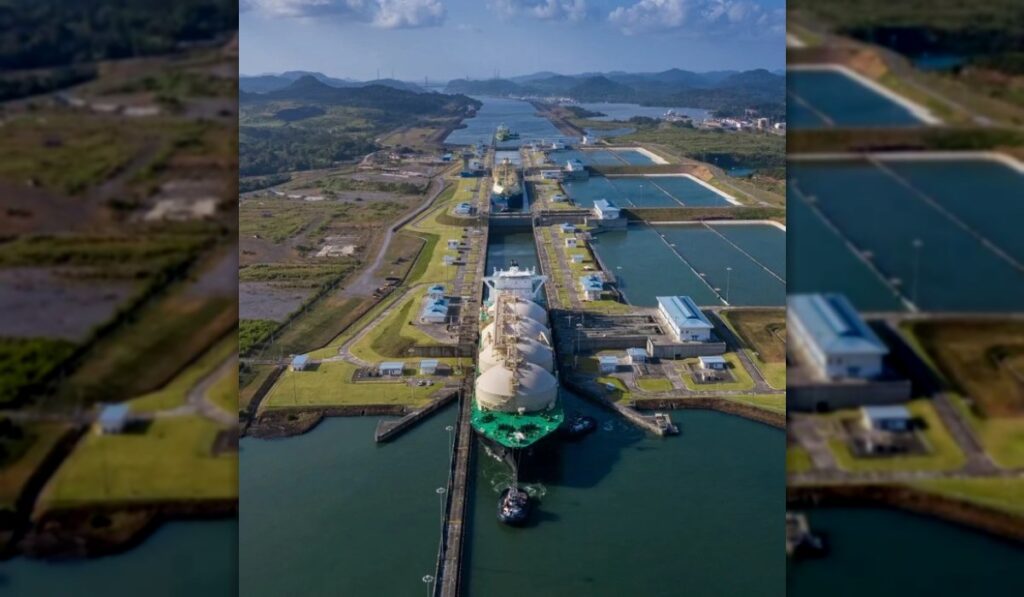
The authority also permits vessel swaps and substitutions, including for ships under alliances or vessel-sharing agreements, while maintaining a weekly cap of 63 Neopanamax reservation slots. These adjustments come as the canal reduces daily transits to nine for Neopanamax locks from September 3, with a further cut to 23 daily slots for Panamax locks scheduled for September 15.
The Panama Canal Authority, a government agency under the Panamanian government, manages one of the world’s most critical maritime chokepoints. container traffic, the canal’s operational decisions ripple across supply chains, energy markets, and commodity prices.
The $5.3 million bid by SK Gas for its LPG carrier G. The previous record, set earlier in August by another South Korean company, stood at $4.6 million.
Safe Bulkers
The Panama Canal Authority attributes the surge to market dynamics rather than tariff hikes.
“Auction values are determined by multiple factors, including each client’s urgency and commercial priorities, as well as broader supply and demand conditions.”
Panama Canal Authority·Spokesperson
The authority’s dashboard shows 107 vessels with reservations currently waiting for transit, with northbound wait times exceeding 10 days. Southbound traffic, however, remains relatively fluid, with average waits under four days.
The new booking rules aim to distribute slots more equitably. Under the revised system, five slots per day are reserved for container vessels, while LPG and LNG carriers each receive three slots per day. Vehicle carriers, Ro-Ros, bulkers, and other segments share three slots per week.
Slots can be reassigned to other segments based on demand to prevent unused capacity, and operators can exceed slot limits if no competitors exist in their segment. This flexibility is critical for segments like LNG, where cargoes are time-sensitive and often tied to long-term contracts with strict delivery windows.
With climate models predicting more frequent and severe El Niño events, the authority faces pressure to invest in alternative water sources, such as desalination plants or additional reservoirs, though such projects require years of planning and billions in funding.
The impact on global trade is already visible. Bloomberg reports that at least two LPG carriers combined cargoes in a ship-to-ship transfer off Balboa, while another carrier returning from China opted for the longer route around South America to reach Houston. Such detours add significant time and cost, disrupting supply chains reliant on the canal’s efficiency.
For example, a voyage from Shanghai to New York via the canal typically takes 25 days, while the route around Cape Horn extends the journey to 35 days or more. This delay not only increases fuel costs but also tightens vessel availability, further straining an already stretched shipping market.
The canal’s adjustments also have broader implications for energy markets. LNG carriers, which account for a growing share of Neopanamax transits, are particularly sensitive to delays. The U.S. has become the world’s largest LNG exporter, with much of its output destined for Asia via the Panama Canal.
Any disruption to this route forces buyers to seek alternative suppliers, such as Qatar or Australia, potentially driving up global prices. Similarly, LPG carriers transporting propane and butane from the U.S. Gulf Coast to Asia face higher costs, which could trickle down to consumers in the form of higher heating and cooking fuel prices.
The authority continues to recommend advance reservations as the only way to guarantee a transit date, though auction slots remain exempt from customer limits. For shippers, this means navigating a complex and costly landscape. The canal’s online dashboard, which provides real-time updates on wait times and slot availability, has become an essential tool for operators.
However, the unpredictability of auction prices, where a single slot can cost more than the vessel’s daily charter rate, has forced many to reconsider their routing strategies. Some are exploring alternatives like the Suez Canal, though geopolitical risks and longer transit times make this a less attractive option for many.
With the September 15 reduction looming, the Panama Canal Authority is walking a tightrope between maintaining its reputation as a reliable trade route and conserving water. The authority has previously explored water-saving measures, such as cross-filling locks and optimising transit schedules, but these have provided only temporary relief. Long-term solutions, such as the proposed $2 billion fourth set of locks or the development of new reservoirs, remain on the drawing board, constrained by funding and environmental approvals.
How Shippers Can Navigate the New Rules: Panama Canal
For operators, the revised booking system offers both opportunities and challenges. The ability to secure multiple slots for the same day or consecutive days provides greater flexibility, particularly for liner services with fixed schedules. However, the cap on weekly slots means that demand will continue to outstrip supply, keeping auction prices elevated. Shippers are advised to monitor the canal’s official website for updates on slot availability and auction results, as well as to engage with the authority’s customer service teams for guidance on booking strategies.
Alliances and vessel-sharing agreements may also benefit from the new rules, as they allow for greater coordination among operators. For example, a consortium of container lines could pool their slot allocations to optimise transit schedules, reducing the risk of delays.
Similarly, LNG and LPG carriers, which often operate under long-term contracts, can use the flexibility to swap vessels or adjust schedules based on cargo readiness. However, the authority’s policy of reassigning slots based on demand means that operators must remain agile, as unused capacity could be redirected to other segments at short notice.
The canal’s water crisis has also sparked innovation in vessel design. Some operators are investing in more fuel-efficient ships that can justify the higher costs of detours, while others are exploring hybrid or alternative-fuel vessels to offset the environmental impact of longer routes. For bulk carriers and Ro-Ros, which have fewer slot allocations, the new rules may incentivise greater use of the Suez Canal or even the Northern Sea Route, though the latter remains a seasonal option due to ice conditions.
As the drought persists, the Panama Canal Authority faces mounting pressure to innovate further. Whether these adjustments will stabilise auction prices or merely delay deeper disruptions remains to be seen. For now, the $5.3 million bid stands as a stark reminder of the canal’s pivotal role, and its fragility, in global maritime trade. Shippers, meanwhile, must adapt to a new reality where the cost of passage is no longer dictated by tariffs alone, but by the urgent demands of a changing climate.
Sign up free to ask CAMAL AI for a summary, the key points or anything else about this story.
Related stories
Financial Ports Newsletter
The maritime economy, every morning
Ports, shipping and freight markets in one short email. Free.