

Klaipėda Port Bets €600m on Expansion: What’s at Stake for Baltic Trade?
Lithuania’s Klaipėda Port launches its largest-ever expansion, aiming to boost capacity and curb environmental risks.
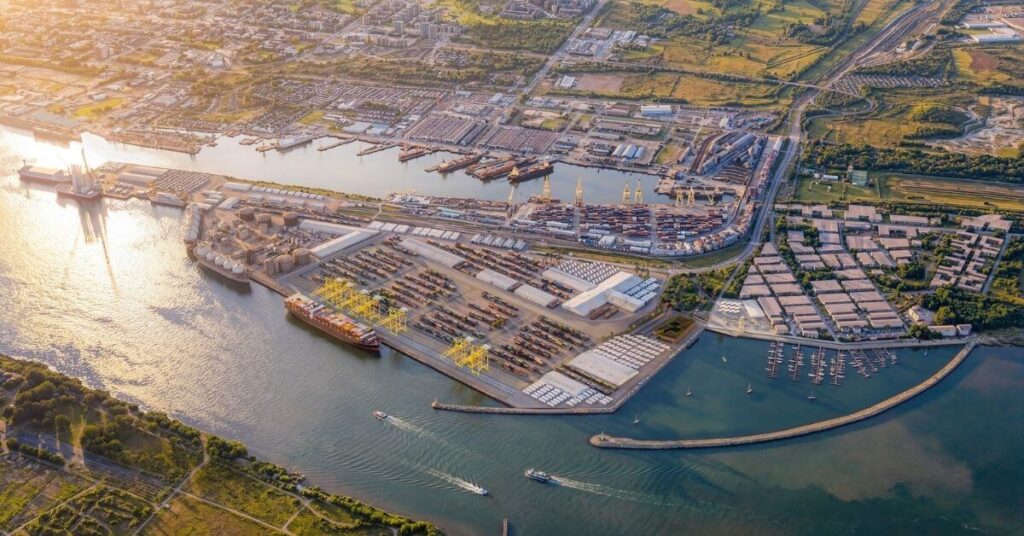
The Port of Klaipėda has launched its most significant expansion in history, a €600 million initiative that will enhance trade capacity while addressing environmental concerns in the Baltic region. Initial work has begun in the port’s southern area, where new breakwaters will be constructed to expand operations and reduce saltwater flow into the nearby Curonian Lagoon.
Algis Latakas, CEO of the Klaipėda Port Authority, emphasized the project’s strategic importance. He stated that the expansion would strengthen Lithuania’s appeal to investors, improve the port’s global competitiveness, and support military logistics for both the country and the broader region.
“After extensive planning, we are now moving forward with the southern port expansion. Site preparation is underway, and construction of the breakwaters will begin this autumn, marking the start of the largest development in the port’s history.”
Algis Latakas·CEO, Klaipėda Port Authority
Expansion Goals: Capacity and Environmental Protection: Klaipėda
The project aims to resolve two key challenges: increasing the port’s cargo handling capacity and mitigating environmental risks. The €600 million investment, part of the port’s 2026–2029 funding plan, will create additional space for operations, allowing Klaipėda to handle larger vessels and greater cargo volumes.
The new breakwaters will play a dual role by also limiting saltwater intrusion into the Curonian Lagoon, a critical environmental concern for the area.
Project Timeline and Financial Scope
Construction of the southern breakwaters will start this autumn under a €24.5 million contract awarded to Tilsta. The first phase involves site preparation, followed by the installation of the breakwaters, which is expected to take several years. Once completed, the expansion will significantly boost the port’s operational capacity.
The total investment could exceed €1 billion when including contributions from future private investors, positioning the project as one of Lithuania’s largest infrastructure developments.


Sign up free to ask CAMAL AI for a summary, the key points or anything else about this story.
Related stories
CAMAL AI
 Financial Ports Newsletter
The maritime economy, every morning
Ports, shipping and freight markets in one short email. Free.
Financial Ports Newsletter
The maritime economy, every morning
Ports, shipping and freight markets in one short email. Free.



