

Nuclear car carrier inches closer to reality: Hyundai and LGL sign MOU
Hyundai Glovis and Liberty Global Logistics evaluate first SMR-powered PCTC for Korea-US trade route
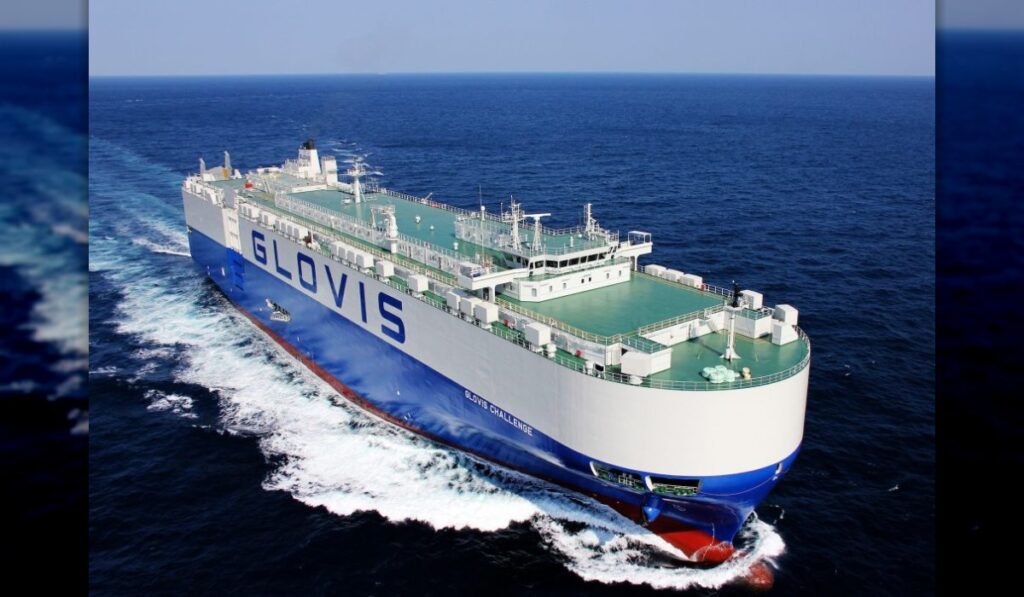
Hyundai Glovis and US-based Liberty Global Logistics (LGL) have joined forces to explore the commercial viability of a nuclear-powered car carrier operating between South Korea and the United States. The partnership, formalized through a memorandum of understanding, aims to move the project beyond theoretical design into practical assessments of regulatory, infrastructure, and commercial feasibility.
The collaboration will focus on developing a pure car and truck carrier (PCTC) powered by a small modular reactor (SMR). LGL will lead the evaluation of the US regulatory environment, concentrating initially on West Coast ports. This includes securing federal and state approvals, adapting port infrastructure, and establishing operational protocols for nuclear-powered merchant vessels. Meanwhile, Hyundai Glovis will conduct a parallel assessment in South Korea, with both companies also examining shipbuilding requirements, flag state regulations, and classification standards.
Technical and regulatory challenges ahead: smr-powered pctc
Hyundai Glovis has already made progress on the technical front. In June 2026, Lloyd’s Register granted Approval in Principle to an SMR-powered PCTC design developed in partnership with Hyundai Heavy Industries, HD Korea Shipbuilding & Offshore Engineering, G-Marine Service, and the Korea Atomic Energy Research Institute. The study evaluated the integration of a molten salt reactor, addressing critical factors such as shielding, vessel stability, propulsion efficiency, and cargo capacity.
HD Hyundai Heavy
Despite this milestone, significant hurdles remain. LGL President David Minetti emphasized that the partnership is not merely about constructing a vessel but ensuring it can operate “safely, efficiently, and commercially”. The project’s success depends on navigating complex regulatory landscapes in both countries, adapting port infrastructure, and gaining public acceptance. If the initial route between South Korea and the US proves feasible, the partners plan to expand the project to additional international trade lanes.
A potential shift in maritime propulsion
Hyundai Glovis has been transitioning its fleet toward LNG dual-fuel vessels but views SMRs as the next step in zero-carbon shipping. The technology could eliminate fuel costs, reduce emissions, and extend operational range without the limitations of alternative fuels. However, the path to commercial operation remains challenging, with industry observers closely monitoring regulatory developments expected in early 2027.
The MOU represents a strategic bet on the future of maritime logistics. As global shipping faces stricter emissions regulations and rising fuel expenses, the question is no longer whether nuclear-powered vessels are possible but how quickly they can become a reality.


Sign up free to ask CAMAL AI for a summary, the key points or anything else about this story.
Related stories
CAMAL AI
 Financial Ports Newsletter
The maritime economy, every morning
Ports, shipping and freight markets in one short email. Free.
Financial Ports Newsletter
The maritime economy, every morning
Ports, shipping and freight markets in one short email. Free.



