

NTSB’s 2025 Report Reveals Deadly Gaps in Maritime Safety
49 marine casualties analysed, including the Dali bridge collapse and Titan submersible implosion.
The National Transportation Safety Board (NTSB) has released its Safer Seas Digest 2025, a stark compilation of lessons from 49 maritime disasters, including the catastrophic Dali bridge collapse and the Titan submersible implosion. The report exposes systemic failures in maintenance, emergency planning, and vessel design that cost lives and disrupted global supply chains.
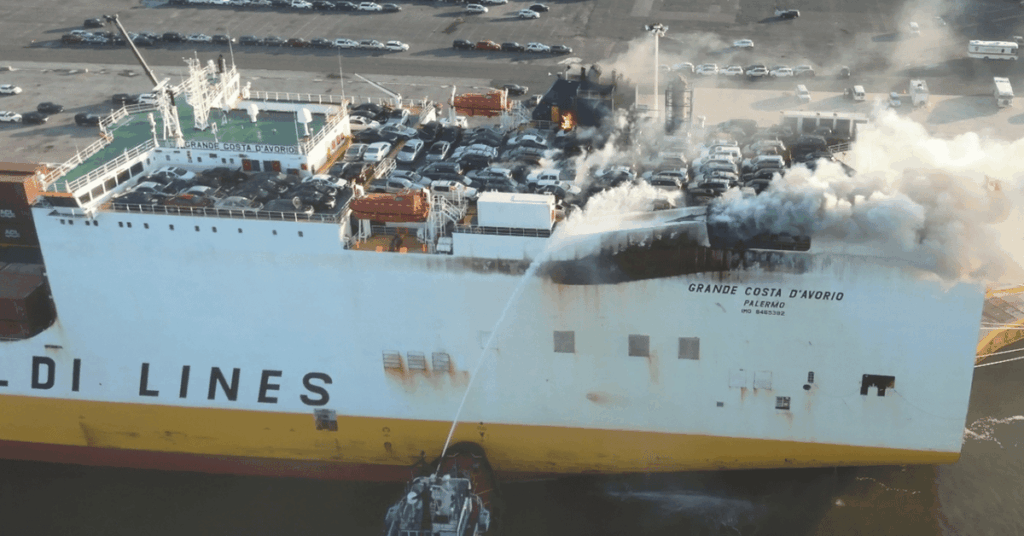
The digest, published annually, distils the NTSB’s marine investigations into actionable insights for operators, regulators, and crews. This year’s edition zeroes in on three high-profile incidents: the Dali’s collision with Baltimore’s Francis Scott Key Bridge in no especificado, the Titan submersible’s implosion during a Titanic expedition in no especificado, and the deadly fire aboard the Grande Costa D’Avorio at Port Newark, New Jersey, in no especificado.
Together, these cases underscore recurring vulnerabilities in the maritime industry, from electrical power loss to inadequate emergency training.
What Went Wrong: The Dali, Titan, and Grande Costa D’Avorio: NTSB
The Dali, a no especificado containership, lost propulsion and steering after a sudden electrical blackout, veering into the Francis Scott Key Bridge and triggering its collapse. Six construction workers died in the disaster, which also severed a critical artery for Baltimore’s port traffic.
The NTSB’s investigation revealed no especificado, including stricter maintenance protocols for vessel power systems and improved bridge infrastructure assessments. “The loss of electrical power should never lead to a catastrophic failure of this magnitude,” the report states, urging operators to prioritise redundancy in critical systems.
The Titan submersible, operated by OceanGate Expeditions, imploded during a dive to the Titanic wreck in no especificado, killing all five passengers. The NTSB found that the submersible’s carbon-fibre hull failed to meet industry standards for strength and durability, with inadequate testing and emergency-response planning compounding the risks.
The report highlights a broader issue: the lack of regulatory oversight for experimental vessels. “The Titan’s failure was not an isolated incident but a symptom of systemic gaps in maritime safety,” the NTSB warns, calling for mandatory third-party certification for submersibles and other high-risk vessels.
The Grande Costa D’Avorio, a roll-on/roll-off container vessel, caught fire at Port Newark in no especificado, killing two firefighters and injuring six emergency responders. The NTSB’s investigation identified 11 safety recommendations, focusing on the need for better training and procedures for land-based crews responding to vessel fires.
The report notes that firefighters lacked specialised knowledge of shipboard firefighting, leading to delays and tragic outcomes. “This was a preventable tragedy,” the NTSB emphasises, urging ports and fire departments to collaborate on drills and protocols for maritime emergencies.
Common Threads: Lessons for the Maritime Industry
The Safer Seas Digest 2025 identifies 12 recurring safety issues across the 49 investigations, offering a roadmap for preventing future disasters. Key themes include.
- Maintenance and redundancy: Vessels must undergo rigorous, regular inspections of electrical systems, propulsion, and safety equipment. The Dali’s blackout, for example, could have been mitigated with redundant power sources.
- Voyage planning and management: Crews must account for strong currents, heavy weather, and bank effects, hydrodynamic forces that can push vessels off course. The NTSB cites multiple groundings and collisions linked to poor planning.
- Fire detection and containment: The Grande Costa D’Avorio fire exposed gaps in fire suppression systems and crew training. The report recommends automated fire detection and fixed suppression systems for high-risk areas.
- Watertight integrity: Flooding remains a leading cause of vessel losses. The NTSB urges operators to conduct regular watertight integrity tests and ensure crews are trained to respond to breaches.
- Fatigue and distraction: Human error, often exacerbated by fatigue, contributes to nearly 80% of maritime accidents. The report calls for stricter enforcement of rest periods and fatigue management programmes.
- Lithium-ion battery risks: Fires involving lithium-ion batteries are increasing, with the NTSB warning of their potential to spread rapidly and release toxic gases. The report recommends dedicated storage areas and enhanced firefighting measures for battery-powered vessels.
- Emergency preparedness: The Titan submersible’s implosion highlighted the need for robust emergency-response plans. The NTSB urges operators to conduct regular drills and ensure crews are trained to handle worst-case scenarios.
The NTSB’s Office of Marine Safety, which investigates major marine casualties on U.S. navigable waters and U.S.-flagged vessels worldwide, stresses that these lessons are not just for American operators. “Maritime safety is a global responsibility,” the report states. “The failures we’ve documented in the Safer Seas Digest could happen anywhere, and the solutions must be adopted universally.”
For industry stakeholders, the digest serves as both a warning and a toolkit. The NTSB encourages operators to review the safety issues identified and integrate the recommendations into their own practices. “Applying these lessons before a casualty occurs can save lives, prevent injuries, and reduce property and environmental damage,” the report concludes. “The time to act is now.”
Marine operators and crews can access the full Safer Seas Digest 2025 on the NTSB’s website. For emergencies, the NTSB’s Response Operations Center is available 24/7 at 1-844-373-9922 or 202-314-6290.


Sign up free to ask CAMAL AI for a summary, the key points or anything else about this story.
Related stories
CAMAL AI
 Financial Ports Newsletter
The maritime economy, every morning
Ports, shipping and freight markets in one short email. Free.
Financial Ports Newsletter
The maritime economy, every morning
Ports, shipping and freight markets in one short email. Free.



