

NTSB’s 12 Hard Lessons From Dali, Titan and Costa D’Avorio
The US agency’s 2025 report exposes recurring failures in maintenance, fires and emergency response.
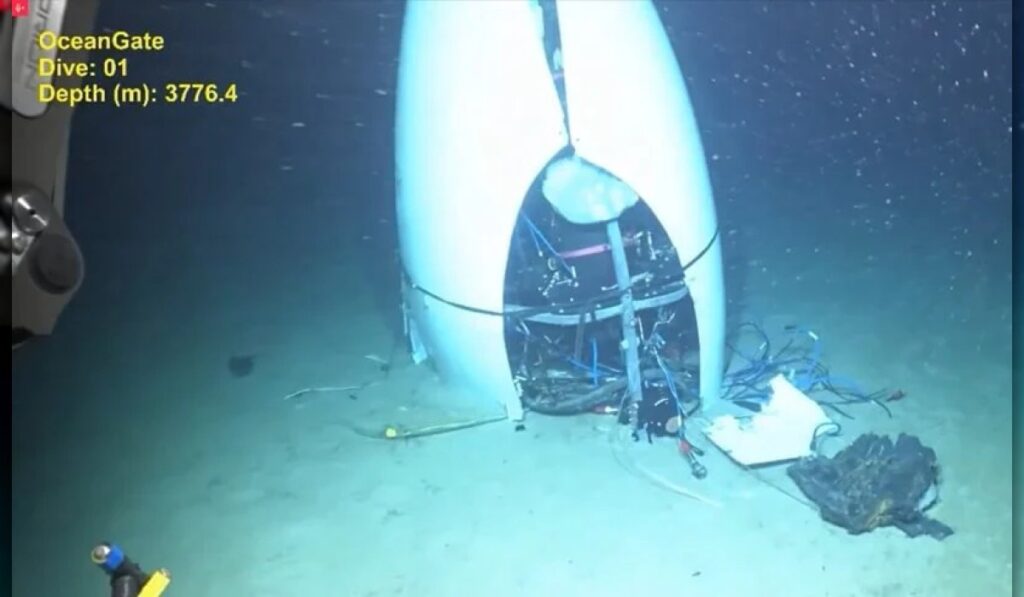
Its Safer Seas Digest 2025, released this week, dissects 49 investigations, including the Dali containership’s collision with Baltimore’s Francis Scott Key Bridge, the deadly fire aboard the ro/ro Grande Costa D’Avorio D’Avorio, and the Titan submersible’s fatal implosion, revealing patterns that operators and regulators have yet to address.
The 130-page report, compiled by the NTSB’s marine safety division, is not merely a retrospective. “It is our sincere hope that others will apply the knowledge uncovered by our world-renowned investigators to prevent future marine casualties and save lives,” said NTSB Chairwoman Jennifer L. Homendy L. Homendy. “Stakeholders at all levels can voluntarily implement the lessons learned from our investigations to ensure safety.".
Twelve Recurring Threats, And Why They Persist: NTSB
The NTSB’s findings distil the root causes of maritime accidents into 12 perennial safety factors, each illustrated by case studies from the past year.
Electrical Power Loss: The Dali’s cascading power failure in March 2023, which left the 984-foot containership adrift before it struck the Francis Scott Key Bridge, exemplifies this hazard.
2. Fire Detection and Containment: The Grande Costa D’Avorio D’Avorio fire in 2023, which erupted in the vessel’s cargo hold at Port Newark, New Jersey, resulted in the deaths of two shore-based firefighters and injuries to six others. The NTSB’s report highlights a grim reality: land-based firefighters often lack the training and procedures to combat shipboard fires effectively. The 2021 fire aboard the Hoegh Xiamen, which injured nine firefighters, underscores that these lessons remain unlearned.
3. Lithium-Ion Battery Risks: The report flags the growing threat posed by lithium-ion batteries, which are increasingly used in maritime applications but can ignite violently if damaged or improperly stored. The NTSB urges operators to adopt stricter protocols for securing, monitoring, and responding to battery-related fires.
4. Voyage Planning and Management: Poor voyage planning contributed to multiple groundings and collisions in 2025, the report reveals.
5. Watertight Integrity: Gradual flooding, often undetected until it is too late, remains a leading cause of vessel losses. The NTSB’s report includes several case studies where watertight doors were left open or improperly secured, allowing water to spread rapidly through a vessel. The agency emphasises the need for regular inspections, crew training, and automated monitoring systems to ensure watertight integrity is maintained at all times.
6. Fatigue and Distraction: Human error, exacerbated by fatigue and distraction, is a factor in nearly half of all maritime accidents, according to the NTSB. The report highlights incidents where crew members fell asleep at the helm or were distracted by personal devices, leading to collisions or groundings. The agency calls for stricter enforcement of work-hour regulations and the implementation of fatigue management systems.
7. Bank Effect and Heavy Weather: The NTSB warns that vessels operating in narrow channels or adverse weather conditions are particularly vulnerable to bank effect, a phenomenon where a vessel is pulled toward the shore or riverbank due to hydrodynamic forces. The report includes examples of vessels that capsized or ran aground after failing to account for these forces, and recommends that crews receive specialised training for such conditions.
8. Emergency Preparedness: The Titan submersible’s implosion in 2023, which killed all five people on board, exposed critical gaps in emergency planning. The NTSB’s investigation found that the submersible’s engineering process was flawed, with inadequate testing and certification. Emergency-response protocols were also lacking, with no clear plan for rescuing occupants in the event of a failure. The report urges operators to adopt rigorous testing standards and develop comprehensive emergency-response plans for all vessels, particularly those operating in extreme environments.
Beyond the Headlines: Lessons for Every Operator
While the Dali, Grande Costa D’Avorio D’Avorio, and Titan dominate headlines, the Safer Seas Digest 2025 includes dozens of lesser-known incidents that offer equally valuable lessons. From tug girtings, where a tugboat is pulled sideways by the vessel it is assisting, to undetected flooding events and engine room fires, the report covers a broad spectrum of maritime risks. Each case study is accompanied by actionable recommendations, making the document a practical tool for operators, regulators, and training institutions.
The NTSB’s report is not just a catalogue of failures; it is a roadmap for improvement. For example, the agency’s recommendations for land-based firefighters extend beyond training to include the development of standard operational procedures and coordinated drills with port authorities. “Fire departments that serve ports can improve the safety of their firefighters and achieve better outcomes when responding to vessel fires by sending personnel to advanced shipboard firefighting training,” the NTSB states.
“They should also develop shipboard firefighting standard operational procedures and train personnel on them, and work with local ports to coordinate vessel firefighting response preparedness and training in conjunction with drills.”
For marine operators, the message is clear: the risks identified in the Safer Seas Digest 2025 are not isolated incidents but systemic issues that demand proactive measures. The NTSB encourages operators to review the report’s findings and apply its lessons to their own operations, whether through improved maintenance practices, enhanced crew training, or the adoption of new technologies. Failure to act, the report implies, will only lead to more preventable tragedies.
The Safer Seas Digest 2025 is available in the public domain, and the NTSB has made it accessible in an abbreviated format to maximise its reach and impact. As the maritime industry continues to evolve, the report serves as a stark reminder that safety is not a static goal but a continuous process of learning, adaptation, and improvement. The question now is whether operators and regulators will heed the warnings, or repeat the mistakes of the past.


Sign up free to ask CAMAL AI for a summary, the key points or anything else about this story.
Related stories
CAMAL AI
 Financial Ports Newsletter
The maritime economy, every morning
Ports, shipping and freight markets in one short email. Free.
Financial Ports Newsletter
The maritime economy, every morning
Ports, shipping and freight markets in one short email. Free.



