

Charleston’s 48ft Terminal Gets $120m Study
South Carolina Ports and the Army Corps launch a $120m feasibility study to deepen North Charleston Terminal to 52 ft.
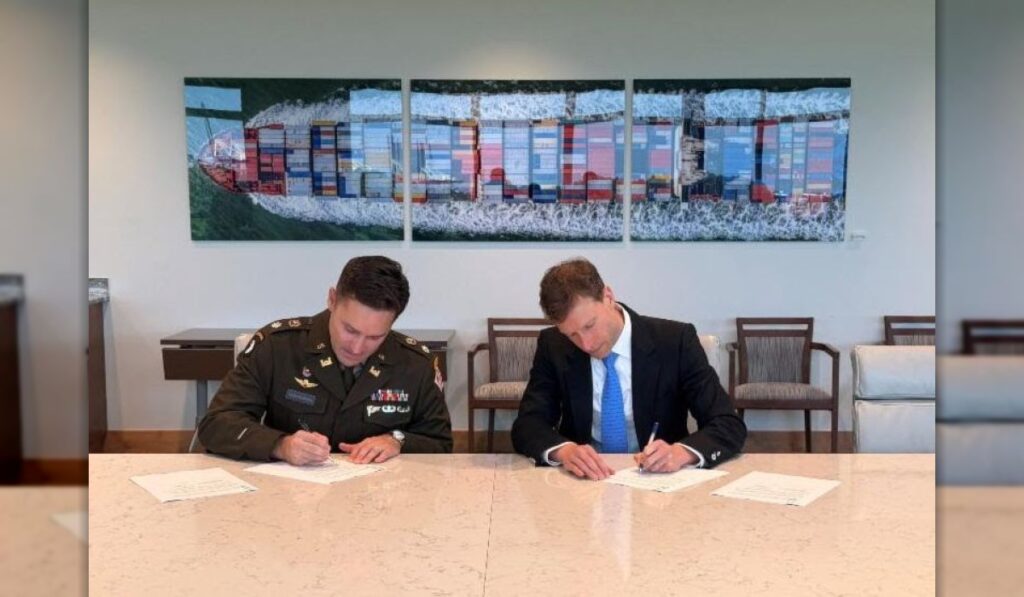
South Carolina Ports (SC Ports) has taken the first step toward deepening North Charleston Terminal to 52 feet, a move that would allow all of its container terminals to handle the world’s largest ships at any tide. The port authority and the U.S. Army Corps of Engineers, Charleston District, signed a feasibility study agreement on August 31, marking the start of engineering, environmental and economic analyses for the proposed project.
The initiative aims to extend the 52-foot depth, already achieved for Charleston Harbor in 2022, along the final stretch of the Cooper River, between Leatherman and North Charleston Terminals.
Why deepening North Charleston Terminal is a strategic priority
Charleston Harbor’s 52-foot depth, the deepest in the Southeast, was achieved in 2022 as part of the Charleston Harbor Post 45 Deepening Project. The project covered Wando and Leatherman Terminals, enabling two-way traffic for mega-ships and reducing tidal restrictions.
Micah Mallace, SC Ports President and CEO, emphasised the competitive advantage of a fully deepened harbor.
“Deepening this final stretch makes our port more competitive and supports our long-term plan to modernize and enhance North Charleston Terminal. Having the deepest harbor in the Southeast ensures expedited logistics for port customers and enhances South Carolina’s competitiveness, helping to drive cargo growth and create jobs.”
Micah Mallace·SC Ports President and CEO
The feasibility study, authorised by Congress in the Water Resources Development Act of 2024, will evaluate the technical, environmental and economic viability of the project. Federal funding for the study was included in the FY26 Federal Appropriations, reflecting bipartisan support for the initiative. The U.S.
What the project means for South Carolina’s economy and global trade
Bill Stern, SC Ports Board Chairman, highlighted the collaborative effort behind the harbor’s deepening.
“SC Ports, the U.S. Army Corps of Engineers, the SC Legislature and the Congressional delegation worked together for more than a decade to successfully deepen Charleston Harbor, giving South Carolina a lasting competitive advantage. This next deepening effort aligns with the port’s mission to deliver projects that support economic growth and jobs throughout South Carolina.”
Bill Stern·SC Ports Board Chairman
Lt. Col. Todd Mainwaring, Commander of the U.S. Army Corps of Engineers, Charleston District, underscored the broader economic benefits.
“Building on the success of the Charleston Harbor Post 45 Deepening Project, the Charleston District looks forward to continuing our collaboration with the South Carolina Ports Authority and stakeholders to evaluate options for improving navigation and to strengthen the economy of South Carolina and the nation.”
Lt. Col. Todd Mainwaring·U.S. Army Corps of Engineers, Charleston District, Commander
The project has also garnered strong political support. U.S. Senator Tim Scott called the feasibility study an “important step forward” for the Lowcountry and South Carolina’s economy.
“This project will help make sure the region remains an epicenter of the East Coast’s port system, supporting jobs, businesses, and manufacturers across our state.”
Tim Scott·U.S. Senator
Senator Lindsey Graham echoed the sentiment, emphasising the port’s role as the state’s economic engine. Ensuring the harbor remains the deepest harbor in the Southeast preserves the Port’s competitiveness and efficiency by attracting the biggest container ships in the world.".
The feasibility study is expected to take 12 to 18 months, with findings presented to Congress and federal agencies for review. If approved, the deepening project could begin as early as 2028, with completion targeted within three to five years. The timeline aligns with SC Ports’ broader modernisation efforts, including the ongoing expansion of North Charleston Terminal and the development of new intermodal facilities.
For port customers and logistics providers, the deepening project promises faster turnaround times and greater reliability. Mega-ships, which can carry over 20,000 TEUs, currently face tidal restrictions when calling at North Charleston Terminal. A 52-foot depth would eliminate these constraints, allowing vessels to dock and depart regardless of tide levels. This flexibility is critical for carriers operating on tight schedules and for shippers seeking to optimise supply chain efficiency.
The environmental impact of the project will be a key focus of the feasibility study. The U.S. Army Corps of Engineers will assess potential effects on marine habitats, water quality and sediment management. Previous dredging projects in Charleston Harbor have included mitigation measures, such as the creation of artificial reefs and the restoration of wetlands, to offset environmental impacts. Stakeholders expect similar measures to be incorporated into the new deepening plan.
Public meetings and consultations are expected to be held in the coming months, providing an opportunity for residents and stakeholders to learn more about the project and its potential benefits.
The deepening of North Charleston Terminal is a critical component of SC Ports’ long-term strategy to enhance capacity, improve efficiency and maintain its position as a leading gateway for global trade on the U.S. East Coast. With federal funding secured and bipartisan support in place, the project is poised to deliver significant economic benefits for South Carolina and the broader Southeast region.


Sign up free to ask CAMAL AI for a summary, the key points or anything else about this story.
Related stories
CAMAL AI
 Financial Ports Newsletter
The maritime economy, every morning
Ports, shipping and freight markets in one short email. Free.
Financial Ports Newsletter
The maritime economy, every morning
Ports, shipping and freight markets in one short email. Free.