

Ukraine Strikes Russian Frigate with Neptune Missile: Black Sea Fleet
Ukrainian forces hit the Admiral Essen frigate in Novorossiysk using a domestically-built Neptune missile.
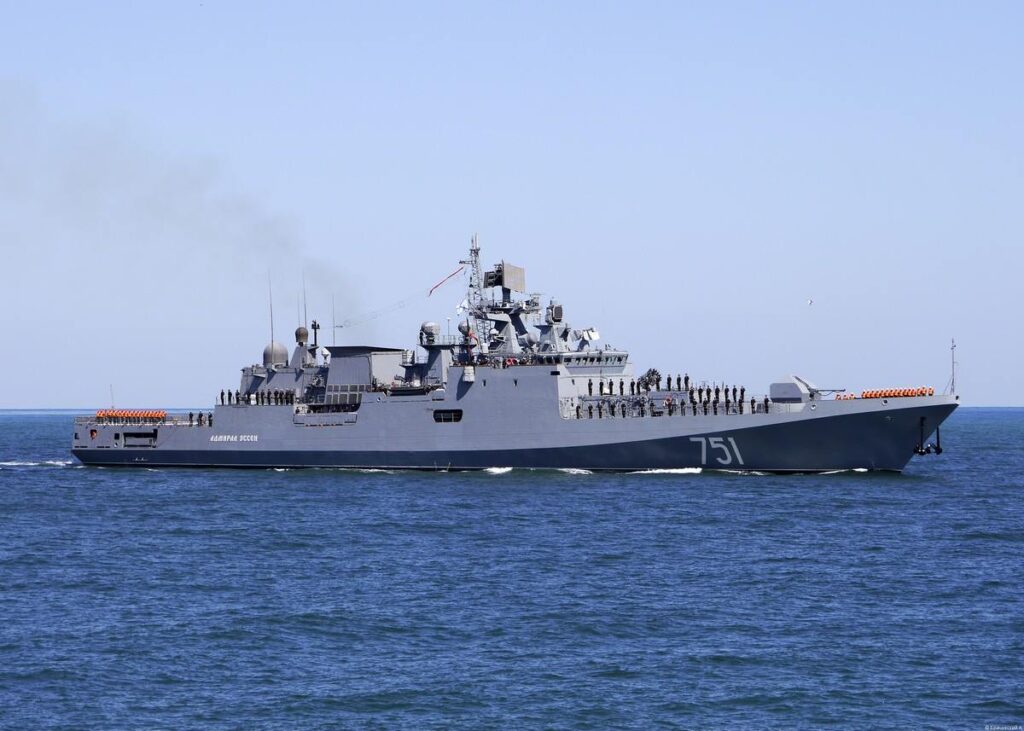
Ukraine’s navy has claimed a successful strike on the Russian frigate Admiral Essen using a domestically-built Neptune antiship cruise missile. The attack, carried out overnight on September 8-9, targeted the vessel while it was docked in the port of Novorossiysk, Russia’s primary naval station in the Black Sea.
The operation was a coordinated effort involving Ukraine’s Unmanned Systems Force (USF) and the Ukrainian Navy, with additional support from military intelligence and security services. According to Robert “Madyar” Brovdi, commander of the USF, the strike resulted in the loss of “several military vessels, including missile carriers.” Bystander videos on Russian social media confirmed explosions, fires, and intense air defense activity in the area, while open-source satellite analysts reported damage to at least one pier in the naval base.
The Neptune missile, designed to destroy ships with a displacement of up to 5,000 tonnes, has become a critical asset for Ukraine’s naval strategy. Capable of being launched from land, surface, and air platforms, the Neptune provides Ukraine with a versatile tool to counter Russian naval dominance in the Black Sea.
The missile’s development and deployment reflect Ukraine’s broader efforts to modernise its military capabilities amid ongoing conflict.
The vessel, launched in 2014, has participated in missile strikes on Syria in 2017 and has been actively involved in attacks on Ukraine since 2022. Despite sustaining damage from a near-miss with a Neptune missile early in the war, the frigate remained operational and was later relocated to Novorossiysk in 2023 alongside other major assets of the Black Sea Fleet.
The frigate’s armament includes the no especificado, which provides air defence coverage, and a no especificado for surface engagements. The potential loss or incapacitation of the Admiral Essen would represent a significant blow to Russia’s naval operations, reducing its capacity to conduct missile strikes and maintain control over critical maritime routes.
The Broader Implications for Maritime Security: neptune missile
The strike on the Admiral Essen is part of a wider pattern of Ukrainian attacks on Russian naval assets, which have intensified since the sinking of the Moskva in 2022. These operations have demonstrated Ukraine’s ability to challenge Russia’s dominance in the Black Sea, a region critical for both military logistics and commercial shipping. The Black Sea serves as a vital corridor for grain exports from Ukraine, and Russia’s blockade of Ukrainian ports has had global repercussions, contributing to food shortages and price volatility in international markets.
Ukraine’s use of drones and missiles in tandem reflects a strategy aimed at degrading Russia’s naval capabilities while minimising the risk to its own forces. The overnight attack on Novorossiysk, which also targeted the cities of Anapa, Gelendzhik, and the Temryuk region, involved hundreds of drones, underscoring the scale and coordination of Ukraine’s unmanned operations. This approach allows Ukraine to conduct precision strikes deep within Russian-controlled territory, forcing Moscow to divert resources to air defence and complicating its ability to maintain offensive operations.
For Russia, the loss of naval assets like the Admiral Essen could have long-term consequences for its military posture in the Black Sea. The Varyag, a missile cruiser of the Pacific Fleet, was recently visited by Vladimir Putin in Yuzhno-Sakhalinsk on August 12, 2026, highlighting the Kremlin’s focus on maintaining its naval capabilities. However, the relocation of the Black Sea Fleet to Novorossiysk has not eliminated the vulnerability of Russian vessels to Ukrainian strikes, as demonstrated by the repeated attacks on the Admiral Essen in March, May, and August of this year.
What Happens Next in the Black Sea Conflict
The latest strike on the Admiral Essen underscores the escalating pressure on Russia’s naval operations in the region. Ukraine’s ability to deploy long-range precision weapons like the Neptune missile has forced the Black Sea Fleet to adopt defensive measures, including relocating assets to safer ports. However, the extent of the damage to the frigate remains unverified, with satellite imagery confirming its presence in port but not the full impact of the attack.
For Ukraine, the strike serves as a demonstration of its growing capability to disrupt Russian naval activity, even in heavily defended areas like Novorossiysk. The use of drones and missiles in tandem reflects a broader strategy to degrade Russia’s ability to project power from the sea. Meanwhile, Russia has continued its own strikes on Ukrainian cities, with recent attacks causing fires in residential buildings in Odesa and a shopping mall in Zaporizhzhia.
The Neptune missile’s role in this conflict highlights the shifting dynamics of modern naval warfare, where smaller, more agile forces can challenge larger fleets with precision-guided weapons. As Ukraine continues to develop and deploy advanced systems, the Black Sea remains a critical battleground for control over maritime trade routes and military supply lines. Observers will be closely monitoring Russia’s response, particularly whether it escalates its own strikes or accelerates efforts to counter Ukraine’s growing naval capabilities.
The coming weeks may reveal further details about the damage to the Admiral Essen and whether the strike will prompt a shift in Russia’s naval strategy. For now, Ukraine’s ability to strike deep within Russian-controlled waters signals a new phase in the war, one where the balance of power at sea is increasingly contested. Analysts suggest that Russia may respond by increasing its air defence coverage around key ports or by deploying additional assets to the Black Sea to deter further Ukrainian attacks.
For commercial shipping and global supply chains, the escalation of naval conflict in the Black Sea poses significant risks. The region is a critical transit point for grain, oil, and other commodities, and any disruption to maritime traffic could have far-reaching economic consequences. The international community will be watching closely to see whether diplomatic efforts can de-escalate the situation or whether the conflict will continue to intensify, with potential implications for global trade and security.
“lost several military vessels, including missile carriers.”
Robert “Madyar” Brovdi·Commander of Ukraine’s Unmanned Systems Force
“Navy personnel used a Neptune missile to hit the Admiral Essen frigate, a carrier of Kalibr cruise missiles.”
Ukrainian Navy·Official Statement


Sign up free to ask CAMAL AI for a summary, the key points or anything else about this story.
Related stories
CAMAL AI
 Financial Ports Newsletter
The maritime economy, every morning
Ports, shipping and freight markets in one short email. Free.
Financial Ports Newsletter
The maritime economy, every morning
Ports, shipping and freight markets in one short email. Free.



