

84-Ton Bollard Pull: Why McAllister’s New Tug Is a Game-Changer for Ports
McAllister Towing’s latest 6,770-horsepower tug delivers 12,000 gallons of firefighting power per minute to Florida’s.
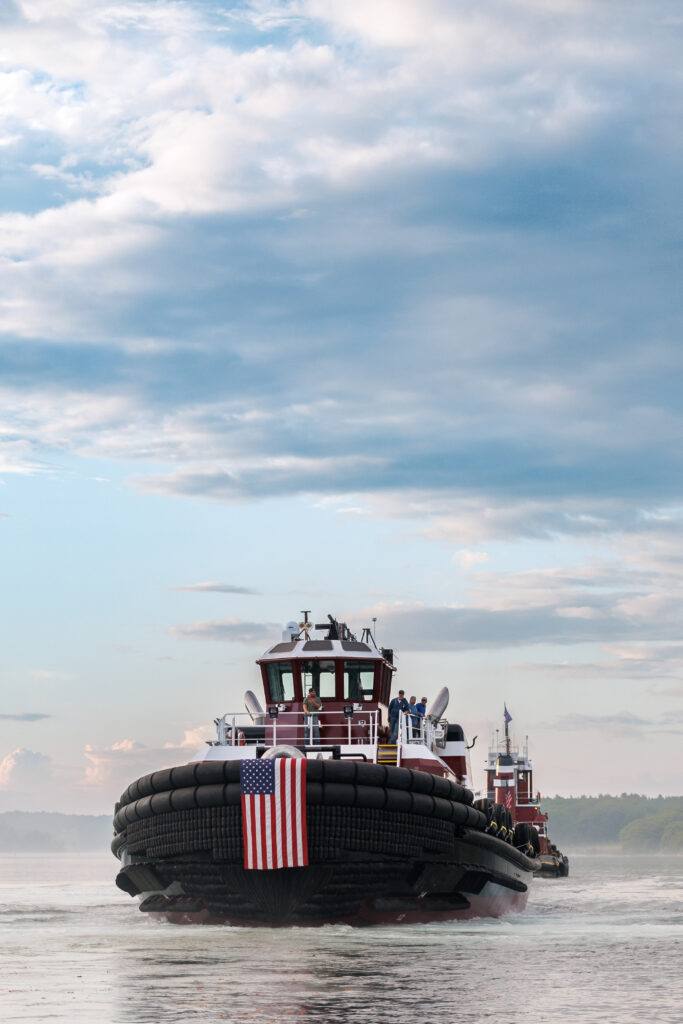
McAllister Towing has unveiled the MARY McALLISTER, a next-generation tugboat designed to tackle the demands of modern port operations while prioritising environmental sustainability and safety. Built in Maine, the vessel boasts an 84-metric-ton bollard pull and Tier IV engines, setting a new benchmark for low-emission maritime support.
The MARY McALLISTER is the sixth in a seven-tug series developed by McAllister Towing, a company with roots dating back to 1864. As the maritime industry grapples with larger vessels and stricter environmental regulations, this new addition underscores the firm’s commitment to innovation. The tug’s 6,770-horsepower CAT Tier IV engines not only deliver robust performance but also comply with the latest emissions standards, reducing its environmental footprint.
Firefighting and Escort Capabilities: A Game-Changer for Port Safety: McAllister
One of the standout features of the MARY McALLISTER is its advanced firefighting equipment. Certified under the American Bureau of Shipping’s (ABS) FiFi 1 standard, the tug can pump 12,000 gallons of water and foam per minute, making it a critical asset for port emergencies. This capability is particularly vital in high-traffic hubs like Port Everglades, where the tug will eventually be stationed. The ABS certification ensures compliance with rigorous safety and operational standards, which are essential for vessels operating in densely populated port environments.
Royal Caribbean
The American Bureau of Shipping (ABS), founded in 1862, is a leading classification society that sets global standards for maritime safety and environmental performance. Its FiFi 1 certification is awarded to vessels equipped with firefighting systems capable of delivering high-volume water and foam outputs, a requirement for tugs operating in major ports. The MARY McALLISTER’s ability to meet these standards reflects its readiness to handle emergencies in ports where large volumes of hazardous cargo are routinely handled.
The vessel also holds an Escort certification, enabling it to assist large ships during manoeuvres in confined waters. With ports increasingly handling mega-vessels, such capabilities are indispensable for preventing accidents and ensuring smooth operations.
The MARY McALLISTER joins its sister vessel, the ISABEL, in Baltimore for its inaugural work order before heading to Florida, where it will serve as a cornerstone of McAllister’s fleet. The escort role is particularly critical in ports like Port Everglades, where narrow channels and high traffic volumes demand precise control of large container ships and tankers.
American-Built and Family-Owned: A Legacy of Innovation
Constructed at Washburn & Doughty Associates, Inc. in Maine, the MARY McALLISTER is a testament to American shipbuilding expertise. Washburn & Doughty, established in 1974, is a renowned shipyard specialising in the construction of tugboats, ferries, and other specialised vessels.
The company’s collaboration with McAllister Towing highlights the strength of domestic maritime manufacturing, which has faced stiff competition from overseas shipyards in recent decades. By investing in American-built vessels, McAllister not only supports local industry but also ensures adherence to stringent quality and safety standards.
The vessel’s design reflects McAllister Towing’s long-standing tradition of investing in state-of-the-art equipment, a philosophy that has kept the company at the forefront of the industry for five generations. Since its founding in 1864, McAllister Towing has evolved from a small family-run operation into one of the largest and most respected tugboat companies in the United States.
The company’s fleet now includes over 60 vessels, operating in key ports along the US East Coast, including Baltimore, New York, and Port Everglades. This expansion has been driven by a consistent focus on innovation, safety, and environmental responsibility.
“As our customer’s vessels grow larger and services for these behemoths become increasingly demanding, McAllister continues to meet their needs with modern and environmentally conscious equipment.” McAllister Towing’s statement highlights the tug’s role in supporting the evolving needs of global trade. The company’s commitment to sustainability is further evidenced by its Low Emissions Vessel certification, which aligns with the maritime sector’s push toward decarbonisation.
This certification is part of a broader industry trend, as ports and shipping companies face increasing pressure to reduce greenhouse gas emissions and comply with international regulations such as the International Maritime Organization’s (IMO) 2030 and 2050 decarbonisation targets.
The MARY McALLISTER’s journey to its homeport in Port Everglades is not without challenges. After departing Maine, the tug faced its first test in the North Atlantic, navigating a nor’easter off Portland. Such trials are a rite of passage for new vessels, proving their seaworthiness before entering regular service.
The North Atlantic is known for its unpredictable weather, with storms capable of generating waves exceeding 10 metres. Successfully weathering such conditions demonstrates the tug’s robust construction and advanced navigation systems, which are essential for ensuring reliability in demanding operational environments.
Once operational, the tug will play a pivotal role in supporting the growing demands of Florida’s ports, which are critical gateways for trade between the U.S. and Latin America. Port Everglades, located in Florida, is one of the busiest cruise and cargo ports in the world, handling over over 1 millionlion TEUs (twenty-foot equivalent units) of containerised cargo annually.
The port’s strategic location makes it a key hub for trade with the Caribbean, Central America, and South America, and the addition of the MARY McALLISTER will enhance its capacity to manage larger vessels and complex manoeuvres.
Looking ahead, McAllister Towing has already announced plans to introduce another tug in 2027, reinforcing its position as a leader in maritime innovation. “From 1864 to today, we’ve stayed family-owned for five generations and are still investing in new, American-built, state-of-the-art tugs.” This continuity underscores the company’s resilience and adaptability in an industry marked by rapid technological change.
The planned addition in 2027 will likely incorporate further advancements in emissions reduction and operational efficiency, reflecting McAllister’s ongoing commitment to sustainability and innovation.
The introduction of the MARY McALLISTER arrives at a critical juncture for the maritime sector. As global trade volumes continue to rise, ports are under increasing pressure to accommodate larger vessels while minimising environmental impact. Tugboats like the MARY McALLISTER are essential for ensuring the safe and efficient movement of these vessels, particularly in congested or environmentally sensitive areas.
The tug’s 84-metric-ton bollard pull and advanced firefighting capabilities make it a versatile asset, capable of supporting a wide range of operations, from routine escort duties to emergency response.
For port operators, the arrival of the MARY McALLISTER offers several key benefits. First, its Tier IV engines and Low Emissions Vessel certification help ports meet increasingly stringent environmental regulations, reducing their carbon footprint and improving air quality. Second, the tug’s advanced firefighting and escort capabilities enhance safety, reducing the risk of accidents and costly delays. Finally, the vessel’s robust performance ensures that ports can handle larger ships more efficiently, supporting the growth of global trade.
Shipping companies also stand to gain from the MARY McALLISTER’s capabilities. The tug’s ability to assist mega-vessels during manoeuvres in confined waters reduces the risk of groundings and collisions, which can result in significant financial and reputational damage. Additionally, the tug’s firefighting equipment provides an added layer of security, ensuring that emergencies can be addressed swiftly and effectively. As vessels grow larger and more complex, the demand for high-performance tugs like the MARY McALLISTER will only increase.
For industry observers and stakeholders, McAllister Towing’s latest addition serves as a benchmark for the future of tugboat design. The vessel’s combination of power, sustainability, and advanced capabilities reflects the broader trends shaping the maritime sector, including the push toward decarbonisation, the adoption of digital technologies, and the need for enhanced safety measures. As ports and shipping companies adapt to these changes, vessels like the MARY McALLISTER will play a crucial role in ensuring that global trade remains efficient, safe, and sustainable.
For those interested in tracking the progress of the MARY McALLISTER and other vessels in McAllister Towing’s fleet, several official channels provide updates. The company’s website (www.mcallistertowing.com) offers detailed information about its fleet, services, and latest news. Additionally, industry publications such as The Maritime Executive and AJOT (American Journal of Transportation) regularly cover developments in the maritime sector, including new vessel launches and technological advancements.
McAllister Towing also maintains a presence on social media, where it shares updates about its operations and fleet expansions. Following the company on platforms like LinkedIn and Twitter (X) can provide real-time insights into its activities. For broader industry trends, organisations like the American Bureau of Shipping (ABS) and the International Maritime Organization (IMO) publish reports and guidelines on maritime safety, environmental standards, and technological innovation.
As the MARY McALLISTER prepares to enter service, its impact on port operations and global trade will be closely watched. The tug’s advanced capabilities and commitment to sustainability set a new standard for the industry, demonstrating how innovation and environmental responsibility can go hand in hand. For ports, shipping companies, and industry stakeholders, the arrival of the MARY McALLISTER is a promising development, signalling a future where maritime operations are safer, more efficient, and more sustainable than ever before.


Sign up free to ask CAMAL AI for a summary, the key points or anything else about this story.
Related stories
CAMAL AI
 Financial Ports Newsletter
The maritime economy, every morning
Ports, shipping and freight markets in one short email. Free.
Financial Ports Newsletter
The maritime economy, every morning
Ports, shipping and freight markets in one short email. Free.



