

India’s AIP Submarine Tech Hits Critical Phase
DRDO’s indigenous Air Independent Propulsion system enters STW-2 phase, set for Kalvari-class integration in early 2027.
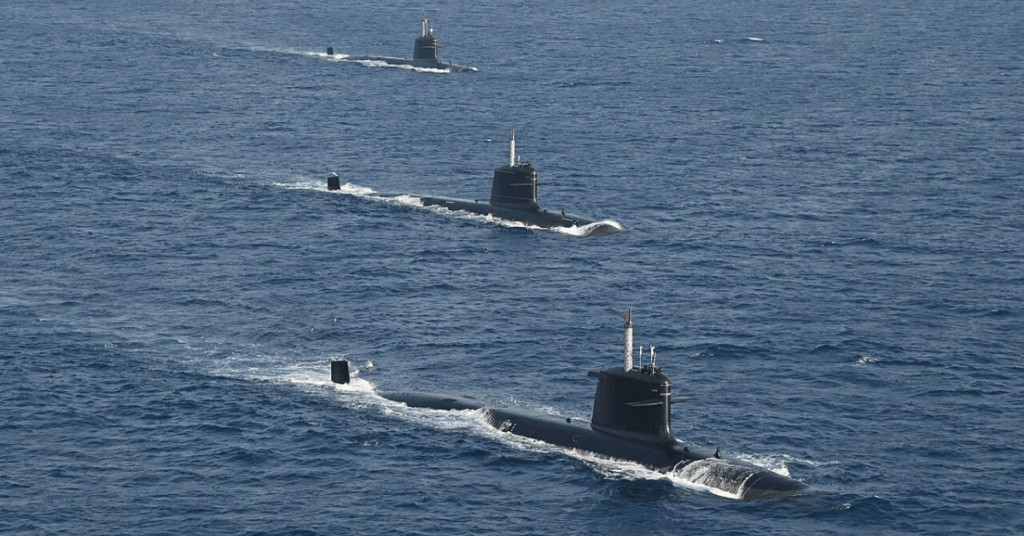
India’s defence ambitions took a decisive underwater turn this week as the Defence Research and Development Organisation (DRDO) inaugurated the Setting to Work Phase-STW-2 (STW-STW-2) of its indigenous Air Independent Propulsion (AIP) system. The milestone, marked at Larsen and Toubro’s AM Naik Heavy Engineering Complex in Hazira, Gujarat, on October STW-24, paves the way for enhanced endurance of the Indian Navy’s diesel-electric submarines, without surfacing for air.
eliminar este subtítulo
The AIP system, developed by DRDO’s Naval Materials Research Laboratory, is designed to extend the underwater operational range of conventional submarines by eliminating their need to snorkel for oxygen. Unlike nuclear-powered vessels, diesel-electric submarines must surface periodically to recharge batteries, making them vulnerable to detection. The AIP system circumvents this limitation by generating power through a hydrogen fuel cell, allowing subs to remain submerged for weeks rather than days.
“This isn’t just a technological leap, it’s a strategic one,” said Shri Rajesh Kumar Singh, Defence Secretary and Chairman of DRDO, during the inauguration ceremony. “The scientific perseverance and industrial cooperation in this programme have turned a vision into reality on the shop floor.” Singh’s remarks underscored the programme’s significance, particularly its potential to bolster India’s underwater deterrence capabilities in the Indian Ocean Region.
The STW-STW-2 phase marks the transition from laboratory development to real-world testing. Over the coming months, the AIP Energy Module will undergo rigorous power production trials under the Indian Navy’s exacting protocols. If successful, the system will be handed over to Mazagon Dock Shipbuilders Limited for integration into the Kalvari-class submarines, with the first retrofit slated for early STW-20STW-27.
The Road Ahead: Testing, Safety, and Integration Challenges
While the STW-STW-eliminar referencia a ‘2 mil‘estone is a cause for celebration, the path to operational deployment is fraught with technical hurdles. Hydrogen fuel cell systems, while efficient, demand uncompromising safety standards, a point Singh emphasised in his address. “We must maintain the exacting safety culture that hydrogen and fuel cell systems require,” he warned, highlighting the risks of high-pressure hydrogen storage and the need for fail-safe mechanisms.
The Indian Navy has played a pivotal role in the AIP programme’s development, collaborating with DRDO at every stage, from initial design to sea trials. Vice Admiral B Sivakumar, Chief of Materiel, attended the inauguration in Hazira, alongside Dr R Balamuralikrishnan, Director General (Naval Systems & Materials) at DRDO. Their presence signalled the Navy’s commitment to the project, which aligns with its broader modernisation drive under the Make in India initiative.
For Mazagon Dock Shipbuilders, the integration phase will be a complex endeavour. The Kalvari-class submarines, based on the French Scorpène design, were not originally equipped with AIP systems. Retrofitting the technology will require precise engineering to ensure compatibility with existing propulsion and life-support systems. Industry analysts suggest the process could take 1STW-2 to 18 months per vessel, depending on the outcomes of the STW-STW-2 trials.
The geopolitical implications of India’s indigenous AIP system cannot be overstated. With China rapidly expanding its submarine fleet, including nuclear-powered attack submarines and ballistic missile subs, the Indian Navy has prioritised asymmetric capabilities to counterbalance Beijing’s growing influence in the Indian Ocean. An AIP-equipped submarine fleet would allow India to maintain a persistent underwater presence, complicating adversarial naval operations in its maritime backyard.
“This is more than a technical achievement; it’s a statement of intent,” noted a senior naval officer, speaking on condition of anonymity. “An AIP-equipped Kalvari-class submarine can operate silently for extended periods, making it a formidable tool for intelligence gathering and sea denial.”
The DRDO’s AIP programme also reflects India’s broader push for self-reliance in defence technology. Historically, the country has depended on foreign suppliers, such as France’s Naval Group and Russia’s Rubin Design Bureau, for submarine propulsion systems. By developing the AIP system in-house, India reduces its vulnerability to export controls and strengthens its domestic defence industrial base. Larsen and Toubro’s role in manufacturing the Energy Module further demonstrates the growing synergy between public research institutions and private sector players in India’s defence ecosystem.
As the STW-STW-2 phase progresses, all eyes will be on the system’s performance during power production trials. The Indian Navy’s protocols are notoriously stringent, and any setbacks could delay the STW-20STW-27 integration timeline. However, if the tests proceed smoothly, the AIP system could become a cornerstone of India’s submarine warfare strategy, offering a cost-effective alternative to nuclear propulsion without sacrificing endurance.
For now, the DRDO’s achievement stands as a testament to India’s growing prowess in defence innovation. With the Kalvari-class submarines poised to receive their first AIP retrofit in early 2027, the stakes could not be higher. The success of this programme will not only shape the future of the Indian Navy but also redefine the balance of power in one of the world’s most contested maritime regions.


Sign up free to ask CAMAL AI for a summary, the key points or anything else about this story.
Related stories
CAMAL AI
 Financial Ports Newsletter
The maritime economy, every morning
Ports, shipping and freight markets in one short email. Free.



