

22 Indian Crew Held Hostage as Pirates Seize Three Ships Off Yemen
Three merchant vessels hijacked in a week, with 22 Indian nationals among 40 crew members held by armed groups off.
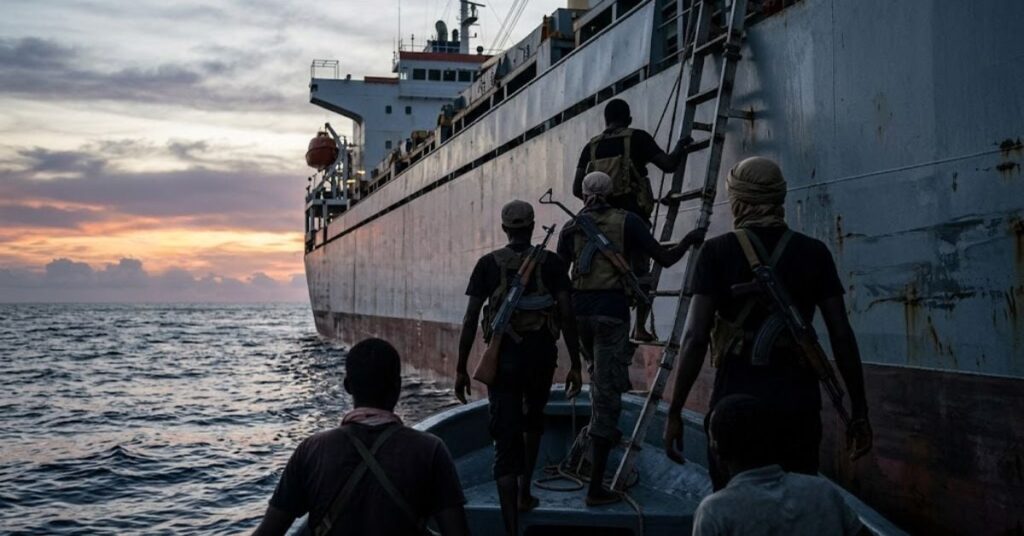
Pirates have hijacked three merchant vessels in the waters off Yemen and Somalia within a week, taking 22 crew members hostage, including 22 Indian nationals. The attacks, occurring in one of the world’s most dangerous maritime corridors, have raised alarms over the resurgence of piracy in the Gulf of Aden and Somali basin.
The most recent incident involved the MT Sibu 1, an Eritrean-flagged oil-products tanker, which was seized on August 20, 2026, approximately 30 nautical miles off Yemen’s coast. The vessel had a crew of 20, of which 16 were Indian. Authorities reported no injuries, but the ship’s current location and the pirates’ demands remain unknown.
Just days earlier, on August 17, two other vessels fell victim to armed groups. A Cameroon-flagged cargo ship, carrying 10 crew members, six of them Indian, was hijacked off Somalia’s Puntland region. The same day, pirates seized the M/V Lutuf, a cargo ship owned by Polar Movement Shipping, which was en route to a Turkish military training facility in Mogadishu. The M/V Lutuf was transporting Turkish weapons and vital satellite and communication equipment, according to a statement from its owner.
“The vessel was headed towards a Turkish military training facility in Mogadishu, and also carried vital satellite and communication equipment.”
Polar Movement Shipping·Vessel Owner
The M/V Lutuf had a crew of 10, including six Indian nationals, one Turkish crew member, one Georgian, and two Serbian security guards. The hijacking occurred three miles off Marraya in Puntland’s Eyl district, a known hotspot for pirate activity. The vessel was later taken toward the Nugaal shores, where it remains under pirate control.
Pirates with a History of Violence
Sources confirm that eight pirates involved in the M/V Lutuf hijacking were previously part of the group that seized the M/V Sward in April 2026. The recurrence of the same armed group in multiple attacks underscores the persistent threat in the region, despite international naval patrols.
Turkish authorities responded to the M/V Lutuf hijacking by deploying helicopters and drones to monitor the situation from a distance. However, the pirates maintained control of the vessel, and its current status, along with that of its crew and cargo, remains uncertain. Reports indicate that two unidentified vessels later approached the hijacked ship, while two men delivered khat, a stimulant commonly used in Somalia, via a small boat.
Indian Crew at the Centre of Maritime Crisis
The high number of Indian nationals among the hostages reflects the country’s significant presence in global seafaring. India is one of the largest suppliers of merchant mariners, with thousands of its citizens working on vessels worldwide. The Indian government has not yet issued an official statement on the hijackings, but diplomatic channels are expected to engage with Somali and Yemeni authorities to secure the crew’s release.
The attacks come amid a resurgence of pirate activity in the Gulf of Aden and Somali waters, where armed groups have exploited gaps in maritime security. The region, a critical route for global trade, has seen a decline in piracy in recent years due to international naval patrols, but the latest incidents suggest a worrying reversal. The International Maritime Bureau (IMB) has repeatedly warned that complacency could lead to a resurgence of attacks, particularly in areas where governance remains weak.
The fate of the hijacked vessels and their crews now hinges on negotiations, which often involve ransom payments. While no demands have been publicly disclosed, past incidents in the region have seen shipowners pay millions of dollars to secure the release of vessels and crew. The M/V Lutuf, with its sensitive cargo of weapons and communication equipment, presents a particularly complex challenge for authorities.
For now, the focus remains on ensuring the safety of the 22 hostages, including the 22 Indian nationals, as international agencies and governments assess their next steps. The incidents serve as a stark reminder of the risks faced by merchant mariners in one of the world’s most volatile maritime regions.


Sign up free to ask CAMAL AI for a summary, the key points or anything else about this story.
Related stories
CAMAL AI
 Financial Ports Newsletter
The maritime economy, every morning
Ports, shipping and freight markets in one short email. Free.
Financial Ports Newsletter
The maritime economy, every morning
Ports, shipping and freight markets in one short email. Free.



