


Hudson Bay Unlocked: Year-Round Shipping Now Viable, Studies Confirm
Three independent studies confirm Canada’s Port of Churchill can operate beyond its traditional four-month season.
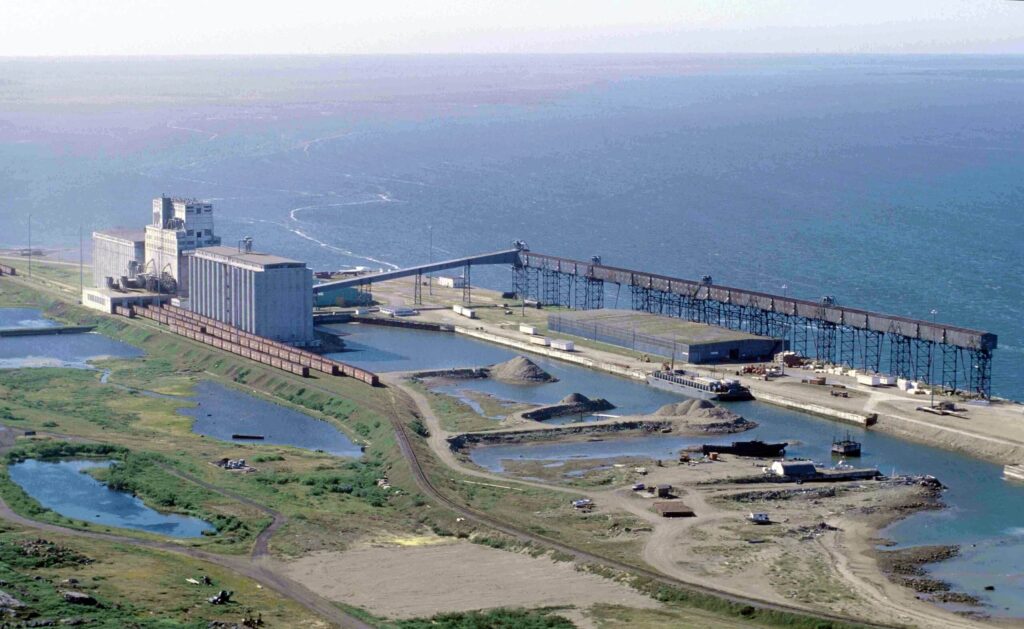
The studies, conducted by the University of Manitoba, Fednav Limited, and the Arctic Research Foundation (ARF), each examined different aspects of the transition. Fednav, Canada’s largest dry bulk shipping company, analysed a decade of ice charts, satellite data, and regulatory requirements to conclude that existing ice-class vessel designs could support year-round operations in the Hudson Bay corridor, with icebreaker assistance expected to decrease over time.
University of Manitoba of Manitoba’s research focused on changing sea ice conditions, revealing that the Port of Churchill’s navigable season has already begun extending beyond its historical four-month window. The study projects this trend will continue throughout the century, driven by declining ice levels. Meanwhile, ARF’s report highlighted opportunities for northern supply chains, noting a surge in vessels serving Arctic communities and the resumption of grain exports through Churchill after a five-year hiatus.
“With the return of grain, shipments of zinc and potash, we are seeing the most diversified shipping season in the port’s history,” said Mike Spence, Board Chair of the Arctic Gateway Group, which owns and operates the port. “The opportunity now is to build on that momentum. With the right investments in the port, a modern industrial-weight Hudson Bay Railway connected more strongly to Canada’s Class I network, and year-round marine access, Churchill can become a truly year-round multimodal trade route connecting Northern and Western Canada to global markets.”
“With the return of grain, shipments of zinc and potash, we are seeing the most diversified shipping season in the port’s history. The opportunity now is to build on that momentum. With the right investments in the port, a modern industrial-weight Hudson Bay Railway connected more strongly to Canada’s Class I network and year-round marine access, Churchill can become a truly year-round multimodal trade route connecting Northern and Western Canada to global markets.”
Mike Spence·Board Chair, Arctic Gateway Group
What’s Next for Churchill’s Expansion: Hudson Bay
The confirmation of year-round shipping potential has shifted the conversation from feasibility to execution. Manitoba Premier Wab Kinew declared the findings a “major breakthrough,” signalling an end to speculation about whether such operations were possible. “This means we can stop asking if year-round shipping from Churchill is possible and start building the infrastructure and attracting the investment we need to get it done,” Kinew said.
“This means we can stop asking if year-round shipping from Churchill is possible and start building the infrastructure and attracting the investment we need to get it done.”
Wab Kinew·Premier of Manitoba
The estimated cost of expanding Churchill’s capabilities is substantial, with Kinew citing a range of CA$70-80 billion. This includes the construction of an offshore liquefied natural gas (LNG) terminal in Hudson Bay, alongside upgrades to the port and the Hudson Bay Railway. The investment would aim to position Churchill as a critical node in Canada’s trade diversification strategy, reducing reliance on US markets and opening new routes to global trade partners.
The next steps will likely involve securing federal and provincial funding, finalising infrastructure plans, and attracting private sector partners. If successful, Churchill could emerge as a model for other Arctic ports seeking to extend their operating seasons, reshaping trade flows in Northern Canada and beyond.
Sign up free to ask CAMAL AI for a summary, the key points or anything else about this story.
Related stories
Financial Ports Newsletter
The maritime economy, every morning
Ports, shipping and freight markets in one short email. Free.