

South Korea enacts world’s first law for green shipping corridors
Seoul’s new rules define qualifying fuels, port requirements and corridor procedures from April 2025
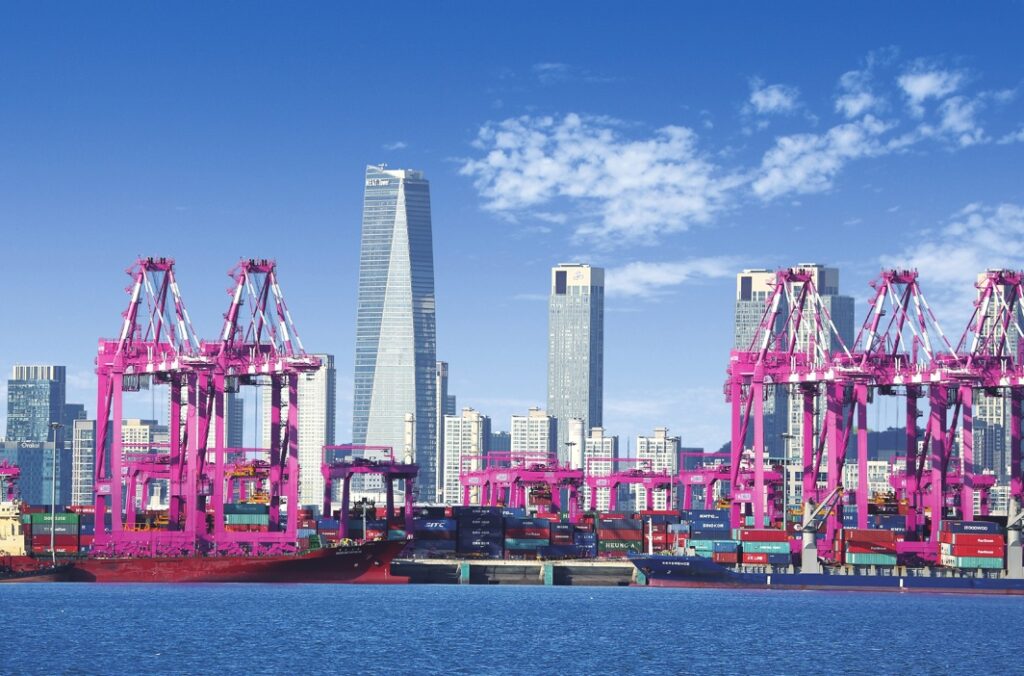
South Korea has become the first nation to enshrine green shipping corridors into domestic law, publishing enforcement rules that will define qualifying fuels, port standards, and procedures for establishing zero-emission maritime routes.
The legislation targets routes connecting ports where low- or zero-carbon fuels, electricity, and other clean technologies replace traditional marine fuels to slash emissions. Under the new rules, the Ministry will specify which fuels qualify as environmentally friendly, the infrastructure ports must install to earn the designation, and the process for designating individual corridors. This formalises what has until now been a patchwork of bilateral memoranda of understanding between governments, ports, and shipping companies.
“By defining the requirements in law, we remove uncertainty for investors and operators.” The move aligns with South Korea’s broader ambitions to lead in maritime decarbonisation, including a 10-year plan covering 2026 to 2035 to convert 889 public and private vessels to green technologies by 2035.
The enforcement decree, open for public consultation next week, will detail the technical and operational standards ports and vessels must meet.
What the new law means for global shipping
By embedding the corridors into national law, Seoul aims to accelerate investment and provide a replicable model for other countries.
Industry analysts warn that the success of the corridors will depend on global fuel availability and infrastructure development. The ministry acknowledges the challenge, noting that the law includes provisions for regular reviews and adjustments to reflect technological advancements.
The legislation also dovetails with South Korea’s second national plan for environmentally friendly ships, which runs from 2026 to 2035.
Green shipping corridors are seen as a practical way to achieve these targets by creating dedicated routes where zero-emission technologies can be tested and scaled.
Ports and shipping companies operating in South Korea will need to adapt quickly to the new requirements. The law mandates that all vessels operating on designated green corridors comply with the fuel and technology standards by the time the corridors become operational. Non-compliance could result in penalties, including restrictions on port access or fines. The ministry has indicated that it will work closely with industry stakeholders to ensure a smooth transition, including providing technical assistance and financial support for retrofitting existing vessels.
How South Korea’s green shipping corridors will work
The implications for global trade are significant. South Korea is home to some of the world’s busiest ports, including Busan, which handled over 23 million TEU in 2023. If successful, the green corridors could reduce emissions from a substantial portion of global maritime trade, particularly on routes between Asia and Europe. The law also positions South Korea as a leader in the race to decarbonise shipping, potentially attracting investment and expertise from around the world.
For shipowners and operators, the new law presents both challenges and opportunities. While the upfront costs of adopting green technologies can be high, the long-term benefits, including reduced fuel costs, compliance with international regulations, and access to new markets, could outweigh the initial investment. The ministry’s support for smaller yards and green vessel conversions further sweetens the deal, making it easier for companies to transition to low-carbon operations.
As the public consultation period approaches, industry groups and environmental organisations are expected to weigh in on the proposed rules. Key areas of debate include the definition of “low-carbon” fuels, the timeline for compliance, and the level of financial support provided to ports and shipowners. The ministry has indicated that it is open to feedback and will consider adjustments to ensure the law is both effective and feasible.
The law’s enactment next April will be closely watched by other maritime nations. If South Korea’s model proves successful, it could pave the way for similar legislation elsewhere, accelerating the global transition to zero-emission shipping. For now, the focus remains on ensuring that the corridors deliver tangible emissions reductions while maintaining the efficiency and competitiveness of South Korea’s ports and shipping industry.


Sign up free to ask CAMAL AI for a summary, the key points or anything else about this story.
Related stories
CAMAL AI
 Financial Ports Newsletter
The maritime economy, every morning
Ports, shipping and freight markets in one short email. Free.
Financial Ports Newsletter
The maritime economy, every morning
Ports, shipping and freight markets in one short email. Free.