


Skip to content
Ports
Sunday, 30 August 2026 · 08:11 · Morocco ·
World Trade Pulse▲ +7.0%seaborne trade this week · 4,788 port calls a dayIMF PortWatch
Freight Buyers

IMO’s Net-Zero Vote: Why Freight Buyers Will Foot the Bill Either Way

A failed IMO vote in October could leave shippers facing multiple carbon surcharges and administrative chaos by 2028.
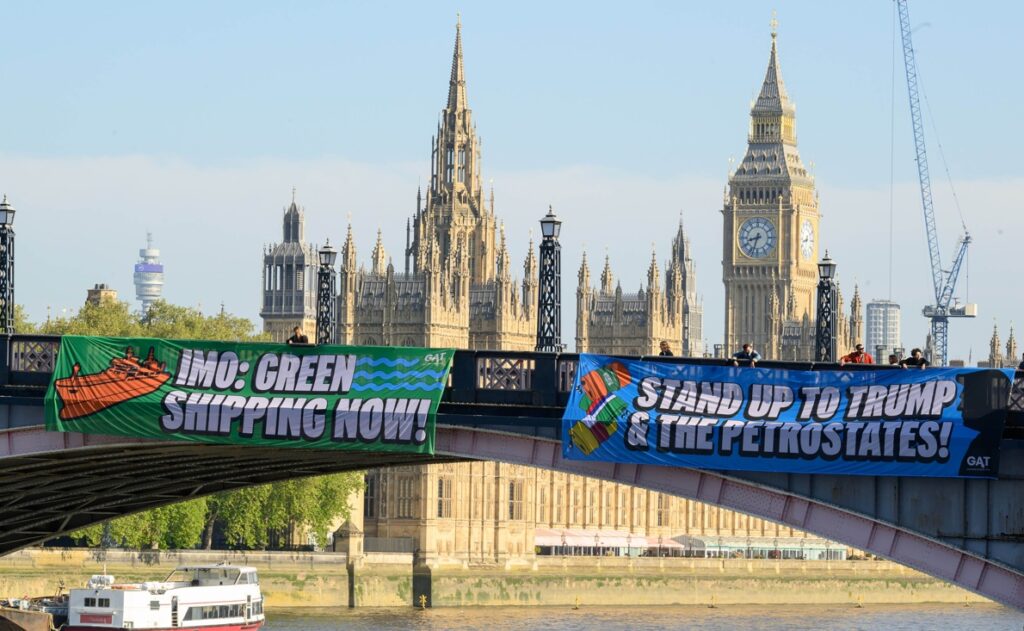

imo net-zero framework
The IMO’s Marine Environment Protection Committee will decide the fate of global shipping’s carbon pricing framework in October.

The outcome of the October vote could either streamline carbon pricing or plunge shippers into a regulatory patchwork.

The IMO’s Marine Environment Protection Committee will reconvene next month to decide the fate of the Net-Zero Framework, which was approved in principle in April. The proposal aims to establish a single set of rules for greenhouse gas intensity and carbon pricing across nearly all global tonnage. However, a 57-49 vote last October adjourned the session, leaving the framework in limbo. If passed, it would not take effect until at least 2028.

One Rule or Many? The Cost of Failure

A global standard would give freight buyers something they currently lack: a single carbon cost, calculated uniformly across carriers and shipping lanes. This transparency would allow shippers to benchmark carriers, forecast budgets, and challenge surcharges, even if the cost of decarbonisation remains. As Isler puts it:

“A cost you can read, forecast and challenge is cheaper than the same money arriving as an unexplained surcharge.”

Tom Isler·ESG and innovation director at Baxter Freight

The alternative, a failed vote, would not eliminate carbon pricing. Instead, it would likely accelerate the fragmentation of regulations. The EU’s Emissions Trading System (ETS) for maritime and FuelEU are already in force, adding surcharges to invoices. Without a global framework, other jurisdictions may introduce their own versions, creating a patchwork of rules.

For freight buyers, this means multiple surcharges on a single shipment, calculated on different bases and applied inconsistently by carriers. It also means administrative complexity, as shippers and forwarders are left to reconcile emissions reporting across conflicting schemes.

Why Freight Buyers Can’t Afford to Ignore the Vote

Isler highlights the real-world impact of this regulatory uncertainty. Customers of Baxter Freight have already queried surcharges on their invoices, only to find no one internally can explain them. Procurement teams treat these surcharges as a rate issue, while sustainability teams see them as a reporting problem, yet both stem from the same lack of standardisation. The disconnect leaves businesses struggling to budget for carbon costs or meet corporate sustainability reporting (CSRD) obligations and Scope 3 emissions targets.

“October will be reported as a win or a loss for shipping,” Isler notes.

Isler recommends four steps for freight buyers to prepare, regardless of the vote’s outcome.

1. Map which carbon pricing schemes already apply to their shipping lanes. Most buyers cannot currently say which regulations affect their routes.
2. Require carbon costs to be itemised in tenders, with methodologies stated, to enable like-for-like comparisons.
3. Collect emissions data now. Every regulatory scenario over the next five years will demand it.
4. Model both outcomes, pass or fail, into 2027 and 2028 budgets. Waiting to be told the result is not an option.

For freight buyers, the choice is between a single, transparent carbon cost or a tangled web of surcharges, administrative burdens, and reporting headaches.

CAMAL AI
Maritime artificial intelligence Go deeper with:

Sign up free to ask CAMAL AI for a summary, the key points or anything else about this story.

Related stories

CAMAL AI CAMAL AI

Financial Ports Newsletter Financial Ports Newsletter The maritime economy, every morning Ports, shipping and freight markets in one short email. Free.

Financial Ports newsletters

Pick the ones you want. Free, and you can unsubscribe in one click.



