

Freight Brokers Face £100k Liability Gap on Leased Trailers
A single audit found every broker certificate failed to cover leased trailers, exposing firms to six-figure risks.
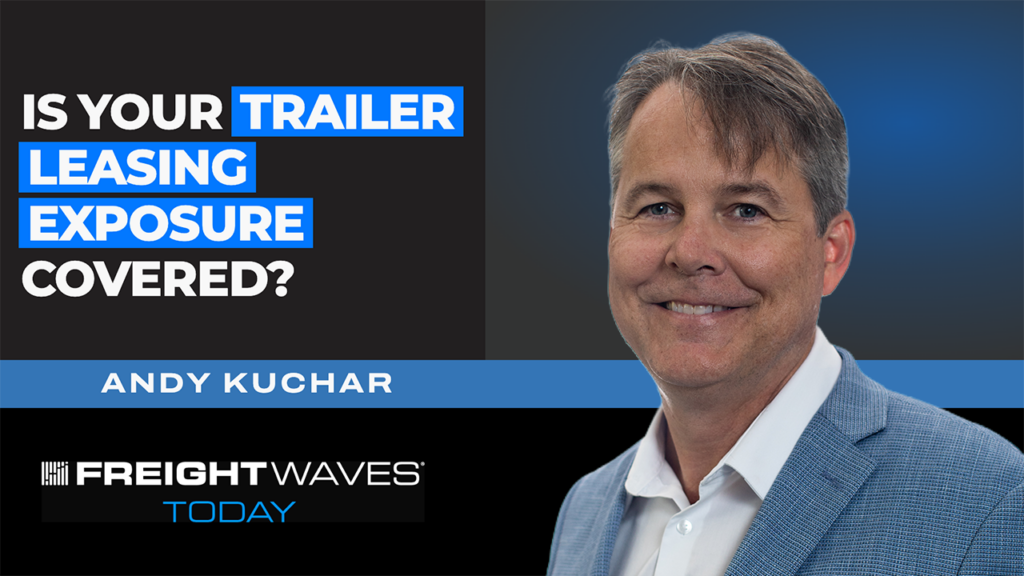
Freight brokers leasing trailers to motor carriers are unknowingly exposing themselves to liability exposure, with every insurance certificate in a recent audit failing to cover the leased equipment. The warning comes from Andy Kuchar, President of Centerline Insurance Company, who revealed that compliance staff, rather than insurance specialists, had accepted commercial auto policies never designed for trailer fleets.
Kuchar’s audit at one trailer leasing firm found that not a single broker had coverage for the trailers they leased. “Every single certificate of insurance that those freight brokers had did not cover those trailers and they didn’t know it,” he said. The oversight leaves brokers vulnerable to claims from accidents caused by maintenance failures, such as brake or bearing defects, which Kuchar said he witnessed twice on Interstate 24 near Chattanooga.
Why Brokers Are Falling Into the Liability Trap: Freight Brokers
The core issue lies in the shift from pure transportation arranging to equipment provision. When brokers lease trailers, they assume maintenance obligations typically borne by the lessee. A single mechanical failure, like a rotted tyre or a seized bearing, can trigger liability claims tracing directly back to the broker. Kuchar emphasised that this legal exposure is absent for brokers who merely arrange transport without leasing equipment.
Global Ship Lease
Insurance gaps compound the problem. Motor carrier commercial auto policies often require every trailer’s VIN to be listed, but leased trailers’ VINs are absent from the carrier’s policy. Premium-financed policies can lapse without the broker’s knowledge, leaving them unprotected. “The last thing you want,” Kuchar warned, “is to have an accident, the leasing company gets pulled in, you get pulled in, and only then you find out you’re actually not in compliance with the lease.”
For example, contingent policies, commonly used by brokers, frequently exclude leased equipment unless explicitly endorsed, a detail easily missed by non-specialists.
Dedicated Coverage: The Only Shield Against Six-Figure Risks
Kuchar urged brokers to abandon reliance on contingent policies, which he compared to a $25 U-Haul damage waiver, cheap but riddled with exclusions. “Contingent policies are cheap for the same reason a $25 U-Haul damage waiver is cheap: low limits and narrow coverage,” he noted. Instead, brokers should secure dedicated policies tailored to trailer-leasing exposures, scrutinising any policy containing the word “contingent” for hidden exclusions.
Documented maintenance schedules are equally critical. While visual inspections by drivers can catch obvious defects, they cannot detect imminent bearing failures. Some leasing companies bundle maintenance tiers into agreements, offering brokers a way to demonstrate roadworthiness. These bundled services, however, vary widely in scope. Brokers must carefully review these tiers to ensure they meet their contractual obligations and mitigate liability risks.
Kuchar also highlighted leasing companies themselves as an emerging risk category, with Centerline issuing roughly half a dozen lessor-side policies in the past three to four months, a trend tied to post-Montgomery litigation. This shift has prompted leasing firms to seek specialised insurance solutions, further underscoring the need for brokers to align their coverage with evolving legal standards.
To streamline this, Kuchar recommended implementing automated compliance tracking systems, which can flag expiring policies or missing endorsements. Such systems are increasingly adopted by larger brokerages but remain out of reach for smaller operators, who may need to rely on third-party audits or specialised insurance brokers to ensure ongoing compliance.
The financial stakes are stark. A single uncovered claim could cost a brokerage $100,000 or more, with liability extending beyond the accident itself to legal fees, compliance penalties, and reputational damage. For smaller firms, such a loss could be catastrophic, potentially forcing them out of business. Even larger brokerages face significant financial strain, particularly if multiple claims arise from a single systemic failure, such as a batch of leased trailers with defective bearings or brakes.
The trailer-leasing liability gap is not an isolated issue but part of a broader trend reshaping the freight industry. As brokers expand their role beyond transportation arranging to include equipment provision, they must adapt their risk management strategies accordingly. This shift is driven by market demands for flexibility and cost efficiency, but it comes with heightened legal and financial exposure. Brokers who fail to address these risks may find themselves at a competitive disadvantage, as shippers increasingly prioritise partners with robust compliance and insurance frameworks.
For the insurance sector, the rise of trailer-leasing liabilities presents both a challenge and an opportunity. Insurers like Centerline are developing specialised products to address this gap, but the market remains fragmented. Brokers seeking coverage must navigate a patchwork of policies, each with its own exclusions and conditions.
Kuchar advised brokers to work with insurance providers that understand the nuances of trailer leasing, rather than relying on generic commercial auto policies. He also recommended that brokers conduct regular audits of their leasing agreements and insurance certificates, ideally with the support of legal or risk management professionals.
Leasing companies, too, have a role to play in mitigating these risks. Many are now offering insurance compliance guidance as part of their service packages, recognising that their own liability is intertwined with that of their lessees. Some have even begun requiring brokers to provide proof of dedicated trailer-leasing coverage before finalising agreements. This proactive approach benefits all parties, reducing the likelihood of disputes and claims arising from uncovered liabilities.
For brokers, the path forward is clear: proactive risk management is no longer optional. Those who take steps to close their coverage gaps, whether through dedicated policies, automated compliance systems, or bundled maintenance agreements, will be better positioned to weather the industry’s evolving legal landscape. The alternative is to remain exposed to unexpected exposures, with potentially devastating consequences.
“The last thing you want, I think, is that, is to have an accident, the leasing company gets pulled in, you get pulled in, and only then you find out you’re actually not in compliance with the lease.”
Andy Kuchar·President of Centerline Insurance Company
As trailer leasing grows, so too does the urgency for brokers to close the coverage gap, or risk becoming the next cautionary tale. The industry’s shift toward equipment provision is irreversible, but the risks it brings can be managed with the right tools and strategies. For brokers, the message is simple: act now, or pay later.


Sign up free to ask CAMAL AI for a summary, the key points or anything else about this story.
Related stories
CAMAL AI
 Financial Ports Newsletter
The maritime economy, every morning
Ports, shipping and freight markets in one short email. Free.



