

EU Shipowners Export 12 Million Tonnes of Steel Yearly
A new report reveals that 66% of EU-owned tonnage is dismantled on South Asian beaches.
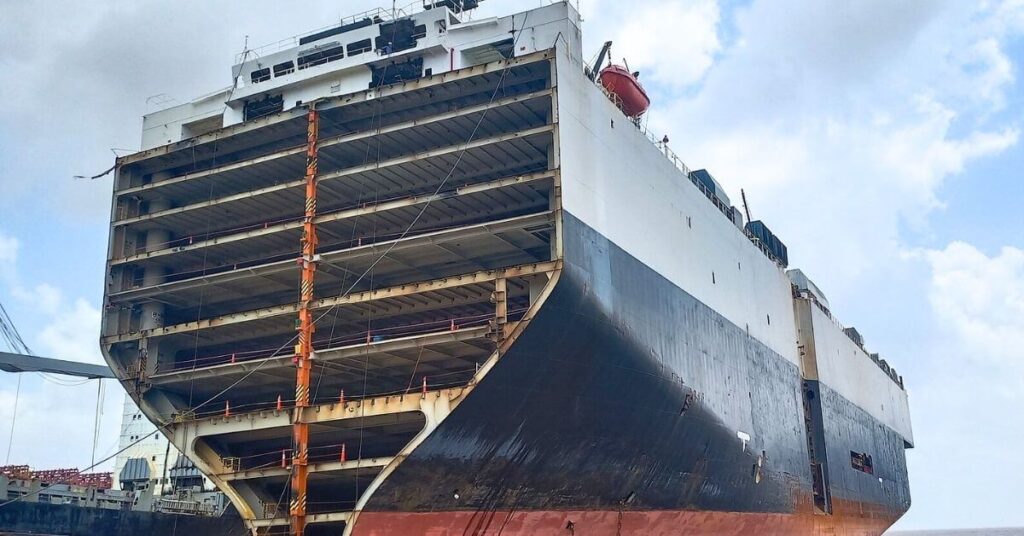
A new study by the NGO Shipbreaking Platform and Transport & Environment (T&E) reveals that most EU-owned or EU-flagged ships are dismantled in South Asia under hazardous conditions, despite sufficient recycling capacity within the European Union.
Between 2019 and 2025, a total of 706 EU-flagged or EU-owned vessels were scrapped globally. Only 22% of these ships were recycled in EU-based facilities, representing just 5% of the total tonnage. The majority—66% of the tonnage—ended up in shipbreaking yards in India, Bangladesh, and Pakistan, where dismantling practices pose serious environmental and safety risks.
Environmental and Economic Costs: eu ship recycling
The report highlights that South Asian shipbreaking relies on “beaching,” a method where vessels are dismantled directly on tidal mudflats without proper containment. This leads to water and soil contamination from hazardous materials, while workers face dangerous conditions due to unstable surfaces and lack of safety measures.
Beyond environmental harm, the practice undermines the EU’s industrial strategy. The bloc promotes strategic autonomy and circular economy principles, yet allows valuable steel from end-of-life ships to be lost to foreign markets. According to the NGOs, up to 95% of a ship’s weight can be recycled as high-quality scrap steel, but most of this material is processed abroad instead of being recovered domestically.
Benedetta Mantoan, Policy Manager at Shipbreaking Platform, criticizes the contradiction: “The EU claims to reduce dependence on imported critical materials, yet it allows shipowners to bypass regulations and export millions of tonnes of recoverable steel. This is not strategic autonomy—it’s a policy failure.”
Regulatory Loopholes and Industry Capacity
The EU’s Waste Shipment Regulation prohibits exporting ships classified as waste to non-OECD countries, while the Ship Recycling Regulation requires EU-flagged vessels to use approved facilities. However, shipowners exploit loopholes by reflagging vessels or falsely declaring them operational. The report found that 102 ships changed their EU flags shortly before dismantling to evade restrictions.
Despite these evasions, EU ship recycling yards have more than enough capacity. In 2020, the peak year for dismantling, EU facilities could process 2.1 million light displacement tonnes (LDT), while the total tonnage of EU-owned ships scrapped that year was only 1.4 million LDT. Yet, over two-thirds of EU-owned tonnage still ended up on South Asian beaches.
The European Commission’s recent decision to include beaching yards in its approved list has drawn criticism. NGOs argue that this move undermines responsible European industry by legitimizing harmful practices. Mantoan warns that beaching—considered the most dangerous dismantling method—should be banned outright, not endorsed under false claims of insufficient EU capacity.


Sign up free to ask CAMAL AI for a summary, the key points or anything else about this story.
Related stories
CAMAL AI
 Financial Ports Newsletter
The maritime economy, every morning
Ports, shipping and freight markets in one short email. Free.
Financial Ports Newsletter
The maritime economy, every morning
Ports, shipping and freight markets in one short email. Free.



