

Electric Trucks Hit Hard Reality: Charging or Bust for Port Fleets
Hight Logistics CEO warns: 50 trucks need more than 2 chargers to avoid operational chaos at US ports.
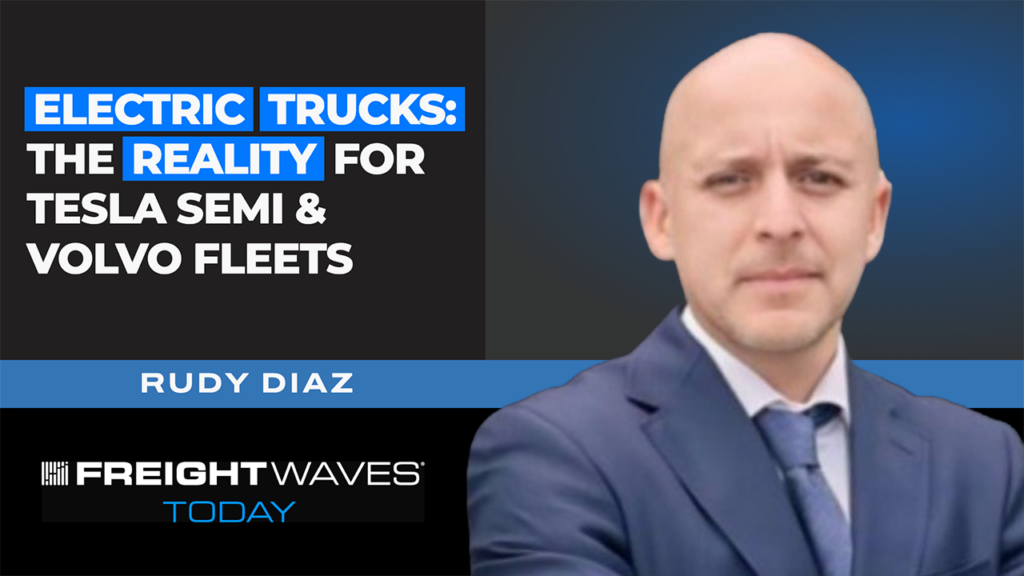
Rudy Diaz, CEO of Hight Logistics, has spent four years operating one of the largest electric truck fleets in port drayage, and his verdict is stark: “If you’re going to go this route, you have to secure your charging. You got to make sure that you understand that it’s not, you’re not plugging in a blender.".
Hight Logistics, a port drayage company specialising in short-haul freight between the Ports of Los Angeles and Long Beach and the Inland Empire, currently runs 2,500 electric trucks, including models from Tesla, Volvo, and BYD. “You have an order of 50 trucks, and you have 2 chargers, then you’re gonna run into a lot of issues,” he warned in an interview with FreightWaves. The mismatch between vehicle orders and charging capacity is the industry’s most pressing bottleneck.
The numbers tell the story. At the Ports of Los Angeles and Long Beach, 850 electric trucks are already in operation, with a second round of California’s Hybrid and Zero-Emission Truck and Bus Voucher Incentive Project (HVIP) generating 1,000 new orders. Tesla is expected to dominate these orders, a shift Diaz called “encouraging” given the Semi’s purpose-built design. Yet even with Tesla’s engineering prowess, the trucks themselves are only half the equation.
Current-generation electric trucks, such as BYD’s and Volvo’s VNRE models, face three critical limitations. Second, a full recharge takes 2 to 3 hours, forcing operators to schedule downtime or risk stranded vehicles. Third, the trucks carry a weight penalty of 6,000 to 8,000 pounds compared to diesel equivalents, reducing payload capacity and accelerating tire wear.
Diaz’s experience underscores the gap between ambition and execution. “Route and charge management, not driver training, proved to be the steepest learning curve,” he said. Drivers adapted quickly to the quieter, regenerative-braking trucks, but dispatchers had to rethink every deployment. Early on, Hight Logistics pushed trucks beyond their usable range to test limits, and had to tow some back.
The Financial and Regulatory Forces Driving Electrification: Electric Trucks
For Hight Logistics, the transition to electric trucks was not a voluntary choice. “California’s Advanced Clean Fleets rule was the regulatory forcing function that pushed us into EVs,” Diaz admitted. Without the state’s mandate, and the financial incentives that came with it, he would have stuck with diesel. “Diesel works,” he said. “It’s not that it’s broken.”
Yet economics are shifting. California’s diesel prices have soared to nearly $8.50 per gallon, making electric trucks a compelling alternative for short-haul drayage. Each run between the ports and the Inland Empire covers roughly 60 miles, well within the range of current EV trucks.
Electric trucks cost roughly $400,000 apiece, a figure Diaz said his company could not absorb without grants and incentives. Even with HVIP vouchers, the upfront investment is daunting. “If you fast forward from four years ago, it’s a lot easier for a carrier to get into an electric truck,” Diaz said. “But it’s still not plug-and-play.".
For now, the industry’s focus must shift from vehicle orders to grid readiness. The 1,000 new orders in California’s latest HVIP round are a promising sign, but they will only succeed if the chargers are in place to support them. As Diaz put it: “You got to have it figured out.”


Sign up free to ask CAMAL AI for a summary, the key points or anything else about this story.
Related stories
CAMAL AI
 Financial Ports Newsletter
The maritime economy, every morning
Ports, shipping and freight markets in one short email. Free.



