

Singapore’s Drone Crackdown: Seafarers Face $39k Fines or Jail
Two crew members fined for flying drones near Changi Airport, with penalties up to two years in prison.
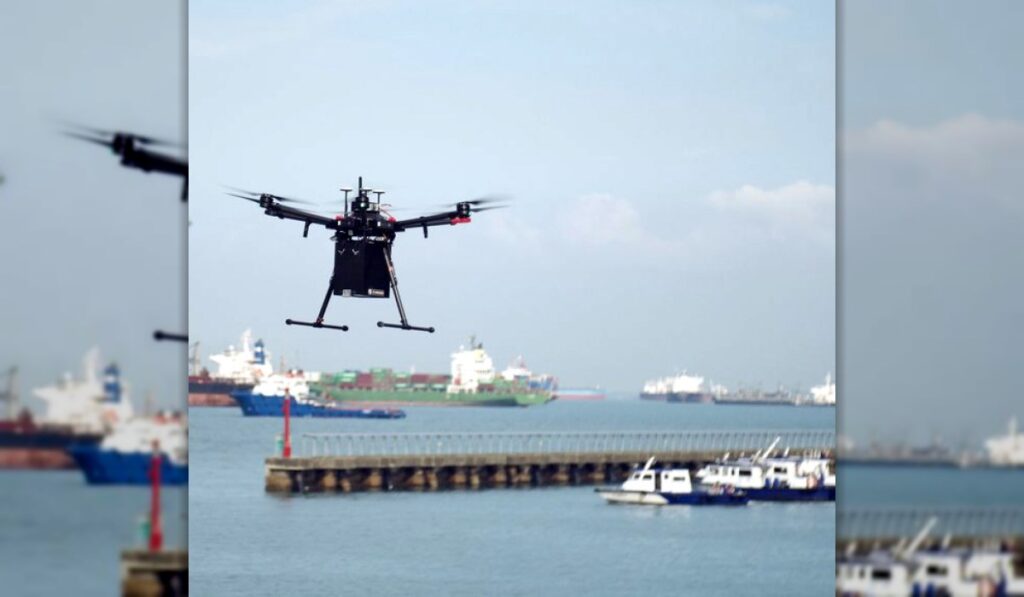
Singapore has intensified enforcement of drone regulations in its port waters, imposing strict penalties on seafarers who violate airspace rules. The Civil Aviation Authority of Singapore (CAAS) and the Maritime and Port Authority of Singapore (MPA) recently issued a joint advisory to shipping companies, highlighting the risks of unauthorized drone operations near Changi Airport.
The five-kilometer no-fly zone around the airport covers critical anchorage areas, including Eastern Petroleum Bravo and Charlie. Operating drones in these restricted zones without prior approval can result in fines of up to US$39,000 or imprisonment for up to two years.
Recent Violations and Penalties
Two recent cases underscore the severity of these regulations. In June, a 46-year-old crew member aboard a local bunker tanker was fined US$4,000 for flying a drone at 140 feet, below the 200-foot legal limit but within three kilometers of Changi Airport. Though he avoided a 10-day jail term, the fine reflected the seriousness of operating in a restricted area without a permit.
In July, another seafarer on a foreign-flagged tanker was penalized US$2,300 for flying a drone at 240 feet, well above the permitted altitude, less than two kilometers from the airport. Both incidents occurred in designated anchorage zones, where enforcement is particularly stringent.
Strict Rules for Drone Use
CAAS regulations prohibit drone flights over crowds, near roads, or in areas where emergency responders are active. Additionally, drones cannot operate above 200 feet or within five kilometers of an airport without explicit authorization. On land, authorities report around 300 drone-related violations annually, with fines for prosecuted cases sometimes exceeding US$10,000.
Despite these strict rules, Singapore remains a global leader in commercial drone innovation. Since 2018, the MPA has supported trials for cargo-drone delivery systems and established dedicated testbeds for maritime drone research. These controlled environments allow companies to develop new technologies while ensuring compliance with safety and security standards.
For seafarers, the message is clear: Singapore’s port waters are not open for recreational drone use. Authorities have made it evident that even minor infractions can lead to significant penalties, and ignorance of the law offers no protection. With the port’s reputation for efficiency and security at stake, enforcement is unlikely to ease in the near future.


Sign up free to ask CAMAL AI for a summary, the key points or anything else about this story.
Related stories
CAMAL AI
 Financial Ports Newsletter
The maritime economy, every morning
Ports, shipping and freight markets in one short email. Free.



