

Italy’s €3.7bn DDX Destroyers: Europe’s Most Advanced Warships Take Shape
Italy has signed a €3.7bn contract for two next-generation destroyers, set to redefine naval warfare.
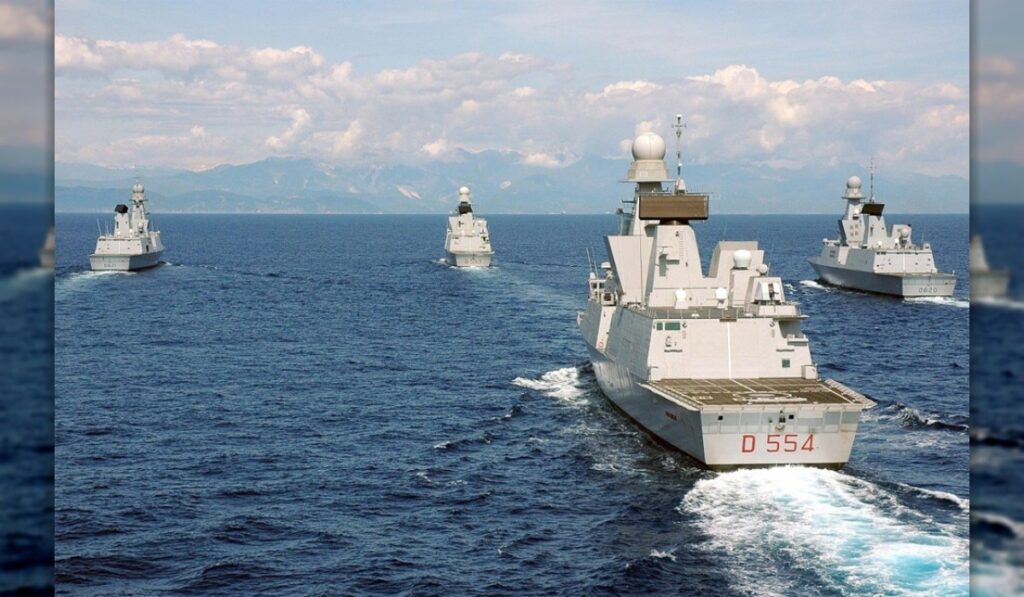
Italy has committed €3.7 billion to build two next-generation DDX destroyers, marking Europe’s most ambitious naval modernisation programme.
The contract, signed through the Organisation for Organisation for Joint Armament Co-operation (OCCAR)-operation (OCCAR), covers development, production, and initial in-service support for the 180-metre, 13,500-tonne warships. The first vessel is scheduled for delivery in 2033, with the second following in 2035. The programme is a collaboration between Fincantieri, which will serve as the system integrator, and Leonardo, responsible for the combat system.
The DDX destroyers are not merely an upgrade, they represent a generational leap in maritime warfare technology. Under Fincantieri’s Navis Sapens concept, the vessels will feature an “electronic brain” capable of intelligently collecting, correlating, and leveraging data from all onboard systems. This digital backbone will transform raw data into actionable intelligence for operational decision-making, technical management, and lifecycle support.
The combat system, developed by Leonardo, will include a next-generation high-power, fully digital S-band AESA radar and MBDA’s weapon systems. The destroyers will also boast an Integrated Air & Missile Defence (IAMD) capability, designed to counter missile, ballistic, and hypersonic threats.
The Navis Sapens framework, introduced by Fincantieri, is a cornerstone of the DDX programme’s innovation.
Giovanni Sorrentino, CEO of Orizzonte Sistemi Navali (OSN), the joint venture between Fincantieri and Leonardo, emphasised the programme’s strategic significance.
“With the DDX programme, Italy is making a generational leap in its maritime defence capabilities and strengthening a strategic asset that involves the entire national system.”
Giovanni Sorrentino·OSN CEO
The industrial and strategic implications of the DDX programme: ddx destroyers
The DDX programme is not just a military endeavour but a catalyst for Italy’s defence industrial base. Fincantieri, Italy’s largest shipbuilder, will act as the system integrator, overseeing the design, construction, and integration of the vessels.
Leonardo, meanwhile, will develop the combat system, leveraging its expertise in radar, electronic warfare, and command-and-control systems. The company’s 49% stake in OSN reflects its critical contribution to the programme, with sub-supply contracts worth around €1.7 billion.
The programme also benefits from the involvement of OCCAR, the Organisation for Organisation for Joint Armament Co-operation (OCCAR)-operation. OCCAR, which manages collaborative defence projects across Europe, ensures streamlined procurement, standardised requirements, and cost-effective execution.
The DDX programme is a cornerstone of Italy’s broader naval modernisation strategy. The 13,500-tonne vessels, with a range of 4,000 nautical miles, will operate with a crew of 251, reflecting the trend toward automation in modern warships. Their open and scalable design allows for future upgrades, ensuring the platform remains relevant amid evolving threats and technological advancements.
The destroyers will replace the Durand de la Penne-class vessels, which have been in service since 1992. Commissioned during the post-Cold War era, these ships were designed for a different strategic landscape, one dominated by conventional naval warfare rather than the multi-domain threats of today. The DDX platform, by contrast, is built to address modern challenges, including hypersonic missiles, cyber threats, and asymmetric warfare, making it a critical asset for Italy’s defence posture.
The new vessels will feature several technological innovations, including a DC power sub-network with energy storage, a stabilisation system integrated with the steering system, and advanced algorithms for thermal and electrical balance calculations. These systems not only enhance operational efficiency but also reduce the vessels’ environmental footprint, aligning with broader defence industry trends toward sustainability and energy resilience.
Fincantieri, which holds a 51% stake in OSN, will receive approximately €1.8 billion for its role as system integrator, while Leonardo, with a 49% stake, will secure around €1.7 billion for the combat system. The contract also includes options worth €1.3 billion, bringing the total potential value to €5 billion.
For Italy, the DDX programme is more than a military upgrade, it is a statement of technological sovereignty. By leveraging domestic industrial expertise, the country is positioning itself as a leader in European naval innovation. The programme also underscores the importance of international collaboration, with OCCAR playing a pivotal role in procurement and oversight. As Europe faces growing security challenges, from Mediterranean instability to Arctic competition, Italy’s investment in the DDX destroyers signals its commitment to maintaining a credible and modern naval force.
The first DDX destroyer is expected to enter service in 2033, with the second following two years later. As the vessels take shape, they will redefine Italy’s naval capabilities and set a new standard for surface combatants in Europe. For stakeholders in the maritime defence sector, the programme offers a glimpse into the future of naval warfare, where digitalisation, automation, and multi-domain integration are no longer optional but essential.
For industry observers and defence analysts, the DDX programme serves as a benchmark for future naval projects. Its emphasis on open architecture, modular upgrades, and interoperability with allied forces sets a precedent for how nations can balance national security needs with industrial and technological collaboration. As the vessels progress from design to deployment, they will likely influence similar programmes across Europe and beyond, reinforcing Italy’s role as a key player in the global defence market.


Sign up free to ask CAMAL AI for a summary, the key points or anything else about this story.
Related stories
CAMAL AI
 Financial Ports Newsletter
The maritime economy, every morning
Ports, shipping and freight markets in one short email. Free.
Financial Ports Newsletter
The maritime economy, every morning
Ports, shipping and freight markets in one short email. Free.