

IMO’s Net-Zero Plan Risks Choking Shipping—US LNG Could Be the Fix
FMC Commissioner Laura DiBella warns rigid IMO rules could derail maritime emissions targets by excluding viable fuels.
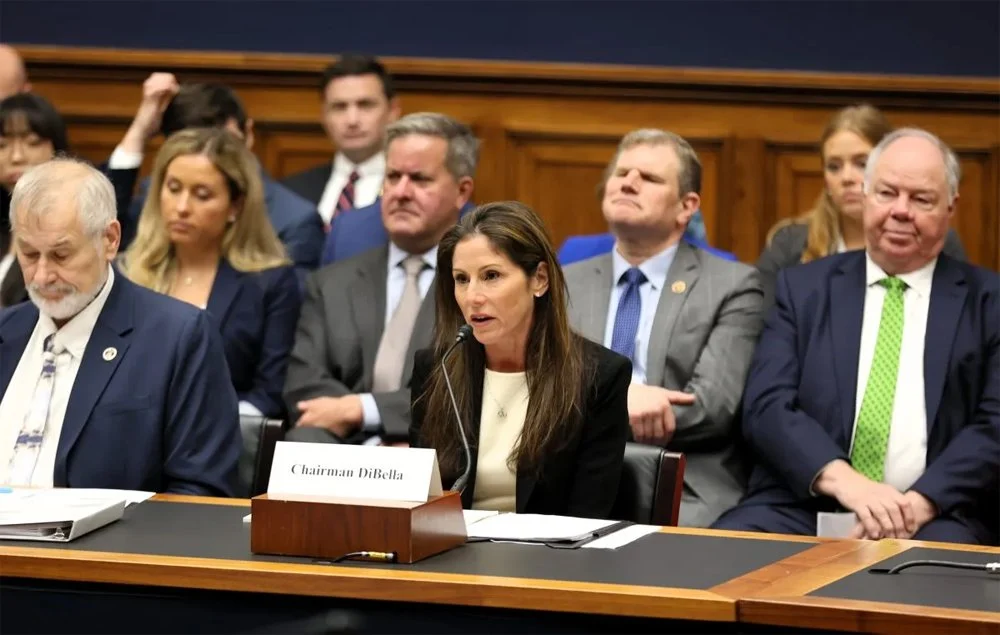
The International Maritime Organization’s push for net-zero emissions by 2050 risks backfiring unless regulators embrace fuel diversity, warns Laura DiBella, a commissioner at the U.S. U.S. Federal Maritime Commission (FMC). In an op-ed published today, DiBella argues that the IMO’s Net-Net-Zero Framework (NZF) (NZF) could inflate shipping costs globally if it artificially restricts alternatives like LNG and bio-LNG, fuels she says could realistically power 60% of the maritime sector by mid-century.
But DiBella contends the framework’s rigid approach, prioritising regulatory mandates over market forces, could disrupt the industry’s reliance on the petroleum-based fuel system, which remains resilient due to its global supply chains. “The primary flaw in the NZF is the attempt to move shipping away from the global petroleum system by regulation rather than by the operation of ordinary market forces,” she writes.
The FMC commissioner emphasises that fuel diversity does not guarantee stability. Without proven affordability, availability, and scalability, alternative fuels could fail to replace conventional options, leaving the industry vulnerable to price shocks. “Alternative fuels must satisfy clear, transparent, and agreed-upon measures of affordability, global availability, and scalability,” she states. “Both conventional and transitional fuels should remain in use to meet these criteria.”
DiBella’s critique centres on the exclusion of LNG and bio-LNG from some NZF proposals. Bio-LNG, produced from organic agricultural waste, could be a game-changer, she argues, as it leverages existing LNG infrastructure and the growing fleet of LNG-fuelled vessels. The U.S., already the world’s leading LNG exporter, is poised to double its export capacity by 2030, making American-sourced bio-LNG a viable candidate for global adoption.
“In my view, efforts toward emissions reductions must be linked explicitly to demonstrated viability and realistic availability of alternative fuels, not a pre-determined, rigid implementation date or limited fuel options.”
Laura DiBella·Commissioner, U.S. U.S. Federal Maritime Commission
What’s at Stake for Global Trade: Could
DiBella warns that restricting fuel options could lead to “run-away costs passed on to consumers in the U.S.
The FMC commissioner also dismisses concerns that bio-LNG will become prohibitively expensive as demand grows. “A well-designed global fuel standard can create the long-term demand certainty needed to unlock new investment and expand supply,” she argues. The U.S. is uniquely positioned to lead this transition, with its vast LNG export capacity and potential for bio-LNG production. “Responsibly sourced, American-made bio-LNG must be recognised as a qualifying fuel domestically and internationally,” she asserts.
The IMO’s NZF is expected to undergo further revisions before adoption. DiBella’s intervention highlights the tension between environmental goals and economic realities, urging regulators to prioritise practicality over rigid timelines.
The IMO has yet to finalise the NZF’s details, but DiBella’s call for fuel diversity could shape the framework’s final form.
The FMC has not formally endorsed DiBella’s position, as her comments reflect her personal views. However, her stance underscores the broader challenges facing the maritime sector as it navigates the transition to a low-carbon future.
Sign up free to ask CAMAL AI for a summary, the key points or anything else about this story.
Related stories
Financial Ports Newsletter
The maritime economy, every morning
Ports, shipping and freight markets in one short email. Free.