

World’s first lashing-free containership sails: CMA CGM’s 13,000 TEU
HD Hyundai delivers the first vessel to eliminate manual lashing using extended cell guides and a 40 ft portable bench.
HD Hyundai has delivered the 13,000 TEU methanol dual-fuel vessel to France’s CMA CGM, introducing a hybrid lashing-free system that extends cell guides above deck and replaces traditional lashing with a portable bench and twist-lock routing.
The innovation centres on what the shipbuilder calls a portable bench, a standardised structure the size of a 40 ft container that fits between cell guides.
Containers positioned outside the cell guides are secured directly to the hull using a newly developed twist-lock routing system, removing the need for manual lashing.
Bing Hou, Maritime CEO and developer of ShipGod AI, highlighted the broader inefficiencies in maritime operations during an interview this week. “The turning point for me was watching how much time good officers spend managing documents instead of being officers, and how much of what they know is never captured for the next crew,” he said. His AI-driven workspace aims to digitise onboard workflows, addressing a gap that has persisted despite technological advancements.
“The turning point for me was watching how much time good officers spend managing documents instead of being officers, and how much of what they know is never captured for the next crew.”
Bing Hou·Maritime CEO and developer of ShipGod AI
The shift toward automation comes as the maritime industry faces increasing pressure to improve efficiency amid rising geopolitical tensions. This week, maritime war attacks in the Black Sea and Middle East escalated, expanding in both number and geographical scope.
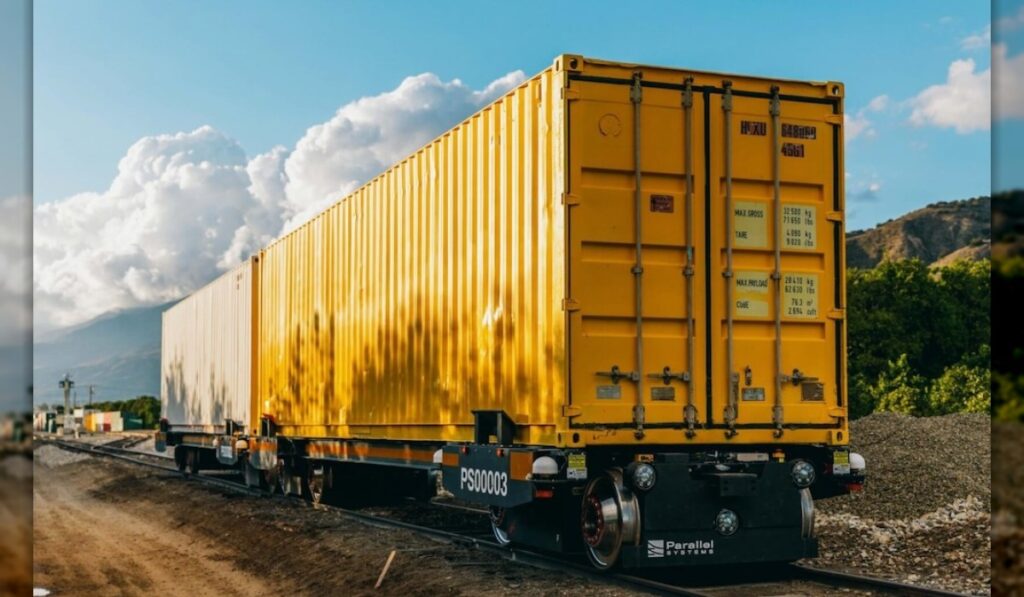
Autonomous freight trains and drones: The next frontier beyond ports: CMA CGM
While HD Hyundai’s lashing-free vessel represents a leap forward in ship design, the industry is also pushing boundaries in landside logistics.
Beth Branch, President and Chief Executive of Port New Orleans, emphasised the importance of flexibility in navigating geopolitical uncertainties. “We cannot predict every geopolitical development, but we can build capacity, strengthen partnerships and give customers more flexibility,” she told Splash Ports.
“We cannot predict every geopolitical development, but we can build capacity, strengthen partnerships and give customers more flexibility.”
Beth Branch·President and Chief Executive of Port New Orleans
However, not all digital innovations have been embraced by seafarers. Aristos Philis, Chief Executive of KeelX, cautioned against superficial digitisation. “If six months after introducing your platform the crew still maintains the same spreadsheet beside it, you haven’t really digitised anything. You’ve given them another system to update,” he quipped. His observation highlights the need for user-centric design in maritime technology, ensuring that tools align with the practical needs of crews.
While not yet mainstream, drones are being tested for tasks such as hull inspections, cargo monitoring, and even search-and-rescue operations. These technologies could further reduce human exposure to hazardous conditions while improving operational efficiency.
As the maritime sector continues to evolve, the integration of AI, automation, and alternative fuels like methanol will play a pivotal role in shaping its future. The delivery of CMA CGM’s lashing-free vessel is a testament to this transformation, offering a glimpse into a more efficient and safer era of shipping.


Sign up free to ask CAMAL AI for a summary, the key points or anything else about this story.
Related stories
CAMAL AI
 Financial Ports Newsletter
The maritime economy, every morning
Ports, shipping and freight markets in one short email. Free.
Financial Ports Newsletter
The maritime economy, every morning
Ports, shipping and freight markets in one short email. Free.



