

China unveils $413m floating lab to redefine ocean research
World’s first self-propelled research catamaran to house 238 scientists and survive 170mph typhoons
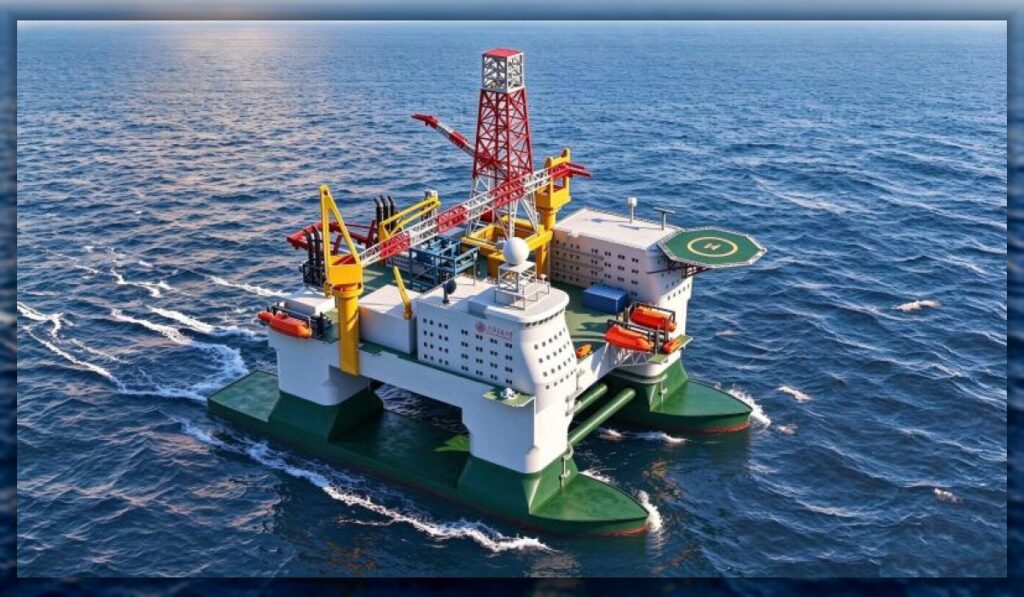
China has commissioned the construction of the world’s first self-propelled floating research platform, a groundbreaking vessel designed for long-term oceanographic studies. The $413 million project, awarded to Shanghai Waigaoqiao Shipyard, will result in a 74,000-ton catamaran capable of housing 238 researchers and crew while withstanding extreme marine conditions.
The platform will measure 138 meters in length and 85 meters in width, with a main deck rising 45 meters above the waterline. Its semi-submersible twin-hull design ensures stability, allowing operations in sea state 7 conditions, waves reaching 20 to 30 feet, and survival during category 17 typhoons, where winds exceed 165 mph. The vessel will cruise at 11 knots and feature six specialized laboratories for marine technology, disaster meteorology, and ecosystem monitoring.
Development timeline and capabilities: floating research island
Construction is scheduled to begin in 2028, with delivery to Shanghai Jiao Tong University expected in June 2030. The shipyard, known for building the world’s largest sixth-generation semi-submersible drilling platform, will apply its expertise in deep-water engineering to this project. The floating research island will operate as a mobile base, enabling scientists to conduct long-term observations while relocating as needed.
Natural Gas
The initiative reflects China’s expanding capabilities in maritime technology, including the domestic production of aircraft carriers, LNG tankers, and specialized research vessels. Once completed, the platform will serve as a key asset for deep-sea exploration and environmental studies.


Sign up free to ask CAMAL AI for a summary, the key points or anything else about this story.
Related stories
CAMAL AI
 Financial Ports Newsletter
The maritime economy, every morning
Ports, shipping and freight markets in one short email. Free.



