

Canada Doubles LNG Output: Why This $23bn Bet Could Reshape Global Energy
Kitimat facility to reach 28 million tonnes per year as Shell and partners approve Phase 2 expansion.
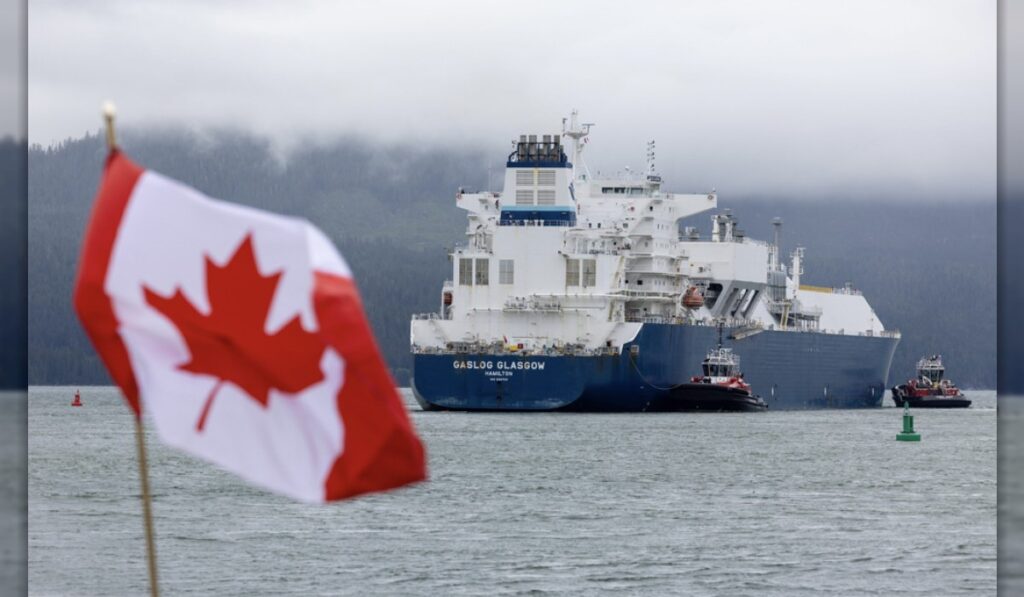
Canada’s first major liquefied natural gas (LNG) export terminal is set to double its capacity, with a multibillion-dollar expansion approved by its multinational partners.
The decision, announced on September 29, 2026, comes just 15 months after the terminal began exports in June 2025. Since then, LNG Canada has shipped over 100 cargoes, leveraging its strategic location, an ice-free deepwater harbor fed by a 670-kilometer pipeline, to supply growing markets in Asia. The expansion will add two new LNG trains, an additional storage tank, a condensate tank, and a loading berth, alongside expanded utility and process systems.
Why this expansion matters for global energy security
Global LNG demand is on a steep upward trajectory, with Shell’s LNG Outlook 2026 projecting a rise from 422 million tonnes per annum (mtpa) in 2025 to nearly 700 mtpa by 2050. This represents a 65% increase, driven by Asia’s need for secure, flexible, and reliable energy supplies.
Natural Gas
Chris Cooper, President and CEO of LNG Canada, framed the project as a “nation-building investment.” In a statement, he said:
“LNG Canada Phase 2 is another nation-building investment that demonstrates Canada can build big things when governments, First Nations partners, local communities, skilled trades, contractors, and investors work together with shared purpose. With FID secured, Phase 2 will double LNG Canada’s capacity from 14 to 28 million tonnes a year, putting LNG Canada on a trajectory to become one of the largest LNG facilities in the world and helping move Canada toward becoming one of the world’s top five LNG exporting nations.”
Chris Cooper·President and CEO, LNG Canada
The project’s partners, Shell (40% ownership), Petronas (25%), PetroChina (15%), Mitsubishi Corporation (15%), and Korea Gas (5%), will distribute the additional LNG based on their shares. Shell Canada, for instance, will receive nearly 6 mtpa of the expanded output, reinforcing its position in the global gas market.
Economic and strategic implications for Canada
The Phase 2 expansion is not just a commercial venture; it is a strategic move for Canada’s economy.
Canada’s Minister of Energy and Natural Resources, the Honourable Tim Hodgson, echoed this sentiment, calling the expansion “exactly the kind of investment Canada needs.” He added:
“At a time when our country must build a stronger economy that allows us to be an energy superpower for the long term, this is exactly the kind of investment Canada needs.”
Tim Hodgson·Canada’s Minister of Energy and Natural Resources
Fluor Corporation, in a joint venture with JGC Corporation, has been selected to deliver the engineering, procurement, fabrication, construction, and commissioning for the project. Fluor’s share of the contract, valued at US$7.5 billion, will be recognized in the third quarter of fiscal 2026.
The pipeline feeding the Kitimat facility, operated by Coastal GasLink, will also see an upgrade. The existing 670-kilometer pipeline will be expanded with the construction of five new compressor stations, ensuring a steady supply of natural gas to the terminal.
For Canada, the expansion is a critical step toward achieving its goal of becoming one of the world’s top five LNG exporters. Cederic Cremers, Shell’s Integrated Gas President, underscored this point.
The expansion is expected to begin production in the early 2030s, with the additional capacity helping to meet the projected rise in global LNG demand. For Asia, the timing could not be more critical. The region’s growing economies are increasingly reliant on LNG to power industries, generate electricity, and reduce carbon emissions compared to coal. LNG Canada’s strategic location in Kitimat, with its ice-free harbor and direct pipeline access, makes it an ideal hub for supplying these markets.
For stakeholders in the maritime and energy sectors, the expansion signals a shift in global trade flows. As Canada ramps up its LNG exports, shipping routes from the Pacific Northwest to Asia are likely to see increased traffic, creating opportunities for carriers, port operators, and logistics providers. The project also underscores the importance of infrastructure investment in enabling energy transitions, particularly in regions with abundant natural gas reserves.
Looking ahead, the success of LNG Canada’s Phase 2 could pave the way for further expansions or new projects in Canada. With global LNG demand projected to continue rising, the country’s role as a reliable supplier is set to grow, offering a counterbalance to traditional exporters in the Middle East and the United States. For now, the focus remains on delivering the current expansion on time and on budget, ensuring Canada can capitalize on the opportunities presented by the evolving global energy landscape.


Sign up free to ask CAMAL AI for a summary, the key points or anything else about this story.
Related stories
CAMAL AI
 Financial Ports Newsletter
The maritime economy, every morning
Ports, shipping and freight markets in one short email. Free.
Financial Ports Newsletter
The maritime economy, every morning
Ports, shipping and freight markets in one short email. Free.



